

 View Gallery
1 photo
View Gallery
1 photo
Let’s talk about the hero of any gathering that needs a touch of brightness, a bit of crunch, and a whole lot of color. The humble veggie platter. It’s more than just a plate of raw vegetables, you know. It’s a welcoming gesture, a fresh start to a meal, and proof that simple things can be absolutely beautiful.
I love a cheese board as much as anyone. But sometimes, you need something that feels light, and vibrant, and makes you feel good. That’s where this comes in.
Whether you’re looking for a no-cook appetizer for a party or just a stunning way to encourage everyone to eat their greens, this platter is your answer. It’s customizable, can be made ahead, and honestly, it’s just a joy to put together.
Why a Veggie Platter is a Party Must-Have
There’s a quiet magic to a well-crafted veggie platter. It sits there, unassuming, yet it always gets attention. It’s the first thing people gravitate towards when they arrive, a refreshing palate cleanser amidst richer foods.
For the host, it’s a little slice of sanity. Most of the work is just washing and cutting. There’s no oven to watch, no last-minute fussing required. You can assemble it in the calm of the morning, cover it, and forget it until guests ring the doorbell.
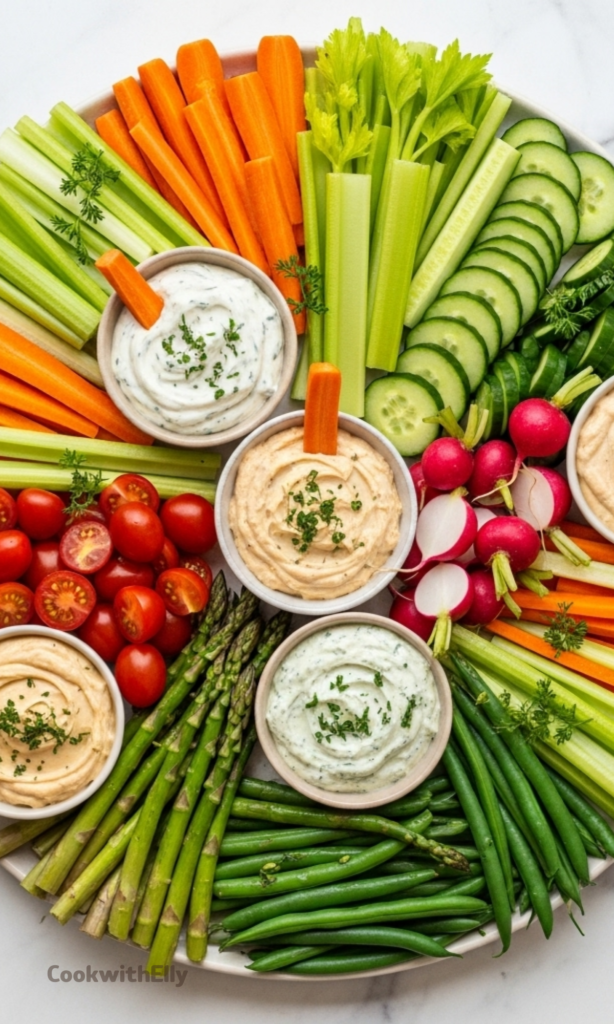
It’s also a conversation starter. Those bright orange baby carrots, the deep purple of a watermelon radish, the cheerful red of cherry tomatoes—they create a landscape that people just love to dive into. It feels generous, healthy, and thoughtfully prepared, all at once.
Ingredients Needed for the Recipe
Here’s what you’ll need to create a classic, crowd-pleasing platter. Think of this as a blueprint, not a strict rulebook. The beauty is in the customization.
- Dill Dip (homemade or store-bought): The creamy, herby anchor that makes every vegetable taste like a treat. A good dip is non-negotiable.
- Baby Carrots: Sweet, crunchy, and perfectly dippable. They add a classic, familiar touch.
- Celery Sticks: That satisfying crispness and light flavor are perfect for cleansing the palate between dips.
- Broccoli Florets: Their tree-like shape is great for holding onto dip, and they bring a lovely deep green color.
- Cauliflower Florets: The mild, slightly nutty flavor and textural contrast are essential. They’re like broccoli’s elegant cousin.
- Cherry Tomatoes: Juicy little pops of sweetness and acidity that brighten up every bite.
- Sugar Snap Peas: They offer a fantastic sweet crunch and a beautiful, bright green hue.
- Cucumbers (sliced on the bias): Cooling and hydrating. Slicing them on an angle just looks more interesting.
- Green Beans: Trimmed and left raw, they have a wonderful snap and a fresh, grassy flavor.
- Watermelon or Regular Radishes: For a gorgeous pink color and a delightful peppery kick that wakes up the senses.
- Baby Bell Peppers (assorted colors): Sweet, colorful, and fun. They look like little edible rainbows.
Your Dip, Your Way
The dip is the heart of the operation. While a store-bought version is perfectly fine for saving time, making your own is surprisingly simple and tastes, well, fresher. If you’d like to try it, here’s my go-to dill dip recipe.
In a medium bowl, I combine 1 ½ cups of sour cream with 2/3 cup of mayonnaise. To that, I add 2 tablespoons each of dill weed, dried minced onion, and dried parsley flakes, plus 1 teaspoon of celery salt.
Give it a good stir, cover it, and let it hang out in the fridge for about 30 minutes. This waiting time is key—it lets all those flavors get to know each other and become something greater. This makes enough for a big platter, serving about 10 people happily.
How to make Veggie Platter?
This is the fun part. It’s less about cooking and more about creating a delicious, edible mosaic. Grab your largest board, platter, or even a clean baking sheet. The more space you have, the better it looks.
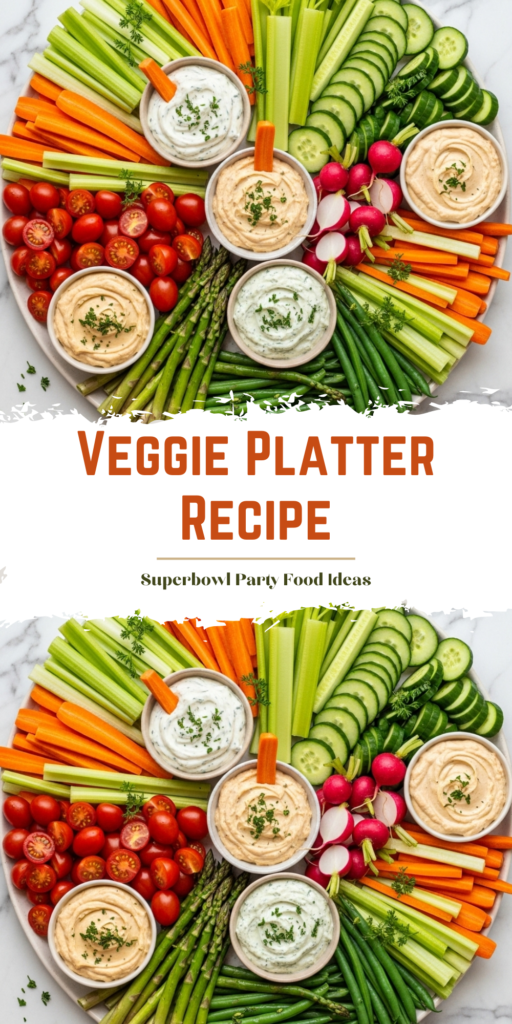
Step 1: Anchor Your Dips
Start by placing your bowls of dip on the platter. Think of them as the centerpieces, or maybe off-center pieces for a more dynamic look. Two small bowls work nicely, or one larger one. This creates your focal points.
It gives the whole arrangement structure. Everything else will naturally flow around these creamy anchors.
Step 2: Place the Hearty Vegetables
Now, add your substantial piles. Group the baby carrots, celery sticks, broccoli, and cauliflower florets around the dip bowls.
Create little mounds or neat rows, whatever feels right. Don’t be shy about piling them high. These are your sturdy building blocks, the reliable favorites everyone expects to see.
Step 3: Fill in All the Gaps
This is where the artistry happens. Take all your remaining vegetables—the tomatoes, snap peas, cucumber slices, green beans, radishes, and baby peppers.
Use them to fill in every empty space on the board. Tuck cucumber slices next to a broccoli pile. Let the snap peas create a green river between carrots and dip.
The goal is a lush, abundant, and incredibly inviting tapestry of color and texture. No platter should be visible underneath!
Tips
- Think Seasonally: For the best flavor and value, swap in vegetables that are at their peak. Asparagus in spring, blanched green beans in summer, endive or jicama in fall.
- Make it a Day Ahead: Seriously, do it. Cut all the vegetables, make the dip, and store them separately in airtight containers in the fridge. The dip’s flavor deepens, and you’ll have zero work on party day.
- Keep it Chilled: This is a cold platter. If you’re not serving it immediately, keep it in the refrigerator. You can even place the whole platter on a baking sheet filled with ice for longer parties.
- Garnish for Glamour: Scatter a few fresh dill fronds or parsley leaves over everything. Add a handful of olives or cornichons for a salty contrast. It makes it look professionally styled.
- Offer Dip Variety: Not everyone loves dill. Consider adding a small bowl of hummus or a zesty French onion dip alongside. Choice is always appreciated.
Serving and Sharing Ideas
This platter is wonderfully versatile beyond just being an appetizer. For a light lunch, I’ll sometimes make a smaller version for myself and add a hard-boiled egg or a handful of chickpeas for protein. It becomes the most satisfying desk lunch.
For a potluck, it’s your safest, most welcome bet. It complements every other dish there. And for family nights, placing it in the center of the dinner table encourages everyone to start their meal with something fresh and crunchy.
If you have leftovers, and that’s a big if, they’re not really leftovers at all. Those pre-cut vegetables are gold. Toss them into a morning omelet, a quick stir-fry, or a hearty vegetable soup. The dip makes a great spread for sandwiches the next day.
A veggie platter is more than food. It’s a fresh, colorful, and utterly welcoming way to feed people you care about. It’s deceptively simple, always delicious, and guaranteed to bring a little bit of garden brightness to any table, any day of the week.
Veggie Platter Recipe
Description
For a healthy appetizer recipe that will inspire everyone to eat vegetables (and enjoy them!), serve this easy Veggie Platter. This party snack idea is customizable, takes just 10 minutes to assemble, and can be made up to a full day ahead. It’s among the most colorful, beautiful party snack ideas—perfect for gatherings, game days, or anytime you need a light, fresh bite.
ingredients
Veggie Selection (Customizable)
Dip (Optional – Store-Bought or Homemade Dill Dip)
Instructions
-
On a large board or serving platter, create anchor points by placing small bowls or mounds of dill dip (or other favorite dips).
-
Arrange piles of baby carrots, celery sticks, broccoli, and cauliflower around the dips.
-
Fill in any gaps with cherry tomatoes, sugar snap peas, cucumber slices, green beans, radishes, and baby bell peppers for a vibrant, full look.
-
Chill until ready to serve (up to 24 hours ahead if prepped in advance).
Nutrition Facts
Servings 10
Serving Size 1 cup vegetables + 2–4 tbsp dip
- Amount Per Serving
- Calories 80kcal
- % Daily Value *
- Total Fat 1gg2%
- Saturated Fat 0gg0%
- Trans Fat 0gg
- Cholesterol 0mgmg0%
- Sodium 60mgmg3%
- Potassium 320mgmg10%
- Total Carbohydrate 16gg6%
- Dietary Fiber 5gg20%
- Sugars 7gg
- Protein 3gg6%
- Calcium 4 mg
- Iron 6 mg
* Percent Daily Values are based on a 2,000 calorie diet. Your daily value may be higher or lower depending on your calorie needs.
Note
- Homemade Dill Dip: Mix 1½ cups sour cream, ⅔ cup mayonnaise, 2 tbsp dill weed, 2 tbsp dried minced onion, 2 tbsp dried parsley flakes, and 1 tsp celery salt. Chill 30 min before serving.
- Seasonal Tip: Use produce guides to pick what’s freshest each month—this keeps costs down and flavor high!
- Make Ahead: Chop veggies and make dip up to 1 day ahead. Store separately, then assemble just before serving.
- Extra Flair: Garnish with fresh herbs, olives, cornichons, or toasted nuts for added texture and visual appeal.
Frequently Asked Questions
How much should I prepare per person?
Aim for about 1 to 1½ cups of vegetables and 2–4 tablespoons of dip per guest. Better to have extra—it disappears fast!
Can I use different vegetables?
Absolutely! Swap in zucchini, jicama, endive, blanched asparagus, or any crisp, colorful veggie you love. Keep textures varied and colors bright.
What are good dip alternatives?
Beyond dill dip, try hummus, tzatziki, French onion dip, spinach-artichoke dip, or even a spicy harissa yogurt sauce.