

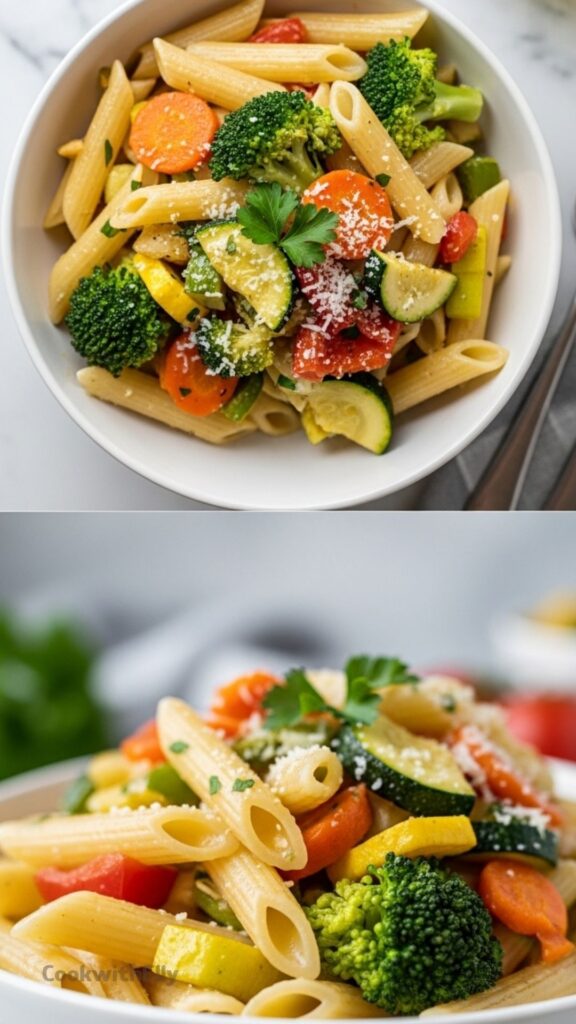

The garlic hit the pan a second too early and I knew it right away. That sharp, almost sweet smell started turning darker faster than I wanted. I pulled the heat down, slid in a splash more oil, and just like that, things settled. Not perfect, but workable.
That’s kind of how this dish goes for me most days. A little adjusting, a little tasting, and somehow it always lands in a really good place. Pasta Primavera doesn’t need perfection. It just needs attention.
I keep coming back to it because it feels flexible. Whatever vegetables are sitting in the fridge get their turn. And somehow, with a bit of lemon and cheese, everything just fits together.
It’s simple food, but not boring. Bright, warm, a little messy in the best way.
What is Pasta Primavera?
Pasta Primavera is basically pasta tossed with a mix of fresh vegetables, cooked just enough to stay a little crisp. It sounds like something straight out of Italy, but it actually started in New York.
The original version leaned on cream cheese, but I never go that route. I stick with parmesan, lemon, and olive oil. It keeps things lighter and lets the vegetables actually taste like themselves.
It’s one of those dishes that works any time of year. Spring vegetables, summer zucchini, even random leftover bits in winter. It adapts without complaining.
Ingredients Needed for the Recipe
- Penne pasta – about 10 oz, holds sauce and veggies well
- Salt – for seasoning the pasta water properly
- Olive oil – 1/4 cup, helps cook and coat everything
- Red onion – 1/2 medium, adds sweetness and depth
- Carrot – 1 large, for a slight crunch and color
- Broccoli – 2 cups, gives structure and bite
- Bell pepper – 1 medium, brings sweetness
- Yellow squash – 1 medium, softens nicely
- Zucchini – 1 medium, blends into the mix
- Garlic – 3 to 4 cloves, for that strong base flavor
- Grape tomatoes – 1 heaping cup, adds juiciness
- Italian seasoning – 2 teaspoons, ties everything together
- Lemon juice – 2 tablespoons, brightens the dish
- Parmesan cheese – 1/2 cup, for richness
- Parsley – 2 tablespoons, fresh finish
- Pasta water – about 1/2 cup, loosens the sauce
A small moment before cooking started
I stood in front of the fridge longer than I needed to. Not because I didn’t know what to cook, but because I was deciding which vegetables deserved to be used first.
The zucchini looked slightly tired, the broccoli was still firm, and the carrots were just sitting there like they always do. So I grabbed everything. No overthinking.
That’s the thing with this recipe. It doesn’t ask for perfect ingredients. It just asks you to use what you’ve got and pay attention while cooking.
How to make Pasta Primavera?
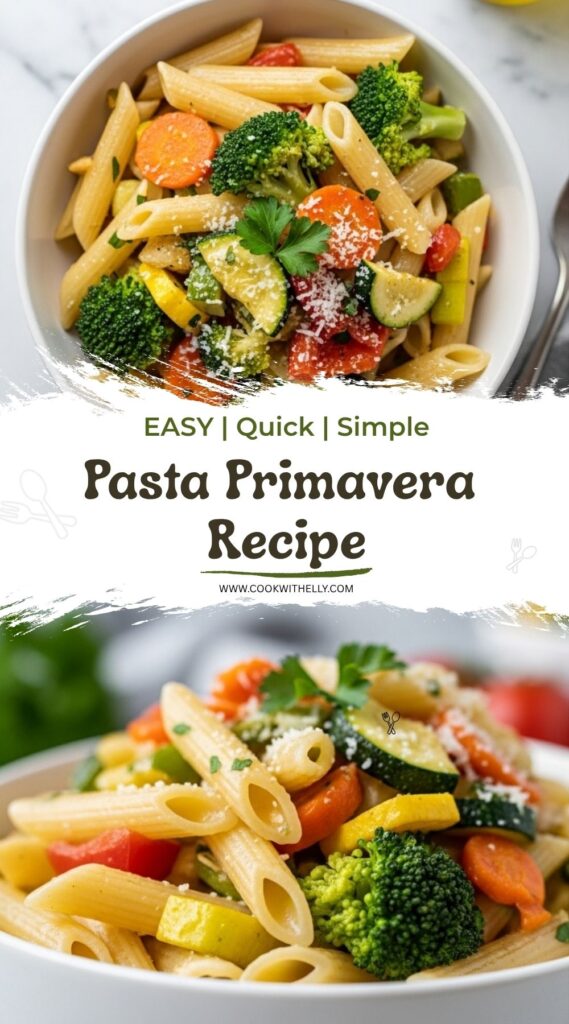
Step 1 – Boil the Pasta
I bring a large pot of water to a boil and salt it more than feels reasonable. It should taste like the sea, or close enough.
The pasta goes in and I keep an eye on it. Not constantly, but I don’t walk away either. Just before draining, I scoop out some of that starchy water. I always forget this step once, then never again for a week.
Step 2 – Start the Vegetables
Olive oil into a wide pan, medium-high heat. Onion and carrot go in first. They need a head start.
I stir them around for a couple minutes until the edges soften slightly. Not fully cooked. Just moving in that direction.
Step 3 – Build the Layers
Next comes broccoli and bell pepper. The pan starts looking colorful now, which honestly makes the whole process more satisfying.
After a couple minutes, I add squash and zucchini. These cook faster, so I don’t rush them in too early. Everything should soften at roughly the same pace.
Step 4 – Finish the Veggies
Garlic goes in last because it burns easily. I learned that the hard way more than once.
Then tomatoes and Italian seasoning. The tomatoes start breaking down just enough to create a light coating over everything. Not a sauce, just something to bring it together.
Step 5 – Bring It All Together
I toss the cooked pasta back in with the vegetables. Lemon juice goes over the top, along with a bit of salt.
Then I add a splash of that reserved pasta water. Not all at once. Just enough to loosen things and make it glide instead of stick.
Step 6 – Final Toss
Parmesan and parsley go in last. I toss everything until the cheese melts slightly and clings to the pasta.
I always taste at this point. Sometimes it needs more lemon. Sometimes more cheese. I adjust without thinking too much about it.
Something that almost went wrong
There was one time I let the vegetables cook too long while I got distracted. They turned soft. Not terrible, but definitely not what I wanted.
I fixed it by adding a bit more lemon and extra parmesan. It helped, but it wasn’t the same. Since then, I stay nearby when the veggies are in the pan.
They should be tender but still have a slight bite. That contrast is what makes the whole dish feel alive instead of flat.
Tips
- Salt the pasta water properly – it makes a big difference
- Cut vegetables roughly the same size so they cook evenly
- Add garlic later to avoid burning
- Don’t overcook the vegetables – keep some texture
- Use pasta water gradually, not all at once
- Taste before serving and adjust lemon or cheese
- Add extra parmesan if it feels too light
- Keep the heat controlled – not too high, not too low
That’s pretty much how I make it every time. No strict rules, just small decisions along the way. And somehow, it always turns into something I actually want to eat again the next day.
Pasta Primavera Recipe
Description
Pasta Primavera is a vibrant, vegetable-loaded pasta dish that works beautifully in any season. It combines tender pasta with a colorful mix of fresh vegetables, lightly sautéed in olive oil and finished with bright lemon juice and parmesan. This easy recipe is flexible, making it perfect for using whatever vegetables you have on hand while still delivering a satisfying, wholesome meal.
Ingredients
Instructions
-
Bring a large pot of salted water to a boil. Cook the pasta according to package instructions until al dente. Reserve some pasta water, then drain.
-
Heat olive oil in a large skillet over medium-high heat.
-
Add onion and carrot, sauté for about 2 minutes until slightly softened.
-
Stir in broccoli and bell pepper, cook for another 2 minutes.
-
Add squash and zucchini, continue cooking until vegetables are tender but still crisp.
-
Mix in garlic, tomatoes, and Italian seasoning. Cook briefly until fragrant.
-
Combine cooked pasta with vegetables. Add lemon juice and a splash of reserved pasta water to loosen the mixture.
-
Stir in half of the parmesan and parsley. Toss well and adjust seasoning.
-
Serve warm with remaining parmesan sprinkled on top.
Nutrition Facts
Servings 5
- Amount Per Serving
- Calories 415kcal
- % Daily Value *
- Total Fat 14g22%
- Saturated Fat 3g15%
- Cholesterol 6mg2%
- Sodium 198mg9%
- Potassium 844mg25%
- Total Carbohydrate 57g19%
- Dietary Fiber 6g24%
- Sugars 9g
- Protein 10g20%
* Percent Daily Values are based on a 2,000 calorie diet. Your daily value may be higher or lower depending on your calorie needs.
Note
For extra richness, you can increase the parmesan or add a touch of butter. Feel free to swap vegetables based on availability.
Frequently Asked Questions
Can I use different vegetables?
Yes, this recipe is very flexible. You can substitute vegetables like asparagus, peas, spinach, or green beans based on what you have available.
Can I add protein to this dish?
Absolutely. Grilled chicken, shrimp, or even tofu can be added to make this dish more filling and protein-rich.