

 View Gallery
1 photo
View Gallery
1 photo
I used to treat filet mignon like a “restaurant-only” food. Too expensive, too delicate, too easy to mess up, or so I told myself every time I walked past it at the butcher counter.
Then one night, after a little practice and a lot of deep breaths, I finally cooked it at home. And honestly? It wasn’t scary at all, just simple, calm, and deeply satisfying.
This is the kind of recipe that reminds you why good ingredients matter. Filet mignon doesn’t need drama or heavy seasoning, just care, heat, and a little patience.
When done right, it’s tender in a way that feels almost unfair. Soft, juicy, rich, and quietly luxurious without trying too hard.
I love this approach because it respects the steak. Salt, pepper, a hot pan, butter, herbs, and time doing what time does best.
If you’ve ever felt nervous cooking filet mignon, I get it. I was right there, hovering over the stove, second-guessing every move.
But once you understand the rhythm of it, the whole process becomes comforting. It’s controlled, predictable, and surprisingly forgiving.
This recipe is now one of my favorite ways to make an ordinary night feel special. No celebration required, just a good pan and a little confidence.
Ingredients Needed for the Recipe
- Filet mignon steaks – The star of the dish, prized for their tenderness and clean beef flavor.
- Kosher salt – Enhances the natural taste of the beef without overpowering it.
- Freshly ground black pepper – Adds gentle heat and depth that works beautifully with the steak.
- Vegetable or canola oil – A neutral, high-heat oil for getting a proper sear.
- Fresh thyme – Brings an earthy, aromatic note that pairs perfectly with butter.
- Garlic – Adds warmth and savory richness as it cooks gently in the pan.
- Unsalted butter – Finishes the steak with richness and helps carry the herb flavors.
Each ingredient has a purpose here, and none of them are trying to steal the spotlight. That balance is what makes the final plate feel intentional.
This is one of those times where restraint actually delivers more flavor, not less.
How to make Filet Mignon?

Step 1 – Prepare the Steaks
Start by preheating your oven to 400°F so it’s ready when you need it. Pat the steaks completely dry, because moisture is the enemy of a good sear.
Season generously with salt and black pepper on all sides. Don’t rush this step, it sets the tone for everything that follows.
Step 2 – Heat the Skillet
Place an oven-safe skillet over high heat and add the oil. Let it get hot enough that it barely starts to smoke.
This heat is what creates that golden crust, the part everyone secretly loves most.
Step 3 – Sear the Steaks
Add the filet mignon to the pan and don’t move them for three full minutes. Let the surface do its thing.
Flip and sear the second side for another three minutes until both sides are beautifully browned.
Step 4 – Add Butter and Aromatics
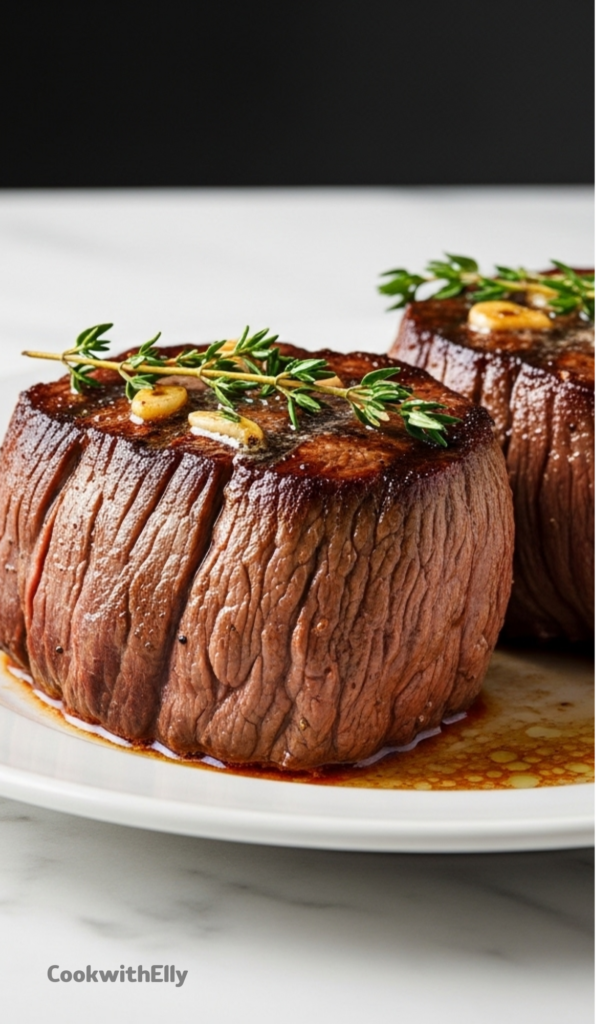
Turn off the heat and add the butter, thyme, and garlic right into the pan. The residual heat melts everything gently.
The smell at this point is unreal, rich, savory, and just a little indulgent.
Step 5 – Finish in the Oven
Transfer the skillet to the oven and cook until the steak reaches your preferred doneness. Medium-rare usually takes about ten minutes.
Flip the steaks halfway through and pull them out when they’re about ten degrees below your final target.
Step 6 – Rest Before Serving
Move the steaks to a plate or cutting board and let them rest for five minutes. This part matters more than people think.
Resting allows the juices to settle back into the meat instead of spilling onto the plate.
Why This Simple Method Works
Filet mignon is naturally lean, which means it doesn’t need complicated techniques. What it needs is precision and respect.
The hot sear builds flavor fast, while the oven finish gives you control over doneness.
Butter and herbs at the end keep everything from tasting dry or flat. It’s simple, but it’s not careless.
This balance is what makes the steak feel restaurant-quality without requiring professional equipment.
Tips
- Use a meat thermometer to avoid overcooking, especially with such a lean cut.
- Pull the steak early, it will continue cooking as it rests.
- Don’t skip drying the steaks before seasoning.
- Medium-rare highlights the tenderness best, in my opinion.
- Always use an oven-safe skillet to avoid extra transfers.
Serving Ideas That Never Fail
I usually pair filet mignon with something simple and familiar. Baked potatoes are a classic for a reason.
Roasted or grilled vegetables add balance and keep the meal from feeling heavy.
If you want something brighter, tomatoes with a little acidity cut through the richness beautifully.
The goal is to support the steak, not compete with it.
Storing and Reheating Leftovers
If you have leftovers, store them in an airtight container in the refrigerator for up to four days.
Reheat gently in a low oven until warmed through, avoiding the microwave if you can.
Freezing works too, but filet mignon really shines when enjoyed fresh.
If you do freeze it, thaw slowly in the fridge before reheating.
Final Thoughts from Elly
Cooking filet mignon taught me something important. Expensive ingredients don’t always require complicated handling.
Sometimes they just ask for attention, patience, and trust in the process.
Now, this recipe feels less like a challenge and more like a quiet pleasure. The kind you return to again and again.
If you’ve been waiting for the “right time” to try filet mignon at home, this is it. You’ve got this.
Filet Mignon Recipe
Description
This filet mignon recipe delivers a melt-in-your-mouth, restaurant-quality steak right at home. Seasoned simply with salt, pepper, garlic, and fresh thyme, then finished with butter for rich flavor, it’s tender, juicy, and foolproof when cooked to medium-rare (135°F). Ideal for special occasions or whenever you’re craving a luxurious yet easy-to-make meal.
ingredients
Instructions
-
Preheat your oven to 400°F (204°C).
-
Pat the filet mignon steaks dry with paper towels. Generously season both sides with kosher salt and freshly ground black pepper.
-
In an oven-safe skillet (preferably cast iron), heat vegetable oil over high heat until it lightly smokes. Add the steaks and sear for 3 minutes per side until deeply browned.
-
Turn off the stovetop heat. Add thyme, chopped garlic, and butter to the skillet. Tilt the pan slightly and spoon the melted butter over the steaks for 30 seconds.
-
Transfer the skillet to the preheated oven. Roast for about 8–10 minutes for medium-rare (135°F internal temp), flipping halfway through. Remove from oven when thermometer reads 125°F (it will rise during resting).
-
Transfer steaks to a plate or cutting board and let rest for 5 minutes before serving.
Nutrition Facts
Servings 2
Serving Size 1 steak
- Amount Per Serving
- Calories 480kcal
- % Daily Value *
- Total Fat 34gg53%
- Saturated Fat 14gg70%
- Trans Fat 0gg
- Cholesterol 170mgmg57%
- Sodium 590mgmg25%
- Potassium 720mgmg21%
- Total Carbohydrate 2gg1%
- Dietary Fiber 0gg0%
- Sugars 0gg
- Protein 42gg84%
- Calcium 20 mg
- Iron 4 mg
* Percent Daily Values are based on a 2,000 calorie diet. Your daily value may be higher or lower depending on your calorie needs.
Note
- Doneness Guide: Rare (125–130°F), Medium-Rare (130–140°F), Medium (140–150°F), Well-Done (160°F+).
- Resting is key: Always let your steak rest—it allows juices to redistribute for maximum tenderness.
- Serving suggestion: Pair with baked potatoes and grilled lemon butter asparagus for a complete meal.
Frequently Asked Questions
Why is filet mignon so expensive?
Filet mignon comes from the small, tender end of the beef tenderloin. Each cow yields only a few pounds, making it rare and in high demand—hence the premium price.
Can I cook filet mignon without an oven?
Yes! You can finish cooking entirely on the stovetop by searing longer on lower heat, but using the oven ensures even doneness and prevents over-charring.
How do I store leftovers?
Store in an airtight container in the fridge for up to 4 days. Reheat gently in a 250°F oven until warmed through (about 20 minutes) to preserve texture.