

 View Gallery
1 photo
View Gallery
1 photo
There’s something quietly spectacular about a truly good Danish butter cookie.
It’s not loud or overly sweet, but delicate, crisp, and impossibly buttery, dissolving on your tongue in the most delightful way.
A Simple Recipe with Grand Results
My version sticks to the beautiful simplicity of the classic. We’re using just four basic ingredients you likely have in your kitchen right now.
The magic isn’t in a long list of components, but in the method and a little bit of patience. It’s a wonderfully straightforward bake, perfect for any day you need a little treat.
Ingredients Needed for the Recipe
Each ingredient here has a very specific job in creating that iconic texture and flavor.
- Butter, at room temperature: This is the star, providing all the rich flavor and that melt-in-the-mouth quality. It must be soft but not oily.
- Powdered (Icing) Sugar: This fine sugar dissolves instantly with the butter, helping create a dough that bakes up light and crisp, never gritty.
- Vanilla Extract: A warm, fragrant backdrop that enhances the butter’s flavor beautifully. A simple, pure extract works best here.
- Cake Flour or All-Purpose Flour: Cake flour gives an exceptionally tender, delicate crumb, while all-purpose flour is a reliable, accessible alternative that still yields a lovely cookie.
The Heart of the Matter: Proper Creaming
This is the step that truly defines your cookies. Creaming isn’t just about mixing; it’s about incorporating air.
When you beat the softened butter and powdered sugar together for a full five to eight minutes, it transforms. The mixture becomes pale, fluffy, and almost whipped.
How to make Danish Butter Cookies?
Follow these steps, and you’ll be rewarded with a batch of cookies that could rival any famed blue tin.

Step 1: Preparing the Dough Base
Start by ensuring your butter is perfectly softened. Combine it with the powdered sugar and vanilla in a mixing bowl.
Now, beat it. Use a handheld mixer or a stand mixer, and let it run on medium-high speed for a good 5 to 8 minutes. Scrape the bowl down once halfway through. You’ll see the color lighten and the texture become wonderfully fluffy.
Step 2: Incorporating the Flour
Switch to a spatula for this part. Sift your flour, about a third of the total amount at a time, directly into the creamed butter mixture.
Gently fold it in after each addition. This careful folding preserves all that precious air you worked so hard to create, ensuring a light cookie.
Step 3: Preparing to Pipe
Lay out a large piece of plastic wrap. Scoop all of your dough into the center.
Use the plastic to shape and roll the dough into a thick log. This makes loading the piping bag clean and simple. Snip the end of the plastic log and slide it into a bag fitted with a large open-star tip, like a 1M.
Step 4: Piping and Chilling
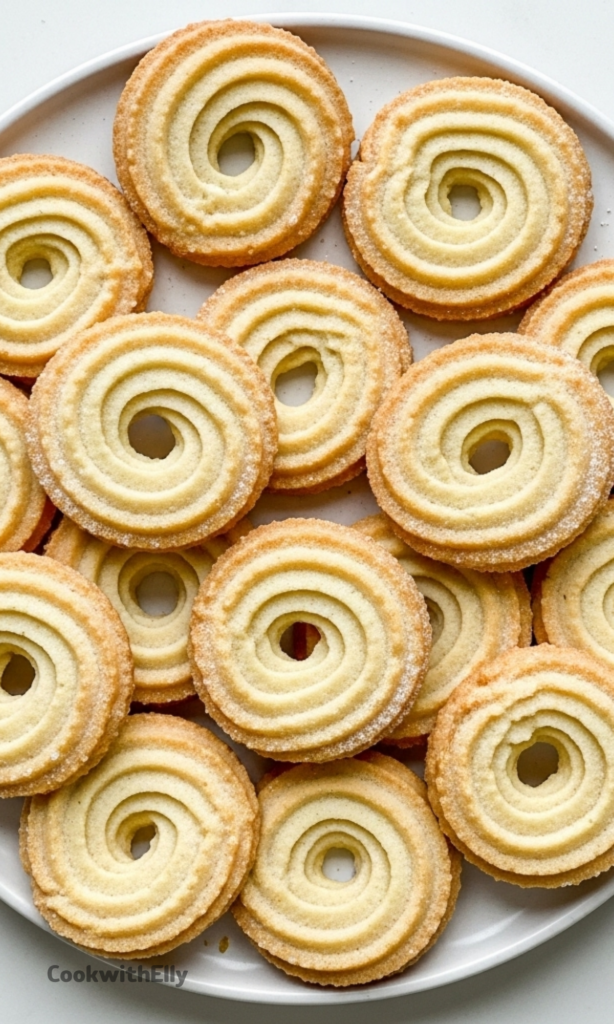
Line your baking sheet with a silicone mat or parchment paper. Never grease the pan directly. Now, pipe your classic rosette shapes, leaving a little space between them.
If the dough fights you, a single tablespoon of warm milk will soften it right up. Then, and this is crucial, slide the entire sheet into the fridge for 30 minutes. This chill firms up the butter, guaranteeing your cookies hold their beautiful shape in the oven.
Step 5: Baking to Perfection
Bake the cookies in a preheated oven at 300°F (150°C) for about 15 minutes. Bake just one tray at a time, on the middle rack.
You’re looking for the faintest golden hint right at the edges. Let them cool on the sheet for 10 minutes before moving them. They’re fragile when hot but crisp up perfectly as they cool.
Why Chilling the Dough is Non-Negotiable
That 30-minute rest in the fridge is your secret weapon against flat, spread-out cookies. It solidifies the butter.
When cold butter hits the oven, it takes longer to melt, giving the cookie structure time to set first. The result? A cookie that’s beautifully defined and perfectly crisp.
Tips
- Divide your dough in half when filling the piping bag. A less-full bag is far easier to control and much kinder on your hands.
- Invest in a silicone baking mat if you bake often. It provides just the right amount of grip to prevent spreading and promotes even, gentle browning on the bottom.
- If you’re unsure about your flour measurement, add an extra 2-3 tablespoons to the dough. A slightly higher flour ratio is the best safeguard against over-spreading.
Beyond the Rosette: Creative Variations
The beauty of this dough is its versatility. Once you’ve mastered the classic shape, a whole world opens up.
You can mix in the zest of a lemon or orange for a citrusy twist. A handful of finely chopped pecans or hazelnuts folded in adds wonderful texture.
Storage and Make-Ahead Magic
These cookies keep wonderfully in an airtight container at room temperature for about a week, if they last that long.
And here’s a fantastic trick: you can pipe the entire batch onto sheets, freeze them solid, then transfer the frozen shapes to a freezer bag. Bake them straight from frozen, adding just a few extra minutes to the baking time. Fresh cookies, on demand.
If Piping Isn’t Your Thing
No piping tips? Absolutely no problem. This dough adapts easily.
Simply roll small portions into balls, place them on your lined sheet, and press down gently with a fork in a criss-cross pattern. Just remember to chill these shaped cookies as well before they go into the oven.
The process is a joy, and the result—a tin filled with delicate, buttery, homemade goodness—is pure contentment.
I hope you love making, and sharing, these little bites of bliss as much as I do.
Danish Butter Cookies Recipe
Description
Light, crisp, and delicate, these classic Danish Butter Cookies are melt-in-your-mouth delicious. Made with just 4 basic ingredients, this super easy bake is perfect for any day—and you probably already have everything you need in your kitchen! Whether you're piping elegant swirls or pressing simple fork marks, these cookies are as beautiful as they are tasty.
Ingredients
Instructions
-
Let the butter sit at room temperature for at least 1 hour until soft but not melted.
-
In a large bowl, cream together the butter, powdered sugar, and vanilla extract using a hand or stand mixer for 5–8 minutes until light in color and fluffy.
-
Sift the flour in three batches (about ⅓ cup or 40g each), gently folding it into the butter mixture until just combined. Do not overmix.
-
Transfer the dough onto a sheet of plastic wrap and roll into a log. Cut a hole in one end and place it into a piping bag fitted with a 1M open star tip.
-
Pipe 1.5-inch swirls onto a baking sheet lined with a silicone mat or parchment paper. (Tip: if dough is too stiff, add 1 tbsp warm milk to soften.)
-
Optional: sprinkle tops lightly with granulated sugar for extra sweetness and crunch.
-
Refrigerate the piped cookies for 30 minutes to firm up and prevent spreading during baking.
-
Preheat oven to 150°C (300°F). Bake on the center rack for 15 minutes, or until edges just begin to turn golden.
-
Let cool on the baking sheet for 10 minutes before transferring to a wire rack or storing in an airtight container.
Nutrition Facts
Servings 24
Serving Size 1 cookie
- Amount Per Serving
- Calories 90kcal
- % Daily Value *
- Total Fat 6gg10%
- Saturated Fat 4gg20%
- Trans Fat 0gg
- Cholesterol 15mgmg5%
- Sodium 45mgmg2%
- Potassium 10mgmg1%
- Total Carbohydrate 9gg3%
- Dietary Fiber 0gg0%
- Sugars 5gg
- Protein 1gg2%
- Calcium 10 mg
- Iron 0.3 mg
* Percent Daily Values are based on a 2,000 calorie diet. Your daily value may be higher or lower depending on your calorie needs.
Note
- Prevent spreading: Always chill piped cookies before baking and use a silicone mat or parchment paper—not greased pans.
- Flour tip: Use a kitchen scale for accuracy. If cookies still spread, add 2–3 extra tablespoons of flour.
- No piping bag? Roll small dough portions into balls and press with a fork. Chill 30 minutes before baking.
- Make ahead: Piped dough freezes well for up to 1 month. Bake from frozen, adding 5 minutes to baking time.
Frequently Asked Questions
Can I use all-purpose flour instead of cake flour?
Yes! All-purpose flour works, but cake flour gives a lighter, more delicate texture typical of classic Danish butter cookies.
Why are my cookies spreading too much?
Common causes: butter too warm, not enough flour, or baking on a greased (not lined) sheet. Always chill the piped dough and measure flour precisely.
How long do these cookies stay fresh?
Stored in an airtight container at room temperature, they stay crisp and fresh for up to 1 week. They also freeze well for up to 2 months.