

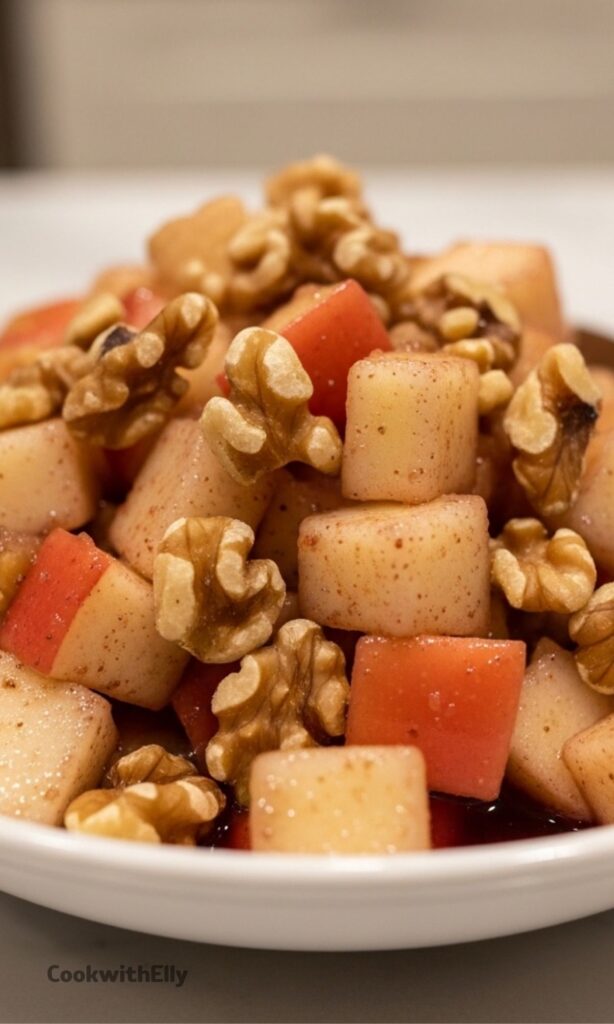

Charoset has always been one of those dishes that quietly holds a lot of meaning, even if it looks simple at first glance. I’ve made this traditional apple walnut version more times than I can count, and every single time, I still sneak a spoonful before it ever reaches the table.
ub-ad-placeholder-119" data-inserter-version="2" data-placement-location="under_page_title">This is the kind of recipe that doesn’t try too hard. It’s fresh, a little sweet, a little textured, and deeply tied to tradition. The apples stay crisp, the walnuts add that gentle crunch, and the wine brings everything together without turning it into a paste.
What I love most is how quickly it comes together. No cooking, no complicated steps. Just a bowl, a knife, and a few ingredients that somehow turn into something meaningful and delicious at the same time.
And yes, texture matters here. This is not meant to be smooth or blended. Each bite should feel like a mix of tiny pieces, not a spread. That’s what makes this Ashkenazi-style charoset so recognizable and comforting.
Ingredients Needed for the Recipe
- Apples (2 cups, diced) – These are the base of the recipe, bringing freshness and a natural sweetness. Choose firm apples so they hold their shape and don’t turn mushy.
- Walnuts (1 cup, chopped) – They add texture and a slight earthiness that balances the sweetness of the apples.
- Cinnamon (1 tablespoon) – This gives warmth and depth, tying all the flavors together without overpowering them.
- Sweet red wine (⅔ cup) – It adds moisture and sweetness while gently binding everything into a spoonable mixture. Grape juice works as a substitute if needed.
A Few Notes on Choosing the Right Apples
Not all apples behave the same once chopped and mixed. I usually go for a mix of sweet and slightly tart varieties, just to keep things balanced without making it too sharp.
Firm apples are key. Softer ones tend to break down too quickly, especially after sitting in the fridge. You want little pieces that stay distinct, not something that melts into the mixture.
I tend to avoid overly tart options in large amounts. They can take over the flavor pretty fast. A mix works best, and honestly, using what you already have in the fridge is usually just fine.
How to make Traditional Apple Walnut Charoset (Ashkenazi Recipe)?
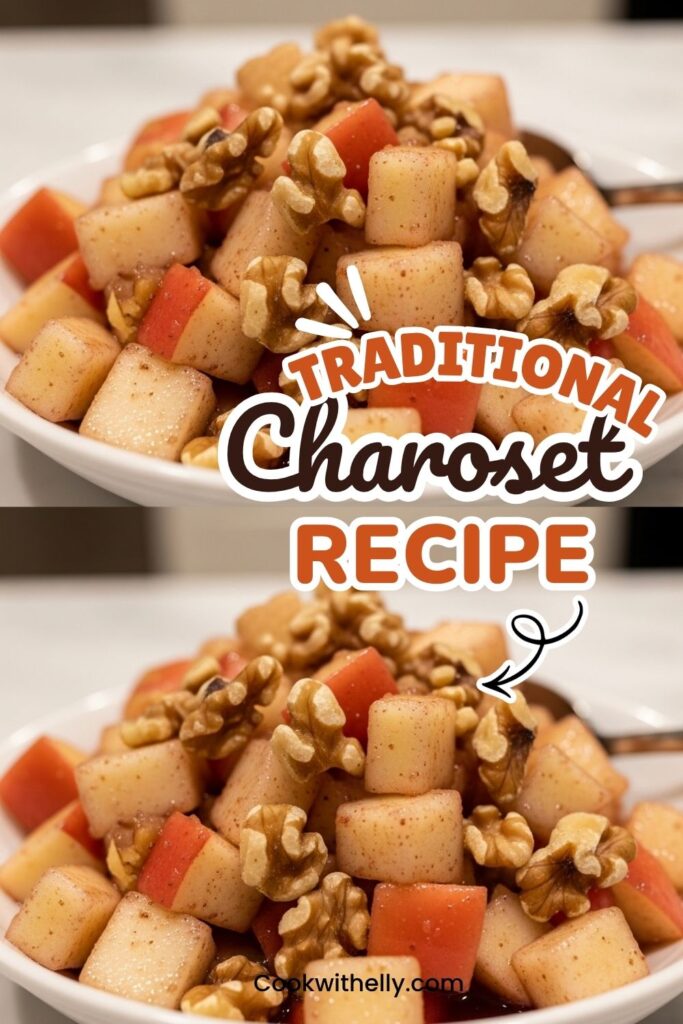
Step 1 – Chop the Apples
Start by dicing the apples into small pieces, slightly larger than a fine dice. They don’t need to be perfectly uniform, and that’s part of the charm.
Place them in a medium bowl as you go. You’ll notice how fresh and crisp they look, and that’s exactly the texture you want to preserve.
Step 2 – Prepare the Walnuts
If your walnuts aren’t already chopped, take a few minutes to cut them down to a similar size as the apples. This helps everything blend evenly without one ingredient overpowering the other.
Add the chopped walnuts to the bowl along with the cinnamon. Give it a gentle toss so the spice coats everything lightly.
Step 3 – Add the Wine
Pour in the sweet red wine gradually, stirring as you go. You’re not trying to soak the mixture, just lightly coat it so everything comes together.
It should look moist and spoonable, not wet. If it starts looking too liquidy, pause and let it settle before adding more.
Step 4 – Chill and Rest
Cover the bowl and place it in the fridge for at least an hour. This resting time lets the flavors blend and deepen without losing texture.
If you have the time, letting it sit overnight makes it even better. Just give it a quick stir before serving.
Serving Ideas for Seder and Beyond
Traditionally, charoset is eaten during the seder with matzo and bitter herbs, often as part of a layered bite. The contrast of flavors and textures is what makes it so memorable.
Outside of the seder, it’s surprisingly versatile. I like spreading it on matzo crackers for a quick snack, or even adding a spoonful to a simple sandwich for a bit of sweetness.
Sometimes, I don’t overthink it at all. A spoon straight from the bowl works just fine, especially when no one is looking. It’s one of those foods that doesn’t need an excuse.
Make Ahead and Storage
This is one of those recipes that actually improves with a little time. Making it ahead takes pressure off when you’re juggling other dishes, and it gives the flavors time to settle in.
Stored in an airtight container in the fridge, it keeps well for up to a week. I usually make a larger batch and just portion it out as needed.
You might notice some liquid collecting at the bottom after a day or two. That’s completely normal. Just stir it before serving or add a handful of fresh chopped apples to bring back the balance.
Tips
- Use a mix of apple varieties for a more balanced flavor.
- Chop everything by hand instead of using a food processor to keep the texture right.
- Add the wine slowly to avoid making the mixture too wet.
- Let it rest in the fridge for at least an hour before serving.
- Stir before serving to redistribute any natural juices.
- If it gets too soft, mix in a few freshly chopped apples.
- For a nut-free version, replace walnuts with chopped dates or raisins.
- Keep the pieces slightly uneven for a more natural, homemade feel.
Traditional Charoset Recipe (Ashkenazi Recipe)
Description
This classic Ashkenazi charoset brings together finely chopped apples, walnuts, cinnamon, and sweet red wine for a fresh, lightly sweet Passover staple. With its intentionally chunky texture—apples that hold their shape and walnuts that add crunch—this charoset honors tradition while mixing up in just 10 minutes. Perfect for your seder plate or enjoyed year-round as a sweet, symbolic spread.
ingredients
Instructions
-
Chop apples into small pieces (a bit bigger than diced) and place in a medium glass bowl. Pieces do not need to be uniformly sized.Use firm apples that will hold their shape
-
If walnuts are not already chopped, chop them to about the same size as the apples. Add chopped walnuts and cinnamon to the bowl with apples. Toss until well combined.For nut-free version, omit walnuts or substitute with chopped dates or golden raisins
-
Gradually add sweet red wine to the apple mixture, stirring until lightly coated and spoonable. Cover and refrigerate for at least 1 hour or overnight.Stir before serving; apples may release juice as they sit
Nutrition Facts
Servings 8
Serving Size 1/8 of recipe
- Amount Per Serving
- Calories 143kcal
- % Daily Value *
- Total Fat 9.6gg15%
- Saturated Fat 0.9gg5%
- Trans Fat 0gg
- Cholesterol 0mgmg0%
- Sodium 1mgmg1%
- Potassium 104mgmg3%
- Total Carbohydrate 12gg4%
- Dietary Fiber 2.4gg10%
- Sugars 8gg
- Protein 2.4gg5%
- Calcium 10mg mg
- Iron 0.6mg mg
* Percent Daily Values are based on a 2,000 calorie diet. Your daily value may be higher or lower depending on your calorie needs.
Note
- Texture tip: Keep apples chunky and avoid overmixing to maintain the traditional Ashkenazi texture—this is not meant to be a smooth paste.
- Make ahead: Charoset tastes even better after resting overnight; flavors meld and deepen in the fridge.
- Wine swap: Prefer non-alcoholic? Purple grape juice works beautifully as a substitute for sweet red wine.
- Nut-free option: Simply omit walnuts or swap with chopped dates or golden raisins for added texture.
- Serving tip: Use a slotted spoon to serve, as apples may release juice while stored.
Frequently Asked Questions
What is charoset?
Charoset is a symbolic food served on the Passover seder plate. Traditionally made from chopped apples, nuts, wine, and spices, it represents the mortar used by the Israelites when they were enslaved in Egypt. During the seder, it's eaten with matzo and bitter herbs as part of retelling the Exodus story.
How long does charoset last?
Stored in an airtight container in the refrigerator, charoset will last up to a week. Many families make a double or triple batch before seders and enjoy leftovers throughout the 8-day Passover holiday.
What's the difference between Ashkenazi and Sephardic charoset?
Ashkenazi charoset is fresh and chunky, made primarily with apples and nuts. Sephardic charoset is often blended and includes dried fruits like dates and figs, creating a thicker, paste-like texture that more closely resembles mortar.
Can I make charoset ahead of time?
Absolutely! In fact, charoset is even better after resting overnight in the fridge. The flavors meld together beautifully, and the texture becomes perfectly spoonable.