

 View Gallery
1 photo
View Gallery
1 photo
Swiss cheese fondue is one of those dishes that feels like a warm hug in food form. It’s cozy, a little indulgent, and somehow both simple and special at the same time. I grew up with fondue being a big deal—Christmas in Aspen, New Year’s Eve at a mountain restaurant, and lots of laughter around a bubbling pot.
Even if you’ve never made it at home, it’s honestly not as tricky as it looks. You don’t need a fancy fondue set, and you don’t need to be a chef. You just need good cheese, a little patience, and a hungry crowd.
What I love most about Swiss cheese fondue?
Is that it’s a real communal meal. It was born as a peasant dish—bread and cheese melted together to make stale bread edible again, and it became a staple in the Alpine regions where winters were long and supplies were limited.
Over time, it evolved into the cozy, celebratory meal we know today. And yes, it’s still absolutely the kind of thing you want on a cold night by the fire, or for Valentine’s Day, or after a long day on the slopes. The whole experience feels like a mini tradition.
There’s a little debate about whether fondue is Swiss or French, but honestly, both countries have a claim. The first records of fondue show up in French and Belgian cookbooks, but the cheese was Swiss. So the Swiss can absolutely call it their own, especially since it’s such a strong part of their culinary culture.
The Italian version, fonduta, is similar but uses different cheeses and eggs, which gives it a different texture and flavor. But if you want classic, traditional Swiss cheese fondue, you’re looking at Gruyère and a few key ingredients.
Ingredients Needed for the Recipe
- Gruyère cheese (16 ounces) – The star of the show; gives the fondue its authentic, nutty flavor.
- Cornstarch (1½ tablespoons) – Helps stabilize the cheese and keeps it from separating.
- Garlic clove (1) – Rubbed inside the pot for a gentle, aromatic base.
- Dry white wine (16 ounces) – Adds acidity and helps the cheese melt smoothly.
- Lemon juice (1 tablespoon) – Boosts acidity and prevents the fondue from getting stringy.
- Kirsch or brandy (3 tablespoons) – Adds depth and a slightly fruity kick.
- Nutmeg, white pepper, paprika (pinch each) – Seasonings that brighten the flavor without overpowering it.
- French bread loaf – The classic dippable item that makes fondue feel like a meal.
How to make Swiss Cheese Fondue?

Step 1 – Prepare the Cheese
First, shred or cube the Gruyère cheese. This is one of those steps that makes a big difference—small pieces melt more evenly and prevent clumping. Toss the cheese with the cornstarch so every piece is lightly coated.
This might seem unnecessary, but it’s what helps the fondue stay smooth and glossy rather than grainy or separated. If you’re making fondue for a crowd, this is the part where you’ll feel like you’re doing something fancy, but really you’re just being smart.
Step 2 – Season the Pot
Take a garlic clove and rub it all around the inside of your fondue pot (or a heavy, oven-safe pot if you don’t have a fondue set).
The garlic flavor should be subtle, not overpowering, and rubbing it into the pot gives the fondue a gentle, aromatic base. It’s a small step, but it’s one of those details that really adds to the overall experience.
Step 3 – Heat the Wine
Pour 1½ cups of the dry white wine into the pot and set it over moderate heat. Keep an eye on it—when air bubbles start rising to the surface, it’s time to add the lemon juice. You want the wine hot, but not boiling. The acidity from the wine and lemon helps the cheese melt smoothly, and it’s the key to getting that silky texture. If the fondue gets too thick later, you can always use the reserved half cup of wine to thin it out.
Step 4 – Add the Cheese
Now comes the fun part. Add the shredded cheese by handfuls, stirring constantly with a wooden spoon. This is where patience matters. Don’t rush it. Keep stirring until each handful melts before adding more.
The goal is a creamy, smooth mixture without lumps. The cheese will slowly soften and blend into the wine, creating that classic fondue consistency. If you notice it thickening too quickly, just lower the heat a bit and keep stirring.
Step 5 – Flavor It
Once the cheese is melted, add the kirsch or brandy along with the pinch of nutmeg, white pepper, and paprika. Stir until everything is well combined and fragrant. The spices should be subtle, like a gentle background note, not a strong punch.
The kirsch adds a slight fruitiness and warmth, and it’s a traditional element that makes the fondue feel truly Swiss. If you’re skipping alcohol, a splash of extra wine can work, but the kirsch really does make it taste more authentic.
Step 6 – Serve and Keep Warm
Keep the fondue bubbling hot over the burner, lowering the heat as needed so it doesn’t burn. If it starts to thicken too much, add a splash of the reserved white wine. The key is to keep it smooth and creamy throughout the meal.
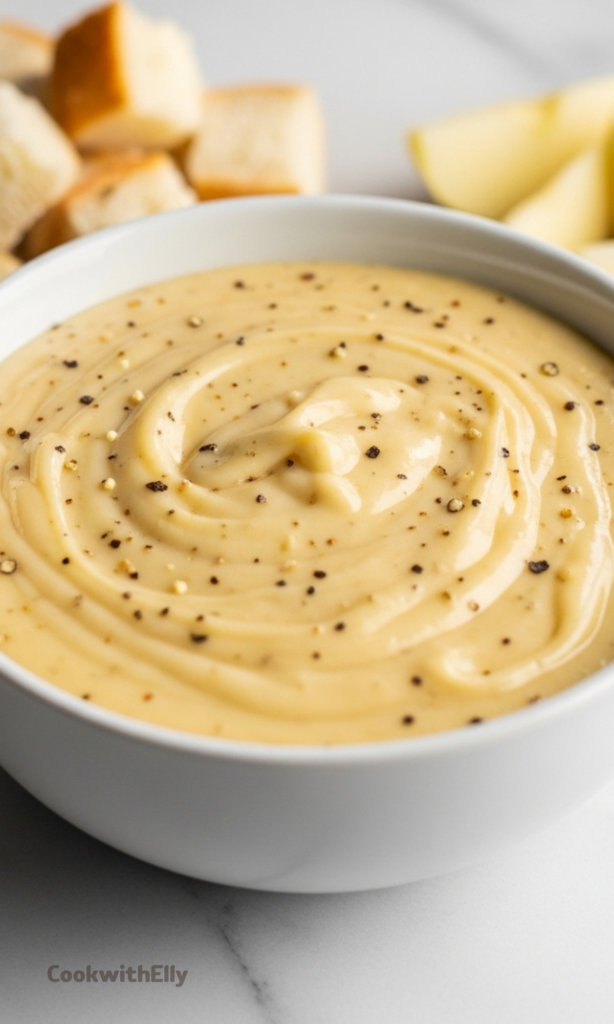
Serve immediately with cubes of crusty French or Italian bread. The fondue should be hot enough to cling to the bread without sliding off. That’s the sweet spot—rich, stretchy, and comforting.
Tips
- Use a heavy pot or double boiler if you don’t have a fondue set, to keep the heat steady.
- Shred the cheese fresh—pre-shredded cheese can contain additives that prevent smooth melting.
- Don’t let the wine boil; you want it hot and bubbly, not aggressively boiling.
- If the fondue gets grainy, add a small splash of wine and whisk gently to smooth it out.
- Keep the heat low once the cheese is melted to avoid burning the bottom.
- Serve with warm bread and warm potatoes—cold dippers cool the fondue too fast.
- If you want a milder flavor, use a mix of Gruyère and Emmental instead of all Gruyère.
What to Serve with Swiss Cheese Fondue
Traditional Swiss fondue is meant to be a complete meal, so you don’t need a ton of extras. But it’s nice to have a few classic sides that complement the richness.
Cubed French bread is the obvious choice, and it’s perfect for dipping because it soaks up the cheese without falling apart. I also love serving boiled baby potatoes, because they’re hearty and feel like a real Alpine tradition.
For something tangy, add pickled onions or cornichons. They cut through the richness in a really satisfying way. Some dried meats like speck or prosciutto are also great—they add salt and texture without competing with the cheese.
Cherry tomatoes or apple slices are nice too, because they bring freshness and a little sweetness. It’s not just about the cheese; it’s about the balance.
Variations and Substitutions
If you can’t find Gruyère, don’t worry. Emmental is a great substitute and is actually another traditional Swiss cheese. It’s milder and has a slightly different texture, but it still melts beautifully.
You can also use French Comté or Italian Fontina if you want a slightly different flavor profile. In a pinch, a domestic Swiss-style cheese works, though it won’t have the same depth as the authentic ones.
For those who love a strong, classic flavor, use well-aged Gruyère. It’s richer and more aromatic. If the taste feels too intense, mix Gruyère with Emmental to soften it.
That’s what I do when I’m serving a crowd with mixed tastes. It keeps the fondue traditional but makes it more universally enjoyable. You can also add a touch more wine or lemon if you want it tangier.
Storage and Reheating
If you happen to have leftovers (and I’m not judging if you do), store the fondue in an airtight container in the refrigerator. When you’re ready to reheat, do it gently over low heat, stirring constantly. Add a splash of wine to loosen it up if needed.
Fondue will thicken as it cools, so reheating it slowly is key. It’s still delicious the next day, just not quite as silky as the first serving.
And if you’re planning a fondue night, here’s a small secret: do the prep work in advance. Shred the cheese, prep the dippers, and set everything out before you start heating the pot. Once the fondue is ready, it moves fast.
The best part is how it brings everyone together—people chatting, dipping, laughing, and savoring each bite. It’s not just a meal. It’s a moment.
So if you’ve been wanting to try Swiss cheese fondue at home, go for it. It’s one of those dishes that feels fancy but is actually incredibly approachable. And once you’ve done it once, you’ll find yourself looking for any excuse to do it again.
Classic Swiss Cheese Fondue Recipe
Description
Indulge in the rich, creamy comfort of authentic Swiss cheese fondue—a communal dish steeped in Alpine tradition. Made with Gruyère cheese, dry white wine, and a hint of kirsch, this fondue is perfect for cozy nights, holiday gatherings, or après-ski celebrations. Serve it with crusty bread, boiled potatoes, pickles, and apples for a complete Swiss experience.
ingredients
Instructions
-
Toss the grated or cubed Gruyère cheese with cornstarch until evenly coated.
-
Rub the inside of a fondue pot or heavy-bottomed saucepan with the peeled garlic clove.
-
Pour 12 ounces (1½ cups) of the white wine into the pot and heat over medium heat until small bubbles begin to rise (do not boil). Add the lemon juice.
-
Add the cheese a handful at a time, stirring constantly with a wooden spoon in a figure-eight motion until fully melted and smooth.
-
Stir in the kirsch or brandy, nutmeg, white pepper, and paprika. Continue stirring until well blended and creamy.
-
Transfer to a fondue pot or keep warm over low heat. If the mixture thickens too much during serving, stir in reserved wine a tablespoon at a time.
-
Serve immediately with French bread cubes and traditional accompaniments like boiled potatoes, cornichons, pickled onions, apple slices, and cherry tomatoes.
Nutrition Facts
Servings 4
Serving Size 1 serving (approx. 1 cup with bread)
- Amount Per Serving
- Calories 480kcal
- % Daily Value *
- Total Fat 30g47%
- Saturated Fat 18g90%
- Cholesterol 90mg30%
- Sodium 620mg26%
- Potassium 180mg6%
- Total Carbohydrate 18g6%
- Dietary Fiber 1g4%
- Sugars 3g
- Protein 28g57%
- Calcium 750 mg
- Iron 1 mg
* Percent Daily Values are based on a 2,000 calorie diet. Your daily value may be higher or lower depending on your calorie needs.
Note
- Cheese Tip: For best results, use authentic AOP Gruyère. Emmental can be substituted or blended for a milder flavor.
- No fondue pot? Use a heavy saucepan or slow cooker on low heat—just keep it warm and stir occasionally.
- Wine substitute: If avoiding alcohol, use low-sodium vegetable broth mixed with 1 tsp lemon juice and 1 tsp white vinegar.
- Leftovers: Reheat gently on the stove with a splash of wine or milk; do not microwave.

Frequently Asked Questions
Can I make Swiss fondue without alcohol?
Yes! Replace the wine with an equal amount of low-sodium vegetable broth and add 1 tablespoon of lemon juice and 1 teaspoon of white vinegar to mimic the acidity needed for smooth melting.
Why did my fondue become grainy or separate?
This usually happens if the heat is too high or the cheese is added too quickly. Always melt cheese slowly over medium-low heat and stir constantly. Cornstarch helps stabilize the emulsion.
What should I serve with Swiss cheese fondue?
Classic pairings include cubed crusty bread, boiled baby potatoes, cornichons, pickled onions, apple slices, cherry tomatoes, and cured meats like speck or prosciutto.