

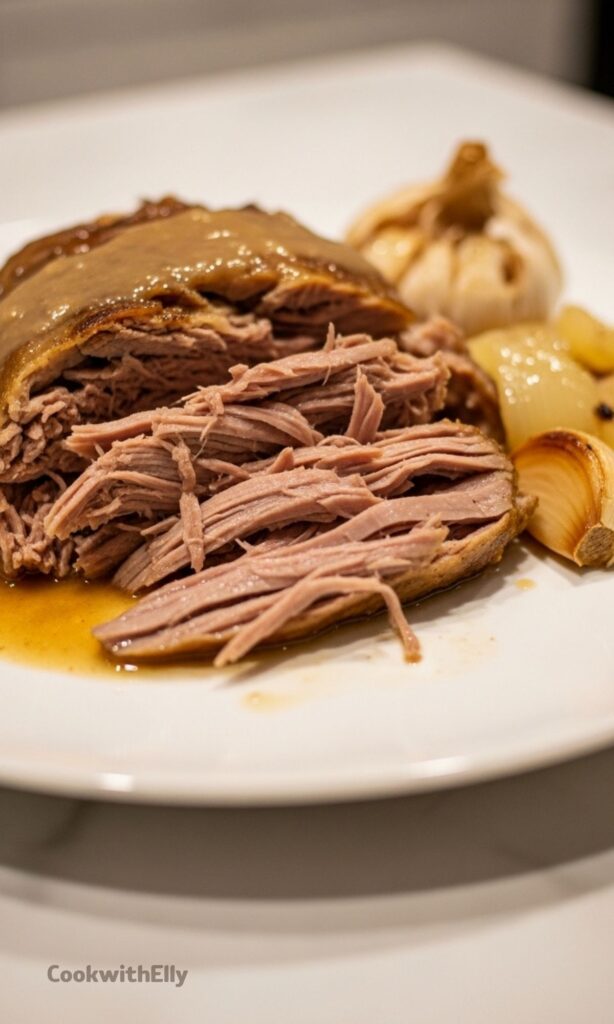

There’s something quietly satisfying about a dish that asks very little of you and gives so much back. This slow roasted leg of lamb is exactly that kind of meal. I’ve made it on lazy weekends and busy weekdays alike, and it never feels like a chore.
What I love most is how forgiving it is. Once everything is tucked into the pan and sealed, the oven does the real work. You just let time do its thing, and somehow, hours later, the kitchen smells incredible.
The garlic might raise eyebrows at first. Thirty cloves sounds like a bold move, but trust me, it softens into something mellow and almost sweet. It blends into the sauce in a way that feels rich but never overwhelming.
And that sauce, it’s the kind you don’t want to waste a single drop of. Thick, silky, and full of deep flavor, it clings to the lamb in the best way possible.
Ingredients Needed for the Recipe
- 1.5kg bone-in leg of lamb – the bone helps keep the meat juicy and adds depth to the sauce
- Sea salt – brings out the natural flavor of the lamb
- Black pepper – adds gentle warmth and balance
- 30 cloves garlic, peeled – turns soft, sweet, and forms the base of the sauce
- 2 red onions, quartered – add sweetness and body to the braising liquid
- 8 sprigs rosemary – gives a classic earthy aroma
- 4 sprigs thyme – adds subtle herbal depth
- 3 fresh bay leaves – rounds out the overall flavor
- 750ml beef stock – creates a rich braising liquid and deepens the sauce
Before You Start Cooking
I always take a few minutes to get everything ready before turning on the oven. It makes the whole process feel smoother, especially when dealing with a large cut like lamb.
Peeling garlic can feel a bit tedious, I won’t lie. If I’m in a hurry, I blanch the cloves quickly and the skins slip right off. It’s a small step that saves time and a little patience.
How to make Slow Roasted Leg of Lamb?
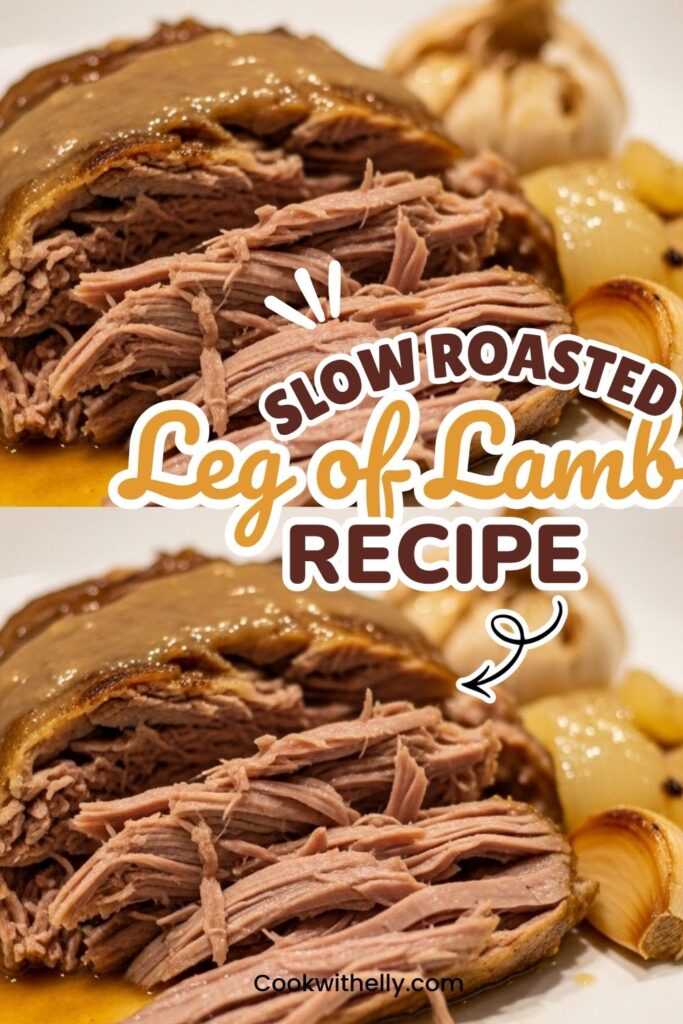
Step 1 – Prepare the lamb and pan
Start by preheating your oven to 150°C. While that warms up, season the lamb generously with salt on all sides. Don’t rush this part, it sets the base flavor.
Scatter the garlic cloves across the bottom of a roasting pan and place the lamb right on top. It might feel like a lot of garlic, but it settles down beautifully as it cooks.
Step 2 – Build the flavor base
Add the onions around the lamb, followed by rosemary, thyme, and bay leaves. Sprinkle some black pepper over everything to tie it all together.
Pour in the beef stock gently, letting it pool around the lamb. This is what keeps everything moist and slowly transforms into that rich sauce later on.
Step 3 – Seal and slow roast
Cover the lamb with a layer of baking paper, then seal the pan tightly with foil. I press the edges down carefully so no steam escapes during cooking.
Slide it into the oven and let it cook for four hours. No peeking, no stirring, just let it be. This is where the magic happens quietly.
Step 4 – Finish with color
Once the time is up, increase the oven temperature to 200°C. Remove the foil and let the lamb roast uncovered for another 20 minutes.
This step gives the outside a bit of color and texture. It’s a small change, but it makes the final dish feel complete.
Step 5 – Rest and prepare the sauce
Transfer the lamb to a serving dish and keep it warm. Meanwhile, remove the herbs from the pan and pour the liquid, garlic, and onions into a jug.
Let it sit for about 10 minutes so the fat rises to the top. Skim most of it off, then blend the rest into a smooth, glossy sauce.
Step 6 – Serve and enjoy
Pour the sauce over the lamb or serve it on the side. I usually pull the meat apart with forks, it’s so tender it barely needs effort.
Each bite feels rich, comforting, and deeply satisfying. It’s the kind of meal that slows everything down for a moment.
Serving Ideas
I often serve this lamb with something simple on the side. Creamy mashed potatoes work beautifully, soaking up all that sauce without stealing attention.
Sometimes I go lighter with roasted vegetables or even a crisp salad. It balances the richness and makes the plate feel complete without much effort.
Tips
- Seal the foil tightly – this keeps the steam in and prevents the lamb from drying out
- Don’t open the oven during cooking – it interrupts the slow braising process
- Let the fat settle before blending the sauce – it helps avoid a greasy texture
- Leave a little fat in the sauce – it adds richness and helps it coat the meat
- If the lamb isn’t tender enough, give it another 20-30 minutes covered
- Use good quality stock – it makes a noticeable difference in the final flavor
Storage and Leftovers
If you happen to have leftovers, they store really well. I usually pull the meat off the bone and keep it in the sauce so it stays moist.
In the fridge, it holds up for about three days. When reheating, I warm it gently with a splash of water to loosen the sauce.
Freezing works too, which I find handy. Just freeze the lamb with the sauce together, and it comes back to life nicely when reheated slowly.
Slow Roasted Leg of Lamb Recipe
Description
This is one of the most forgiving dishes you can make in the oven. A bone-in leg of lamb goes in at 150°C, sealed tightly under foil, and sits for four hours while the collagen slowly breaks down and the meat becomes tender enough to pull apart with forks.
ingredients
Instructions
-
Prep the lamb
Preheat the oven to 150°C fan forced (300°F). Season the lamb with salt on all sides. Place the garlic in the base of a large heavy-based roasting pan, then top with the lamb. -
Place the onions, rosemary, thyme and bay leaves around the lamb, season with some black pepper, then pour over the beef stock.
-
Place a piece of baking paper over the top of the lamb, then cover the pan tightly with foil, crimping the edges to seal well.Make sure the foil is sealed properly so steam doesn't escape during cooking.
-
Roast the lamb
Roast the lamb for 4 hours. Do not lift the foil during this time. -
Increase the oven temperature to 200°C fan forced (390°F). Remove the foil and baking paper from the pan and roast for a further 20 minutes, until the lamb skin begins to brown and crispen.
-
Transfer the lamb to a serving dish and keep warm.
-
Make pan sauce and serve
Remove all the hard herbs from the pan, then transfer the pan sauce, with the garlic and onions, to a jug and allow the fat to settle to the top for at least 10 minutes.Letting the fat settle ensures you can skim it off cleanly. -
Skim off the fat, then puree the remaining sauce with a stick (immersion) blender until smooth.A small amount of fat left in the sauce adds richness.
-
Pour the sauce over the lamb and pull the meat apart from the bone with carving forks to serve.
Nutrition Facts
Servings 5
Serving Size 1 serving
- Amount Per Serving
- Calories 520kcal
- % Daily Value *
- Total Fat 28g44%
- Saturated Fat 12g60%
- Trans Fat 0.5g
- Cholesterol 145mg49%
- Sodium 680mg29%
- Potassium 710mg21%
- Total Carbohydrate 12g4%
- Dietary Fiber 2g8%
- Sugars 5g
- Protein 42g84%
- Calcium 6 mg
- Iron 25 mg
* Percent Daily Values are based on a 2,000 calorie diet. Your daily value may be higher or lower depending on your calorie needs.
Note
- Seal the pan tightly before it goes in the oven: Make sure the foil is sealed properly around your pan before it goes in the oven. If steam escapes during the four hours, the braising liquid evaporates, the lamb risks drying out and the garlic can scorch on the base of the pan.
- Let the fat settle before you make the sauce: After transferring the pan juices to a jug, give them at least 10 minutes to settle before skimming. A fat separator jug makes this step easy. Don’t discard every last drop of fat though. A small amount left in the sauce adds richness and helps it coat the lamb properly.
- Storage: Pull any leftover lamb off the bone and store it in the sauce in an airtight container in the fridge for up to 3 days. The lamb also freezes well for up to 3 months. Freeze the meat and sauce together so nothing dries out.
Frequently Asked Questions
Can I make this ahead of time?
Yes. Slow roast the lamb as per the recipe, then leave it covered and rested at room temperature for up to 2 hours, or in a cooler (esky) for longer. When you’re ready to serve, remove the foil, return it to a 200°C oven for 20 minutes to develop colour and heat through. Make the sauce while it’s in the oven for the final blast.
How do I know when the lamb is done?
With slow-roasted lamb you’re not chasing a specific internal temperature the way you would with a medium-rare leg. You’re waiting for the collagen to fully break down, which makes the meat pull-apart tender. After 4 hours at 150°C it should be there. Push a carving fork into the thickest part: if it slides in easily and the meat starts to yield, it’s ready. If it resists, cover it back up and give it another 30 minutes.
Can I use lamb shoulder instead of leg?
Absolutely, shoulder is a great cut for slow roasting. It has more intramuscular fat and connective tissue than the leg, which means it becomes even more tender and flavoursome after a long braise. Use the same temperature, the same cooking time and the same sauce method. A bone-in shoulder of a similar weight will give you an outstanding result.