

 View Gallery
1 photo
View Gallery
1 photo
There’s a quiet sort of magic in a shortbread cookie, a treat built from just butter, flour, and sugar.
It’s the alchemy of simplicity, transforming pantry staples into something that feels both rustic and incredibly elegant.
A Crumbly Question Answered
You might wonder, why are they even called ‘shortbread’ in the first place?
That term “short” has nothing to do with height, and everything to do with texture—it’s an old culinary word describing that perfectly tender, melt-away crumb we all love.
Ingredients Needed for the Recipe
Gathering your ingredients is the first simple step. Here’s what you’ll need, and why each one matters:
- Salted Butter, softened: The absolute star of the show. Use the best you can afford, as its flavor sings through. Softening it is crucial for creating the right dough texture.
- Icing Sugar (Powdered Sugar): This fine sugar dissolves seamlessly into the butter, contributing to that famously smooth, delicate melt-in-your-mouth quality granulated sugar can’t quite achieve.
- Plain / All-Purpose Flour: The sturdy backbone that gives the cookie its structure. It cradles all that butter, creating the foundation for the crumb.
The Great Flour Debate: To Rice or Not to Rice?
Some traditional recipes swear by using a bit of rice flour alongside regular flour.
It can make the texture a whisper more tender, but honestly, with the right method, all-purpose flour alone creates a shortbread that’s exquisitely delicate. You really don’t need it.
How to make Shortbread Cookies?
The process is a lesson in gentle handling. Rushing or overworking is the true enemy of a perfect shortbread.
Step 1 – Prep and Cream
Preheat your oven to 160°C (325°F) and line a rectangular pan with baking paper, letting it overhang the sides for easy removal later.
In a bowl, beat your softened butter until it’s perfectly smooth and creamy. This is where that luxurious texture begins.
Step 2 – Incorporate the Sugar
Add the icing sugar to your creamy butter and beat them together until they’re fully combined.
The mixture will become pale and fluffy, a sign you’re on the right track.
Step 3 – Bring in the Flour
Add about half of the flour to the butter mixture and beat until it mostly disappears, looking a bit like damp sand.
Then, add the remaining flour and mix again. The dough will seem quite crumbly at this stage—that’s exactly what you want.
Step 4 – Form the Dough
Use your hands to gently press the crumbly mixture together into a smooth ball.
The key word here is *press*, not knead. You’re just encouraging it to cooperate, not developing gluten.
Step 5 – Press into the Pan
Press the ball of dough into your prepared pan, nudging it evenly into the corners.
For a beautifully smooth top, you can roll a glass or small rolling pin over the surface, but don’t press down too hard.
Step 6 – The First Bake
Bake the pressed dough for about 20 minutes, just until the edges take on the faintest golden hue.
The center should still look pale. This partial bake sets the stage for clean cutting.
Step 7 – Cut and Prick
Pull the pan from the oven and, working quickly, slice your shortbread into fingers or squares.
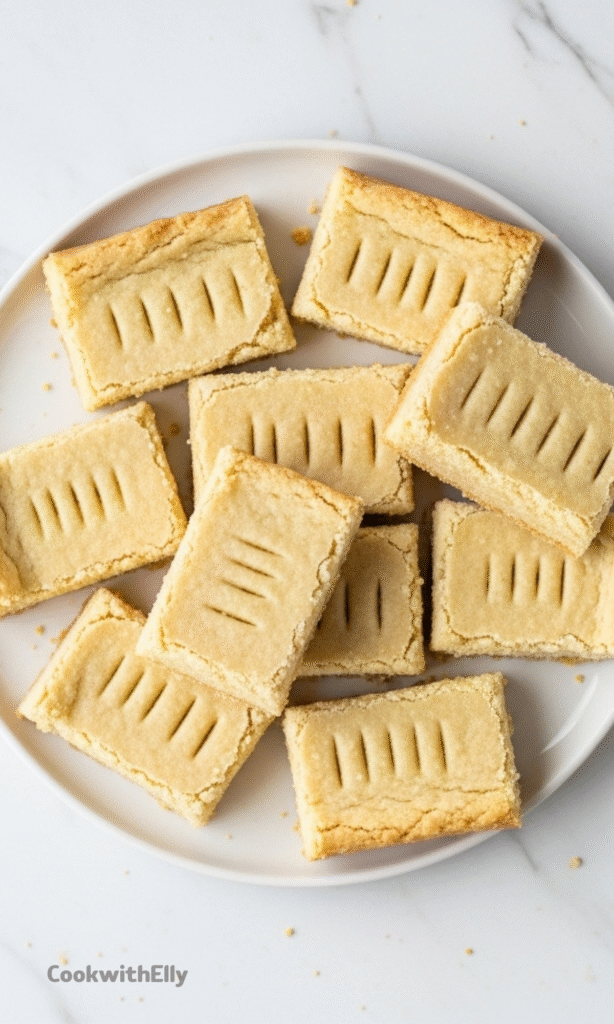
Now is also the time to prick the tops all over with a fork, that classic shortbread signature.
Step 8 – Finish and Cool Slowly
Return the pan to the oven for another 8 minutes, until the surface is a uniform light gold.
Then, turn the oven off, crack the door open, and let the shortbread cool inside for a full hour. This slow finish is the secret to perfect texture.
Step 9 – The Final Reveal
After its oven bath, lift the whole slab out using the paper overhang.
Let the cookies cool completely on a rack before serving. The anticipation makes that first bite even better.
Why Your Method Matters
You can make shortbread by rubbing cold butter into flour with your fingertips, or by pulsing everything in a food processor.
Those methods are fast and yield a very crumbly cookie, but the creamed butter method we use here gives you that crumb *and* a beautifully smooth, classic top.
Tips
- For the cleanest cuts and to keep your fork holes visible, that initial partial bake before slicing is non-negotiable. Trying to cut fully baked shortbread often leads to cracks.
- Resist the urge to use granulated sugar. Icing sugar is finer, leading to a more tender bite and a smoother dough that holds together better.
- Letting the shortbread cool down slowly in the turned-off oven is a genius trick. It finishes the cooking gently, ensuring an even, pale color without any over-browned edges.
A Homemade Triumph
Store-bought shortbread has its place, it’s true. But a homemade batch is a different creature entirely.
The butter flavor is richer, more pronounced. The crumb is softer, more delicate, literally melting away the moment it touches your tongue.
Simple, Inspired Variations
Once you’ve mastered the classic, a world of subtle tweaks opens up. Try rubbing the zest of a lemon or orange into the sugar before adding it to the butter.
You could fold a handful of very finely chopped rosemary or lavender into the flour for a fragrant, sophisticated twist. For a touch of texture, press the top of the dough with demerara sugar before the first bake.
Storage & The Gift of Shortbread
Once completely cool, store your shortbread in an airtight container at room temperature. They keep beautifully for a good week, if they last that long.
This is why they make such a cherished gift. Tucked into a simple box or tin, a batch of homemade shortbread speaks of care and timeless comfort, no fancy packaging required.
It’s a little piece of edible peace, and honestly, we could all use more of that. So go on, your kitchen is waiting.
Shortbread Cookies Recipe
Description
I’m a firm believer that shortbread cookies should be sinfully buttery and delectably tender—and this shortbread recipe delivers exactly that. With just three simple ingredients—butter, flour, and icing sugar—you’ll create melt-in-your-mouth cookies with a delicate crumbly texture and rich, nostalgic flavor. Perfect for afternoon tea or as an elegant homemade gift!
ingredients
Instructions
-
Preheat oven to 160°C (325°F) for standard ovens or 150°C (300°F) for fan/convection ovens.
-
Butter and line a 31.5 x 23.5 cm (9 x 13 inch) baking pan with parchment paper, leaving overhang on two sides for easy removal.
-
In a large bowl, beat softened butter until smooth. Add icing sugar and beat until fully combined.
-
Add half the flour and mix until it resembles wet sand. Add the remaining flour and mix until mostly combined. Use your hands to gently press the dough into a smooth ball—do not over-knead.
-
Press the dough into the prepared pan. For a smoother surface, lightly roll over it with a small rolling pin or glass (don’t press too hard—this keeps the texture tender).
-
Bake for 20 minutes, or until the edges are very lightly golden and the center is still pale.
-
Remove from oven. Immediately cut into desired shapes (e.g., 8 x 3 bars) and prick all over with a fork if desired.
-
Return to oven and bake for another 8 minutes, or until the surface is lightly golden (not browned).
-
Turn off the oven, crack the door slightly, and let the shortbread cool inside for at least 1 hour. This ensures it finishes cooking without browning.
-
Remove from oven, lift out using parchment overhang, and cool completely on a wire rack. Serve with tea or store in an airtight container.
Nutrition Facts
Servings 24
Serving Size 1 cookie
- Amount Per Serving
- Calories 120kcal
- % Daily Value *
- Total Fat 8g13%
- Saturated Fat 5g25%
- Cholesterol 20mg7%
- Sodium 95mg4%
- Potassium 15mg1%
- Total Carbohydrate 12g4%
- Sugars 4g
- Protein 1g2%
- Calcium 10 mg
- Iron 0.3 mg
* Percent Daily Values are based on a 2,000 calorie diet. Your daily value may be higher or lower depending on your calorie needs.
Note
- Pro tip: Partially bake before slicing and pricking—this ensures clean cuts and visible fork marks after baking.
- Rice flour? Not needed! While traditional recipes sometimes call for rice flour or cornstarch, this version achieves perfect tenderness with all-purpose flour alone.
- Storage: Keep in an airtight container for up to 2 weeks. Freezes beautifully for up to 3 months.
- Cooling in the oven is key—this prevents over-browning and preserves the pale golden color classic to shortbread.

Frequently Asked Questions
Can I use unsalted butter?
Yes! Use 250g unsalted butter and add ¼ tsp salt to the dough for balanced flavor.
Why do you bake the shortbread twice?
The first bake sets the structure so you can slice and prick cleanly. The second finishes baking while keeping the texture tender and color pale—just as authentic shortbread should be.