

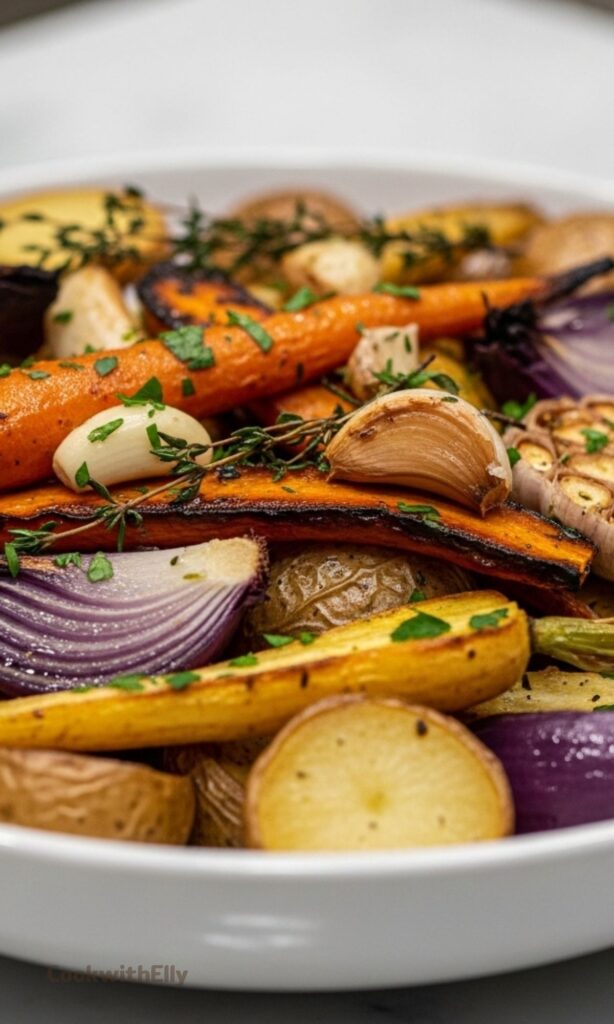

Roasted vegetables are one of those things that seem almost too simple to talk about, yet they quietly transform everyday meals. A tray of caramelised, golden-edged vegetables can turn even the most basic dinner into something comforting and satisfying.
I’ve made them countless times, sometimes carefully planned, other times just tossing together whatever was left in the fridge. There’s a rhythm to it that becomes second nature, but a few small choices can really change the outcome.
It’s not just about tossing vegetables in oil and hoping for the best. The way you cut them, how you layer flavors, even the oven temperature – it all matters more than you’d think.
Once you get it right, though, it sticks. You’ll find yourself making roasted vegetables without thinking twice, and they’ll turn out beautifully every single time.
Ingredients Needed for the Recipe
- Small potatoes – the base of the dish, they turn creamy inside and crisp outside
- Carrots – add natural sweetness and a slight bite after roasting
- Parsnip – brings a deeper earthy flavor that balances the sweetness
- Red onion – softens and caramelises, adding a subtle sharpness
- Garlic cloves (smashed) – infuse gentle garlic flavor without burning
- Thyme sprigs – give a warm, herby aroma that holds up in the oven
- Sage sprigs – add a slightly savory, almost buttery depth
- Extra virgin olive oil – helps everything roast evenly and develop color
- Salt – enhances the natural flavors of the vegetables
- Black pepper – adds a light heat and balance
- Parsley (optional garnish) – freshens up the final dish
Choosing and Preparing the Vegetables
The mix of vegetables here leans toward root vegetables, and there’s a reason for that. They cook at roughly the same pace, which makes things easier and avoids the frustration of uneven textures.
High moisture vegetables, like zucchini or eggplant, behave very differently in the oven. They release water quickly, and that can interfere with the caramelisation you want from potatoes and carrots.
Keeping similar vegetables together gives you better control. It also means you don’t end up with soggy edges on one side of the tray and burnt bits on the other.
There’s also something nice about the combination itself – earthy, slightly sweet, and deeply comforting once roasted.
How to Cut Vegetables for Even Roasting
Cutting might feel like a small step, but it’s where everything starts to come together. The goal is simple – pieces that cook at the same rate.
I aim for chunks that are similar in size, not perfect, just close enough. Too small and they cook too fast, leaving no time for that golden crust to develop.
Potatoes are usually halved, or quartered if they’re large. Carrots get cut on a diagonal, which gives more surface area and better browning.
Parsnips can be a bit uneven, so I adjust as I go, trimming thicker ends into smaller pieces. It doesn’t need to be exact, just balanced.
How to make Roasted Vegetables?
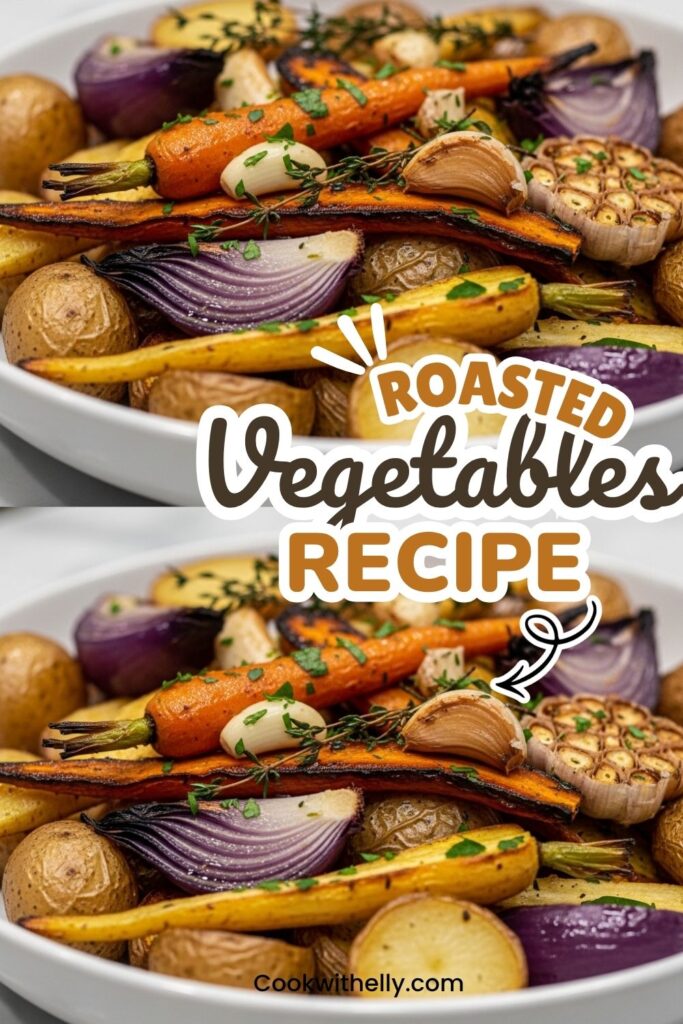
Step 1 – Prepare the Vegetables
Start by peeling and cutting all the vegetables into evenly sized chunks. Keep them slightly larger than bite-sized so they don’t shrink too much in the oven.
Set the red onion aside after cutting, since it cooks faster and will be added later. This small step makes a noticeable difference in texture.
Step 2 – Smash the Garlic
Place each garlic clove under the side of a knife and press down firmly until it cracks open. Leave the skin on so it holds together while roasting.
This way, the garlic softens and sweetens instead of burning. You’ll end up with mellow, golden cloves tucked between the vegetables.
Step 3 – Season the Onion Separately
Toss the red onion pieces in a bowl with a little olive oil, salt, and pepper. Keep them aside for now.
Adding them later ensures they stay tender and lightly caramelised, not overcooked or too soft.
Step 4 – Toss the Remaining Vegetables
In a large bowl, combine the potatoes, carrots, parsnips, smashed garlic, thyme, and torn sage leaves. Drizzle with olive oil and season well.
Mix everything thoroughly so each piece is lightly coated. This helps them roast evenly and develop that golden finish.
Step 5 – Start Roasting
Spread the vegetables on a large tray in a single layer. Make sure they aren’t crowded, or they’ll steam instead of roast.
Place the tray in a preheated oven at 200°C and let them cook for about 30 minutes.
Step 6 – Add the Onion
After the initial roasting time, take the tray out and add the prepared onion. Give everything a quick toss.
This keeps the onion from overcooking while still allowing it to soften and pick up color.
Step 7 – Continue Roasting
Return the tray to the oven and roast for another 60 minutes. Toss the vegetables halfway through to ensure even cooking.
The longer roasting time allows the flavors to deepen and the edges to caramelise beautifully.
Step 8 – Garnish and Serve
Once everything is golden and tender, remove the tray from the oven. Sprinkle with chopped parsley if you like.
Serve immediately while warm, when the textures and flavors are at their best.
Serving Ideas
Roasted vegetables fit into almost any meal without much effort. They work beautifully alongside grilled dishes, simple rice, or even just a slice of bread.
Sometimes I serve them on their own, with a spoonful of something creamy on top. A yogurt-based sauce or even a drizzle of olive oil can bring everything together.
They also make great leftovers. Toss them into a salad, wrap them in flatbread, or add them to a bowl with grains and a light dressing.
There’s a lot of flexibility here, and that’s part of what makes this dish so reliable.
Tips
- Do not mix root vegetables with high moisture vegetables in the same tray
- Use smashed garlic instead of minced to prevent burning
- Cut vegetables into similar sizes for even cooking
- Keep pieces slightly large to allow proper caramelisation
- Do not overcrowd the tray, spread vegetables in a single layer
- Use a moderate oven temperature to allow slow sweetening
- Add quick-cooking vegetables like onion later in the process
- Use fresh woody herbs like thyme or rosemary for better flavor
- Sprinkle delicate herbs only after roasting
- Toss vegetables halfway through cooking for even browning
Variations and Substitutions
Once you get comfortable with the method, it’s easy to swap in other vegetables. Sweet potatoes, pumpkin, or turnips all work well with the same approach.
For a slightly lighter version, you can add vegetables like capsicum or mushrooms. Just adjust the timing so they don’t overcook.
If fresh herbs aren’t available, dried herbs can be used instead. They won’t taste quite the same, but they still add depth.
You can also change the flavor profile entirely with small tweaks. A pinch of spice, a squeeze of lemon, or even a different oil can shift the dish in a new direction.
Roasted Vegetables Recipe
Description
Knowing how to make roasted vegetables well is a life essential! This simple recipe creates beautifully caramelised vegetables with rich flavour using olive oil, herbs, and garlic. Roasting at a moderate temperature allows vegetables to sweeten evenly while developing golden edges. Perfect as a healthy side dish or even a wholesome main meal.
ingredients
Vegetables
Garnish
Instructions
Cutting Vegetables
-
Prepare potatoes
Cut potatoes in half (or into 3–4 pieces if large). -
Prepare carrots
Cut carrots diagonally into 3cm chunks. -
Prepare parsnip
Cut parsnip into 4cm lengths, then into similar sized batons. -
Prepare onion
Cut onion into 2cm square chunks. -
Smash garlic
Press garlic cloves with the side of a knife until slightly flattened but intact.
Roasting
-
Preheat oven
Preheat oven to 200°C (390°F) or 180°C fan. -
Season onion
Toss onion with 1 tbsp olive oil, salt and pepper in a separate bowl. Set aside. -
Season vegetables
Place potatoes, carrots, parsnip, garlic, thyme and sage in a bowl. Toss with remaining olive oil, salt and pepper. -
Roast vegetables
Spread vegetables on a large tray and roast for 30 minutes. -
Add onion
Add onion to tray, toss gently and return to oven. -
Finish roasting
Roast for another 60 minutes, tossing halfway, until golden and caramelised. -
Serve
Sprinkle with parsley and serve warm.
Nutrition Facts
Servings 4
Serving Size 1 cup
- Amount Per Serving
- Calories 220kcal
- % Daily Value *
- Total Fat 12 gg19%
- Saturated Fat 2 gg10%
- Trans Fat 0 gg
- Cholesterol 0 mgmg0%
- Sodium 320 mgmg14%
- Potassium 720 mgmg21%
- Total Carbohydrate 26 gg9%
- Dietary Fiber 5 gg20%
- Sugars 6 gg
- Protein 4 gg8%
- Calcium 6% mg
- Iron 10% mg
* Percent Daily Values are based on a 2,000 calorie diet. Your daily value may be higher or lower depending on your calorie needs.
Note
- Use similar sized vegetable pieces so they cook evenly.
- Roast root vegetables separately from high moisture vegetables like zucchini or eggplant.
- Smashed garlic provides flavour without burning.
- Moderate oven temperature allows vegetables to caramelise slowly and taste sweeter.
- Fresh herbs like thyme, rosemary or sage work best for roasting.
Frequently Asked Questions
Can I use other vegetables?
Yes, sweet potato, pumpkin, mushrooms, capsicum and zucchini work well. Adjust roasting time depending on density.
Why roast at moderate temperature?
A slightly lower temperature allows vegetables to caramelise slowly, enhancing natural sweetness and preventing burning.