

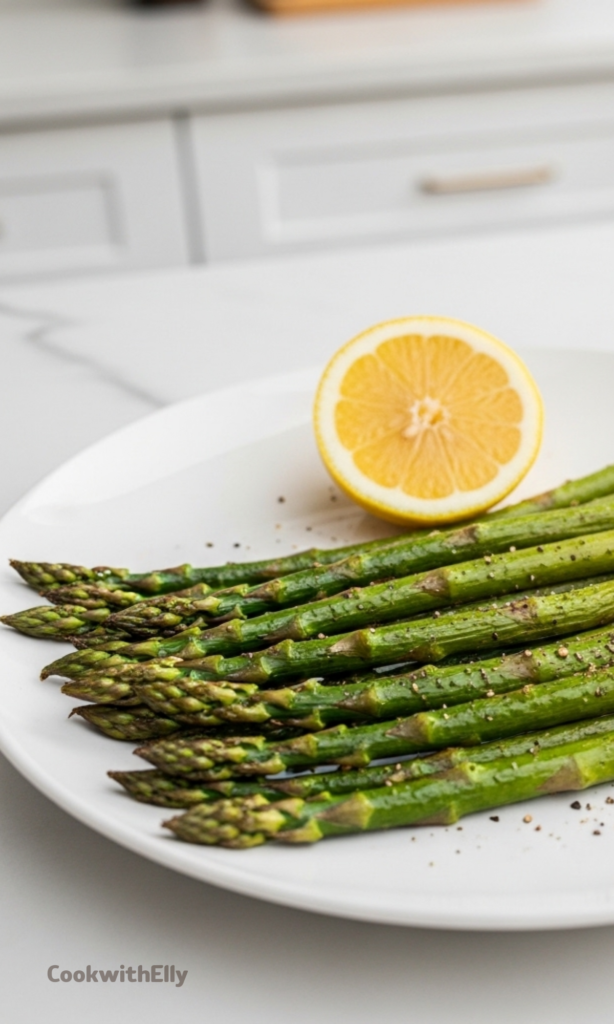

Roasted asparagus is one of those side dishes I come back to every single spring. It’s simple, quick, and honestly feels a little special even though it barely takes any effort. The oven does most of the work, and the results are always worth it.
I love how the spears turn tender and juicy while the tips get lightly crisp and golden. Sometimes I catch myself sneaking a few straight from the pan before dinner even starts. It smells that good, and yes, I rarely wait.
This is also one of those recipes that saves me on busy evenings. It takes about 15 minutes from start to finish, which means I can throw it together without planning ahead. That kind of ease makes it a regular in my kitchen.
When asparagus is in season, I make this constantly. It’s fresh, bright, and flexible enough to go with almost anything I’m cooking that day.
Choosing Fresh Asparagus
Good roasted asparagus really starts at the store or market. I look for spears that feel firm and stand up straight, not limp or wrinkled. The tips should be tight and compact, almost like little buds.
Thickness matters less than people think, but it does affect cooking time. Thin spears cook faster and stay delicate, while thicker ones become meatier and more satisfying. I use both, just adjusting the roasting time slightly.
If the ends look dried out or cracked, I skip that bunch. Fresh asparagus should look vibrant and feel full of moisture, because that’s what gives you that perfect tender bite after roasting.
Ingredients Needed for the Recipe
- Fresh asparagus – The star of the dish, providing a naturally sweet and earthy flavor once roasted.
- Extra-virgin olive oil – Helps the spears caramelize in the oven and keeps them from drying out.
- Sea salt – Brings out the vegetable’s natural flavor without overpowering it.
- Freshly ground black pepper – Adds a gentle warmth and balance.
- Lemon wedges – A squeeze at the end brightens everything and makes the flavors pop.
How to make Roasted Asparagus?
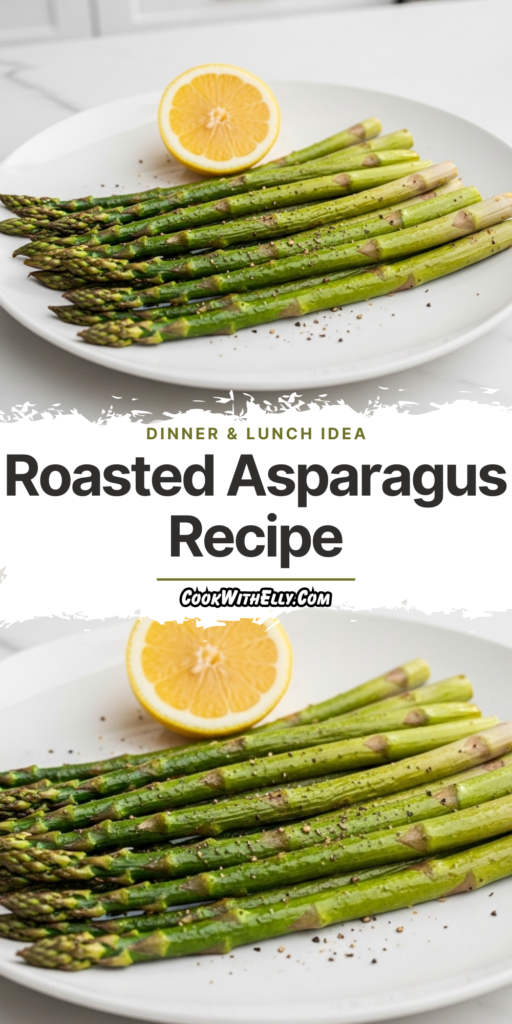
Step 1 – Preheat the Oven
I start by preheating the oven to 425°F. A hot oven is key because it helps the asparagus roast instead of steam. That high heat creates those slightly crisp edges that make this dish so good.
While the oven heats, I line a baking sheet with parchment paper. It makes cleanup easier and prevents sticking, which I always appreciate later.
Step 2 – Trim the Woody Ends
The ends of asparagus can be tough and fibrous, so trimming is important. If you skip this step, you’ll notice right away when chewing. Not pleasant.
I either slice off the bottom inch or two with a knife, or bend each spear until it naturally snaps. The asparagus knows where it wants to break, which is oddly satisfying.
Step 3 – Season the Asparagus
I spread the trimmed spears on the baking sheet and drizzle them with olive oil. Then comes a sprinkle of salt and a few grinds of pepper. Nothing complicated, just clean flavor.
Using my hands, I toss everything together so each spear is lightly coated. This helps them roast evenly and develop that subtle browning.
Step 4 – Arrange for Even Roasting
Once seasoned, I arrange the asparagus in a single layer. Giving them a little breathing room is important because overcrowding causes steaming instead of roasting.
If they overlap too much, they stay soft rather than caramelized. A little spacing goes a long way here.
Step 5 – Roast Until Tender
The tray goes into the oven for about 10 to 15 minutes. I start checking early, especially if the spears are thin. They cook faster than you think.
You’ll know they’re ready when they’re fork-tender and lightly browned underneath. The tips should look just a bit crisp, never burned.
Step 6 – Finish with Lemon
As soon as they come out of the oven, I squeeze fresh lemon juice over the top. That bright acidity wakes everything up and balances the richness of the olive oil.
I taste one, adjust seasoning if needed, and serve right away. This dish is best warm, when the texture is at its peak.
Tips
- Choose spears that are similar in thickness so they cook evenly.
- Always dry asparagus after washing to prevent steaming in the oven.
- Do not overcrowd the pan or you’ll lose the roasted texture.
- Check early when roasting thin spears to avoid overcooking.
- Slight browning equals flavor, so let them caramelize.
- Finish with lemon after roasting, not before, to keep the taste fresh.
- Use a hot oven every time. Lower temperatures make the asparagus soft.
- Serve immediately for the best texture and flavor.
Easy Ways to Change the Flavor
One of my favorite things about roasted asparagus is how adaptable it is. Once you’ve got the basic method down, you can shift the flavor depending on your mood or what’s in the fridge.
Sometimes I add a sprinkle of grated Parmesan right after roasting. The heat melts it slightly, creating a savory finish that feels a little indulgent without much effort.
Toasted almonds or pine nuts bring a welcome crunch. That contrast between tender asparagus and crisp nuts makes the dish feel more complete.
Fresh herbs are another easy upgrade. I’ll scatter chopped parsley, dill, or mint over the top when I want something that tastes extra seasonal.
If I want a bit of heat, I add a pinch of red pepper flakes. Just enough to notice, not enough to overpower the vegetable itself.
Garlic is also a great addition. A little finely grated clove mixed with the oil gives a deeper, savory flavor that pairs beautifully with the roasted edges.
Serving Ideas
This roasted asparagus fits into almost any meal, which is why I rely on it so often. It works alongside simple proteins like chicken, fish, or eggs without competing for attention.
I also love serving it with pasta dishes because the brightness balances heavier flavors. It makes the whole plate feel lighter and more fresh.
For brunch, I’ll chop leftovers and fold them into omelets or a frittata. The roasted flavor actually gets even better the next day.
It’s also great as part of a bigger spring spread. Add a grain salad, something creamy, maybe crusty bread, and suddenly dinner feels thoughtful even if it came together quickly.
Sometimes I serve it straight from the pan at the table. No fancy plating, just real food meant to be shared and enjoyed.
That’s really the charm of this recipe. It’s uncomplicated, flexible, and always satisfying without trying too hard.
Roasted Asparagus Recipe
Description
This oven roasted asparagus recipe is an easy, delicious spring side dish. The spears become tender, juicy, and lightly browned with frizzled, crispy tips. Ready in just 15 minutes, it's perfect for weeknight dinners or last-minute holiday sides. While delicious simply seasoned with olive oil, salt, pepper, and lemon, it also pairs beautifully with Parmesan cheese, garlic, or fresh herbs.
ingredients
Instructions
-
Preheat Oven
Preheat your oven to 425°F (220°C). Line a large rimmed baking sheet with parchment paper. -
Trim Asparagus
Trim the woody ends off the asparagus. You can do this by cutting off the bottom 1-2 inches where the stalk turns pale and thick, or by holding the spear at both ends and bending it until it naturally snaps at the tough point.Discard the tough ends. -
Season
Place the trimmed asparagus on the prepared baking sheet. Drizzle with olive oil and sprinkle with salt and pepper. Toss with your hands to coat evenly, then spread the spears out in a single layer, leaving a little space between them to ensure they brown rather than steam.Ensure spears are not overcrowded. -
Roast
Transfer to the oven and roast for 10 to 15 minutes. The cooking time depends on the thickness of your spears; thin spears may take only 8-10 minutes, while very thick ones might need up to 20. They are done when fork-tender and slightly browned.Check frequently after 8 minutes to prevent overcooking. -
Serve
Remove from the oven. Squeeze fresh lemon juice over the hot asparagus, taste, and add more salt or pepper if needed. Serve immediately.Optional: Top with grated Parmesan cheese, toasted almonds, or fresh herbs like dill or parsley.
Nutrition Facts
Servings 4
Serving Size 1/4 of recipe
- Amount Per Serving
- Calories 65kcal
- % Daily Value *
- Total Fat 5gg8%
- Saturated Fat 0.7gg4%
- Trans Fat 0gg
- Cholesterol 0mgmg0%
- Sodium 150mgmg7%
- Potassium 240mgmg7%
- Total Carbohydrate 5gg2%
- Dietary Fiber 2.5gg10%
- Sugars 1.5gg
- Protein 3gg6%
- Calcium 3% mg
- Iron 10% mg
* Percent Daily Values are based on a 2,000 calorie diet. Your daily value may be higher or lower depending on your calorie needs.
Note
- Thickness matters: Adjust cooking time based on the thickness of your asparagus spears. Thin spears cook faster; thick spears need more time.
- Don't overcrowd: Spread the spears in a single layer with space between them to ensure they roast and brown instead of steaming.
- Variations: Try adding minced garlic before roasting, or topping with shaved Parmesan cheese, toasted pine nuts, or a balsamic glaze after cooking.
- Storage: Store leftovers in an airtight container in the fridge for up to 3 days. Reheat in the oven or microwave, or add cold to salads and pastas.
Frequently Asked Questions
How do I trim asparagus?
You can trim asparagus by cutting off the bottom 1-2 inches of the stalk where it looks pale and woody. Alternatively, hold a spear at both ends and gently bend it; it will naturally snap at the point where the tough part ends.
How long does it take to roast asparagus?
At 425°F (220°C), asparagus typically takes 10 to 15 minutes to roast. Very thin spears may be done in 8 minutes, while very thick ones can take up to 20 minutes. Look for fork-tender texture and slight browning.
Can I make this ahead of time?
Asparagus is best served fresh from the oven. However, you can trim and season the spears ahead of time and keep them covered in the fridge until ready to roast. Leftovers can be stored for up to 3 days.