


 View Gallery
1 photo
View Gallery
1 photo
Persian Love Cake is one of those desserts that quietly wins people over. It does not shout with sweetness or hide behind heavy frosting. Instead, it leans into fragrance, warmth, and a soft, tender crumb that feels intentional.
I have made this cake for quiet afternoons, last-minute dinners, and moments when I wanted something a little different. Every time, it delivers the same reaction. A pause, then a smile, then someone asking what that flavor is.
This cake is built on rose water, cardamom, citrus zest, and almond flour. Each ingredient plays a role, and none of them try to steal the spotlight. That balance is what makes Persian Love Cake feel special without feeling fussy.
What makes Persian Love Cake special
The name alone sets expectations, and somehow the cake lives up to them. Persian Love Cake is rich but not heavy, fragrant but not overpowering. It sits comfortably between a tea cake and a celebration cake.
Rose water is often the most intimidating part for people. Used carefully, it adds a floral note that feels soft and rounded rather than perfumed. In this cake, it works with the lemon zest and cardamom instead of fighting them.
Almond flour changes the texture in a way regular flour cannot. It keeps the crumb moist for days and gives the cake a gentle density. The result is a slice that feels substantial but still light on the fork.
The story behind the flavors
Persian Love Cake pulls inspiration from Middle Eastern flavor traditions. Rose, citrus, nuts, and warm spices show up often in desserts from that region. Together, they create something comforting and familiar, even if you have never tasted it before.
Cardamom is the quiet backbone here. It adds warmth without heat and depth without bitterness. When paired with almond and lemon, it rounds out the sweetness instead of amplifying it.
This is not a trendy cake trying to impress. It feels rooted, thoughtful, and timeless. That is part of why it works so well for both everyday baking and special occasions.
How to make Persian Love Cake
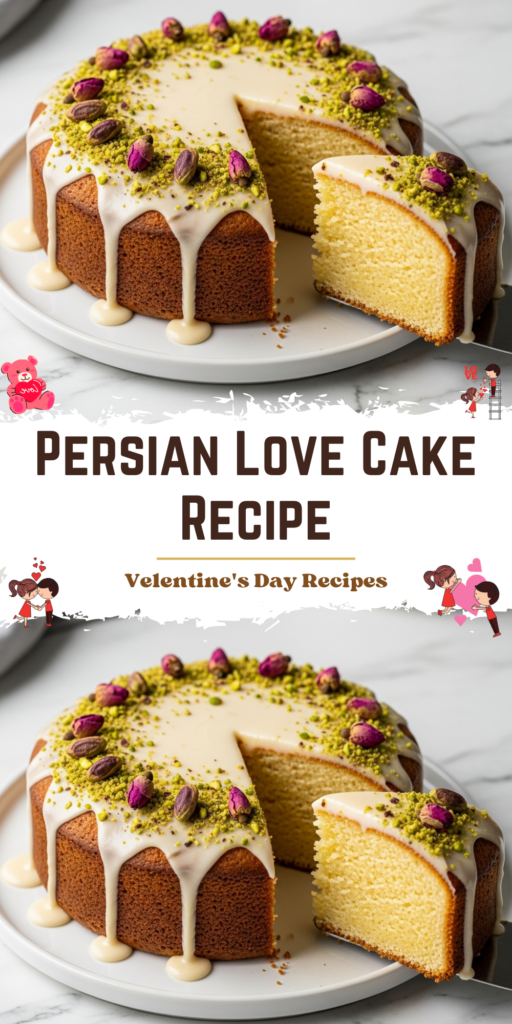
This cake looks elegant, but the process is refreshingly simple. There is no creaming butter for ages or juggling multiple bowls. Everything flows in a logical order.
You start by beating sugar, lemon zest, and eggs until the mixture turns pale and slightly fluffy. That step matters more than it seems, because it sets the foundation for a lighter crumb.
The oil is added slowly while mixing, which helps the batter stay smooth and stable. Rushing this part can cause the mixture to split, so patience pays off.
Once the rose water and vanilla go in, the batter starts to smell incredible. That is when the dry ingredients join, gently folded until just combined. Overmixing is the enemy here.
The cake bakes until golden on top and just set in the center. A knife should come out mostly clean, with maybe a soft crumb clinging to it. That is your cue to pull it from the oven.
Ingredients that matter
Granulated sugar provides sweetness, but it also helps create structure. Combined with eggs, it traps air and gives the cake lift. This is not a place to cut back drastically.
Lemon zest brightens the entire cake. It keeps the floral notes from feeling flat and adds a clean edge to the sweetness. Fresh zest makes a noticeable difference.
Vegetable or canola oil keeps the crumb tender. Butter would add flavor, but oil allows the almond flour and spices to shine without competing.
Rose water should be measured carefully. Too little and it disappears, too much and it overwhelms. The amount used here lands right in the middle.
All-purpose flour provides structure, while super fine almond flour adds moisture and richness. Using almond flour rather than almond meal is important for a smooth texture.
Ground cardamom brings warmth, baking powder adds lift, and salt ties everything together. None of these ingredients are flashy, but each one is essential.
The glaze and toppings
The glaze is simple, but it finishes the cake beautifully. Powdered sugar, rose water, and milk come together into a thick, glossy drizzle. It should sit on the surface, not soak in.
Warming the glaze slightly helps it spread without becoming runny. This small step gives you more control and a cleaner finish.
Chopped pistachios add crunch and color. Rose petals reinforce the floral notes and make the cake feel celebratory. Candied ginger is optional, but it adds a sharp little surprise.
Tips for making Persian Love Cake
Resist the urge to add extra rose water. It can turn from pleasant to overpowering very quickly. Trust the balance in the recipe.
Let the cake cool completely before glazing. Warm cake will melt the glaze and create a sticky mess. Patience here leads to a prettier result.
Use super fine almond flour, not almond meal. The texture difference is noticeable, and almond meal can make the crumb feel coarse.
Serving and storing
This cake slices cleanly once the glaze has set. A sharp knife wiped between cuts helps keep the edges neat. Each slice holds together without crumbling.
Persian Love Cake pairs well with tea or coffee. It does not need anything on the side, though a dollop of lightly sweetened yogurt works nicely.
Stored at room temperature, the cake stays moist for several days. Covered loosely, it actually improves after the first day as the flavors settle.
Why I keep coming back to this cake
I have baked many cakes, and this one keeps finding its way back into my kitchen. It fits into so many moments without needing an excuse.
It feels thoughtful without being showy. The flavors linger, but they do not exhaust your palate. You finish a slice and want another, just not immediately.
Persian Love Cake reminds me that baking does not need to be complicated to feel meaningful. Sometimes, balance and care are enough.
Persian Love Cake Recipe
Description
Persian Love Cake: a fragrant rose cake flavored with freshly ground cardamom and almond flour, and topped with crushed pistachios and rose petals.
ingredients
For the cake
For the glaze
Instructions
-
Preheat the oven to 350°F (175°C) and line an 8-inch round cake pan with parchment paper. Set aside.
-
In a stand mixer on medium speed, beat the sugar, lemon zest, and eggs together until pale yellow, about 1 minute.
-
Keeping the mixer going at a medium-low speed, slowly stream in the vegetable oil to emulsify. Add in the rose water and vanilla extract and mix well.
-
Add the all-purpose flour, almond flour, cardamom, baking powder, and salt, and stir until just combined. Do not overmix.
-
Pour the batter into your prepared pan and bake for 35–45 minutes or until the cake is lightly golden brown and a knife inserted into the middle comes out mostly clean.
-
To make the glaze, combine powdered sugar, rose water, and whole milk in a microwave-safe bowl and whisk to combine (glaze will be very thick). Microwave for 10–15 seconds to thin out mixture, then pour over cooled cake.
-
Sprinkle crushed pistachios and rose petals (and candied ginger, if using). Serve!
Nutrition Facts
Servings 8
Serving Size 1 slice
- Amount Per Serving
- Calories 458kcal
- % Daily Value *
- Total Fat 29g45%
- Saturated Fat 4g20%
- Cholesterol 60mg20%
- Sodium 67mg3%
- Potassium 180mg6%
- Total Carbohydrate 39g13%
- Dietary Fiber 3g12%
- Sugars 28g
- Protein 8g16%
- Calcium 6 mg
- Iron 10 mg
* Percent Daily Values are based on a 2,000 calorie diet. Your daily value may be higher or lower depending on your calorie needs.
Note
- Don’t add extra rose water—it can quickly become overpowering.
- Don’t glaze a hot cake—let it cool completely first to avoid a soggy mess.
- Don’t substitute almond meal—use super-fine almond flour for best texture.
Frequently Asked Questions
Can I make this cake gluten-free?
Yes! Substitute the all-purpose flour with a 1:1 gluten-free flour blend that includes xanthan gum.
Where can I find edible rose petals?
Look for food-grade dried rose petals in Middle Eastern grocery stores, specialty spice shops, or online retailers like Amazon.