

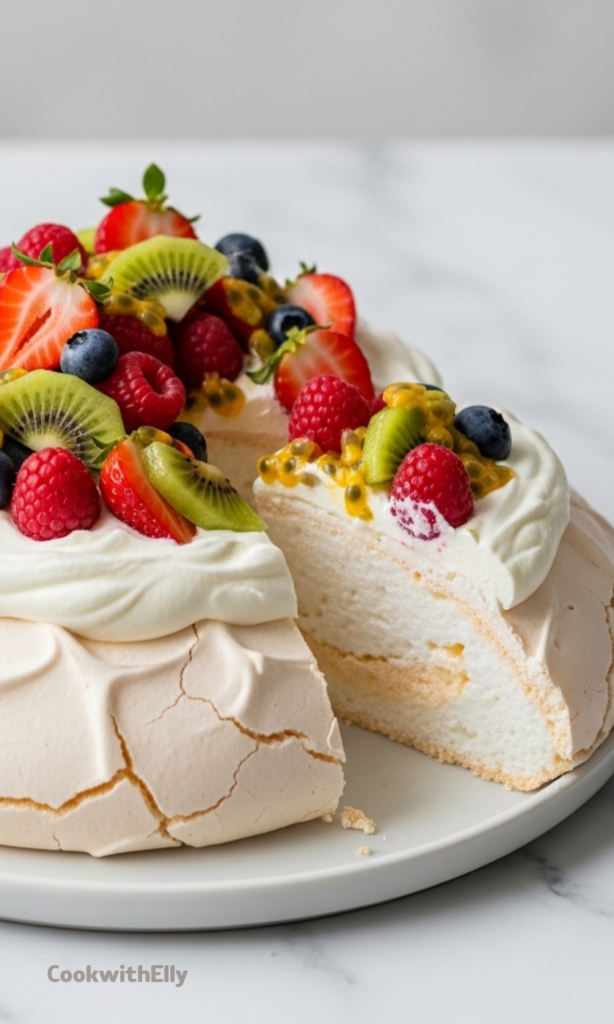

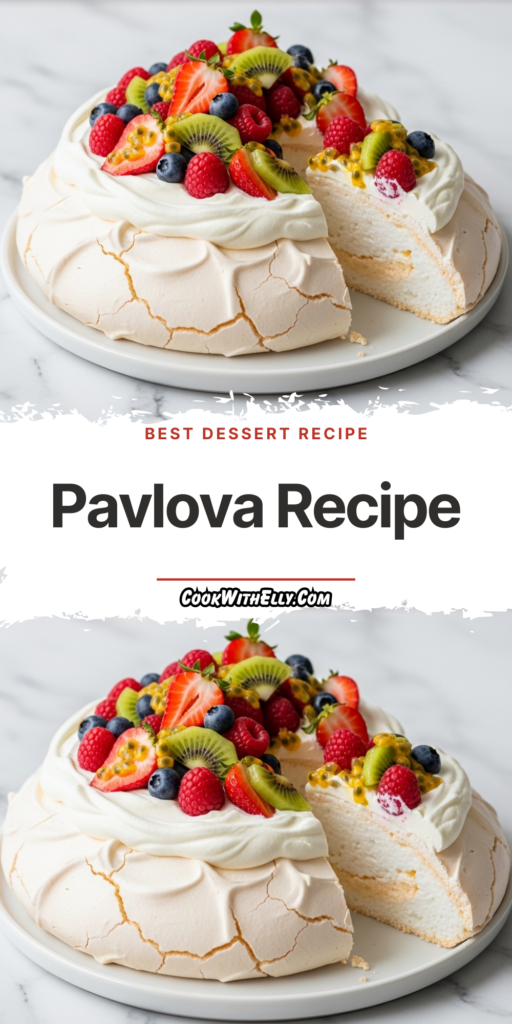
There is something undeniably magical about a Pavlova. Crisp on the outside, soft and marshmallowy on the inside, crowned with clouds of cream and vibrant fruit — it is the kind of dessert that makes people pause mid-conversation just to admire it.
Despite its elegant appearance, Pavlova is made from just a handful of simple ingredients, yet it delivers a texture and flavor that feels truly special.
Often described as both easy and tricky at the same time, Pavlova has earned a reputation for being temperamental. Many home bakers worry about cracks, sinking, or collapse. But here’s the truth: even a cracked Pavlova is still absolutely spectacular.
Once topped with cream and fruit, any imperfections disappear, and the dessert becomes a centerpiece worthy of applause.
With the right techniques, a little patience, and a few smart tips, you can create a near-flawless Pavlova every single time.
What Makes Pavlova So Special?
Pavlova isn’t just another meringue dessert. Its uniqueness lies in contrast — a delicate shell that gently gives way to a soft, airy interior that resembles marshmallow. Unlike crisp meringues that shatter, Pavlova slices beautifully while maintaining its pillowy center.
This texture is achieved through a careful balance of whipped egg whites, sugar, and stabilizing ingredients. The slow baking and gradual cooling create that signature structure without drying it out.
It’s a dessert made to impress but also made to share, perfect for gatherings, celebrations, or simply when you want something light yet indulgent.
Ingredients You’ll Need
For the Pavlova Base
- 150 ml egg whites (from about 4–5 eggs, measured by volume)
- 1 cup caster sugar (superfine sugar)
- 1 tablespoon cornflour (cornstarch), sifted
- 1 teaspoon white vinegar
For the Cream
- 1½ cups thickened cream or heavy whipping cream
- ¼ cup caster sugar
- 1 teaspoon vanilla extract
For the Topping
- Fresh fruit of choice such as strawberries, blueberries, raspberries, cherries, or passionfruit
Step-by-Step Instructions
1. Prepare the Egg Whites
Separate the eggs while they are still cold. This makes it much easier to keep the yolks intact. Measure the egg whites by volume — this is one of the most important steps because egg sizes vary widely.
Allow the measured egg whites to come to room temperature before whipping. Room-temperature whites whip better and create a more stable structure.
2. Preheat the Oven
Preheat your oven to 170°C. Starting with a higher temperature helps initiate the crust formation that stabilizes the Pavlova.
3. Whip to Soft Peaks
Place the egg whites into a clean, completely dry bowl. Beat them using a stand mixer or hand mixer until soft peaks form. The mixture should look foamy and hold gentle shape.
4. Add Sugar Gradually
Add the caster sugar one tablespoon at a time, beating continuously. This gradual addition ensures the sugar dissolves properly, preventing graininess.
Once all sugar is incorporated, continue beating for about 3 minutes until the mixture becomes thick, glossy, and smooth. Rub a little between your fingers — it should feel silky, not gritty.
5. Stabilize the Meringue
Add the sifted cornflour and vinegar. Beat briefly on low speed or gently fold them in. These ingredients help create the soft, marshmallow interior that Pavlova is known for.
6. Shape the Pavlova
Line a baking tray with parchment paper. Use an inverted cake pan base as a guide to shape the meringue into a round.
Spoon the mixture onto the paper and gently form a dome shape about 4–5 cm high. Avoid making it too tall. A slightly sloped, rustic shape is more stable than perfectly straight sides.
7. Bake Low and Slow
Carefully place the tray into the oven and immediately reduce the temperature to 115°C (or 100°C fan-forced).
Bake for 1½ hours without opening the oven door. No peeking — sudden temperature changes can cause collapse.
8. Cool Gradually
Turn the oven off and leave the Pavlova inside with the door closed overnight or for several hours. This slow cooling prevents cracking and helps the structure set properly.
9. Prepare the Cream
Beat the cream, sugar, and vanilla until thick but still smooth and soft. Avoid overbeating; the cream should be silky, not stiff.
10. Assemble Just Before Serving
Transfer the cooled Pavlova to a serving platter. Gently spread the whipped cream over the top and arrange fresh fruit by hand.
Handle toppings delicately — pressing too hard can deflate the Pavlova.
Essential Tips for a Perfect Pavlova
- Measure egg whites by volume. Precision matters more than egg count.
- Use clean, dry equipment. Any grease or moisture can stop the whites from whipping.
- Avoid even a drop of yolk. Fat prevents proper aeration.
- Use fresh but not ultra-fresh eggs. Slightly aged eggs whip better.
- Gradually add sugar. This ensures stability and shine.
- Shape with gentle slopes. Dome shapes resist collapse better than tall cylinders.
- Bake at a low temperature. This keeps the Pavlova white and prevents rapid expansion.
- Do not open the oven. Temperature shocks can ruin the structure.
- Let it cool completely inside the oven. Gradual cooling minimizes cracking.
- Be gentle when decorating. Place fruit individually instead of dumping it on.
- Always make extra cream. It can hide cracks or help stabilize the dessert if needed.
Weather Matters More Than You Think
Pavlova loves dry conditions and dislikes humidity. Hot, humid weather can cause it to collapse or become sticky. If you’re baking during warm months, keeping the Pavlova smaller and baking it longer at a low temperature helps maintain stability.
Interestingly, even though it is considered a summer dessert, Pavlova requires a bit of environmental awareness. Think of it as a dessert that rewards patience and gentle handling.
Don’t Fear Cracks — They’re Part of the Charm
One of the biggest myths about Pavlova is that it must be perfectly smooth. In reality, even professional versions crack. Once sliced, every Pavlova becomes beautifully messy anyway.
If cracks appear, simply use whipped cream as edible glue and decoration. The final result will still look stunning and taste incredible.
Choosing the Best Toppings
The beauty of Pavlova lies in its versatility. While berries are classic, you can customize toppings based on season or preference.
- Mixed berries for freshness and color
- Sliced mango or kiwi for a tropical feel
- Passionfruit for a tangy contrast
- Stone fruits like peaches or cherries
- A drizzle of fruit coulis for added elegance
The light sweetness of the meringue pairs beautifully with slightly tart fruits, creating a balanced dessert that never feels heavy.
Why Pavlova Is Perfect for Entertaining
Pavlova is the ultimate make-ahead dessert. The base can be prepared the day before and stored in the oven or an airtight environment. All that remains is topping it shortly before serving.
It feeds a crowd easily, slices without fuss, and always creates a moment of excitement when brought to the table. Few desserts manage to feel both rustic and luxurious at the same time.
A Dessert That’s Meant to Be Enjoyed, Not Perfected
Pavlova is less about technical perfection and more about experience. The anticipation as it cools, the gentle spreading of cream, the artful placement of fruit — it all becomes part of the ritual.
And when you finally bring it to the table and hear those delighted reactions, every careful step feels worth it.
Pavlova Recipe!!
Description
This iconic Australian dessert features a delicate crisp meringue shell with a soft, marshmallow-like center, crowned with freshly whipped cream and seasonal fruit. Perfect for summer gatherings, holidays, or any special occasion—this pavlova is as impressive as it is delicious!
ingredients
Pavlova Base
Whipped Cream
Toppings
Instructions
-
Prepare Egg Whites
Separate egg whites from yolks while eggs are cold. Measure out 150 ml (just under 2/3 cup) egg whites. Set aside to reach room temperature (~30 minutes).Even a trace of yolk can prevent proper whipping. -
Preheat Oven
Preheat oven to 170°C (340°F). Line a baking tray with parchment paper and place an inverted 24cm (9.5”) cake pan on it to use as a guide. -
Make Meringue
In a clean, dry bowl, beat egg whites on high until soft peaks form (~1 minute). Gradually add caster sugar, 1 tbsp at a time, while beating. Continue beating for 3 more minutes until thick, glossy, and sugar is fully dissolved (rub between fingers to check). -
Add Stabilizers
Gently fold in sifted cornflour and white vinegar until just combined.Do not overmix; this helps prevent cracking. -
Shape Pavlova
Scoop meringue onto the parchment inside the cake ring. Shape into a dome ~20cm wide and 4–5cm tall with sloped sides and a flat top. Smooth edges gently.Avoid tall, vertical sides—they’re prone to collapse in humid weather. -
Bake
Carefully place tray in oven. Immediately reduce temperature to 115°C (240°F) for conventional ovens or 100°C (210°F) for fan-forced. Bake for 1 hour 30 minutes—do not open the oven! -
Cool Gradually
Turn off oven and leave pavlova inside to cool completely—ideally overnight (8–12 hours). This prevents cracking and sweating. -
Add Toppings
Just before serving, whip cream with sugar and vanilla until soft peaks form. Gently spread over pavlova and top with fresh fruit.Assemble right before serving to keep the shell crisp.
Nutrition Facts
Servings 8
Serving Size 1 slice
- Amount Per Serving
- Calories 320kcal
- % Daily Value *
- Total Fat 18g28%
- Saturated Fat 11g56%
- Cholesterol 55mg19%
- Sodium 45mg2%
- Potassium 180mg6%
- Total Carbohydrate 38g13%
- Dietary Fiber 1g4%
- Sugars 36g
- Protein 4g8%
- Calcium 60 mg
- Iron 0.5 mg
* Percent Daily Values are based on a 2,000 calorie diet. Your daily value may be higher or lower depending on your calorie needs.
Note
- Humidity Warning: Avoid making pavlova on hot, humid days if possible—it can cause weeping or collapse.
- Egg Tip: Use store-bought eggs ~5 days old. Freshly laid eggs are too firm to whip well.
- No Peeking! Keep the oven door closed during baking and cooling to prevent cracks.
- Make-Ahead: The meringue base can be made 1–2 days ahead and stored in an airtight container in a cool, dry place.
Frequently Asked Questions
Can I make this pavlova gluten-free or keto-friendly?
Yes! The base recipe is naturally gluten-free. For a keto version, replace caster sugar with a 1:1 erythritol-monk fruit blend (like Lakanto) and use keto-friendly whipped cream (unsweetened or sweetened with stevia). Note: texture may vary slightly.
Why did my pavlova crack or collapse?
Common causes: opening the oven too soon, high humidity, overbeating egg whites, or using too much egg white volume. Follow the tips—especially gradual cooling and precise egg measurement—to minimize risk.