

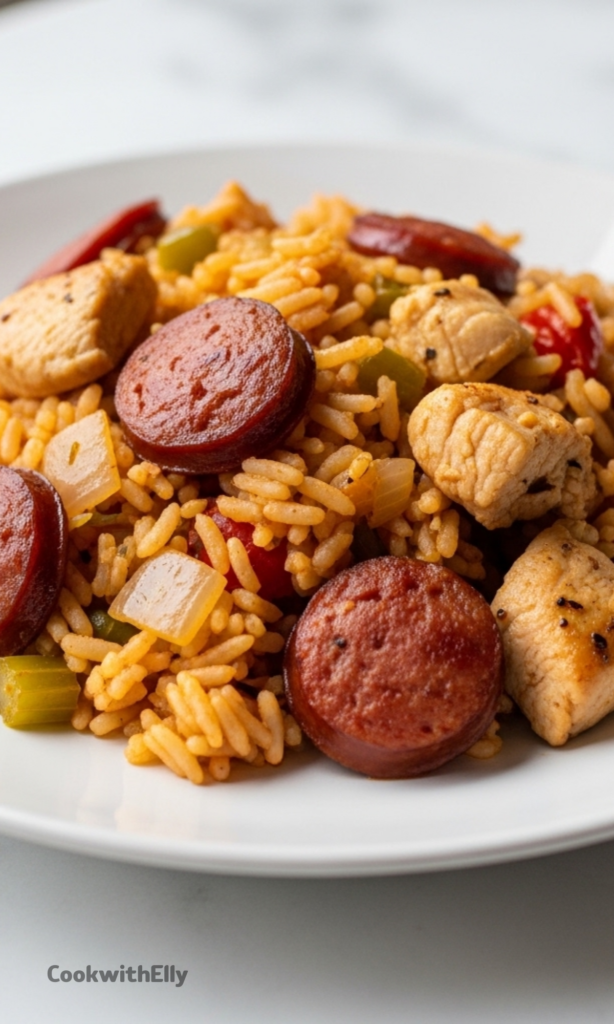

One Pan Jambalaya is one of those dinners I keep coming back to, especially on busy nights when I want something hearty but still colorful and full of flavor. It feels comforting without being heavy, bold without being complicated, and every bite tastes like it belongs there.
I love that it all happens in a single pan. Fewer dishes, deeper flavor, and that cozy feeling of building a meal layer by layer instead of juggling pots. This is the kind of recipe that smells amazing halfway through cooking and somehow tastes even better the next day.
What really keeps me hooked is how flexible it is. Some nights I stick close to the classic version. Other times, I toss in extra veggies or swap proteins based on what’s already in my fridge.
This is real, everyday cooking. Simple steps, honest ingredients, and a final dish that feels like more than the effort you put into it.
Why This One Pan Jambalaya Works So Well
This dish hits that sweet spot between easy and impressive. Everything cooks together, which means the rice soaks up all the seasoning, broth, and little browned bits left behind from the meat.
It’s also forgiving. You don’t need perfect knife skills or exact timing down to the second. As long as you pay attention and keep the heat steady, it comes together beautifully.
I also love that it feeds a crowd without doubling the stress. One pan, one lid, and dinner is done.
Ingredients Needed for the Recipe
- Oil – Used to brown the chicken and sausage, creating flavor right from the start.
- Andouille sausage – Adds smoky heat and that classic jambalaya backbone.
- Boneless skinless chicken breasts – Brings lean protein and balances the sausage.
- All-purpose flour – Helps thicken the base slightly and coats the veggies.
- Butter – Adds richness and helps carry the spices.
- Onion – One part of the holy trinity, building the savory base.
- Green onions – Add freshness and a mild bite.
- Garlic – Deepens the overall flavor and aroma.
- Celery – Adds texture and classic Cajun flavor.
- Green bell pepper – Brings sweetness and color.
- Dried basil – Adds a soft herbal note.
- Cajun seasoning – The heart of the spice profile.
- Kosher salt – Enhances every ingredient.
- Black pepper – Adds gentle warmth.
- Cayenne pepper – Optional, for extra heat if you like spice.
- Diced tomatoes – Add acidity and moisture.
- Low-sodium chicken broth – Forms the cooking liquid for the rice.
- Long-grain white rice – Absorbs all the flavors while staying fluffy.
Gumbo vs Jambalaya
These two dishes get compared a lot, and while they share roots, they cook very differently. Jambalaya is a rice dish where everything cooks together in one pan.
Gumbo is more like a stew, usually served over rice instead of cooked with it. Both use bell pepper, onion, and celery, and both often include sausage or shrimp.
When I want something spoonable and slow-simmered, I go gumbo. When I want one pan, one lid, and done, jambalaya wins every time.
How to make One Pan Jambalaya?
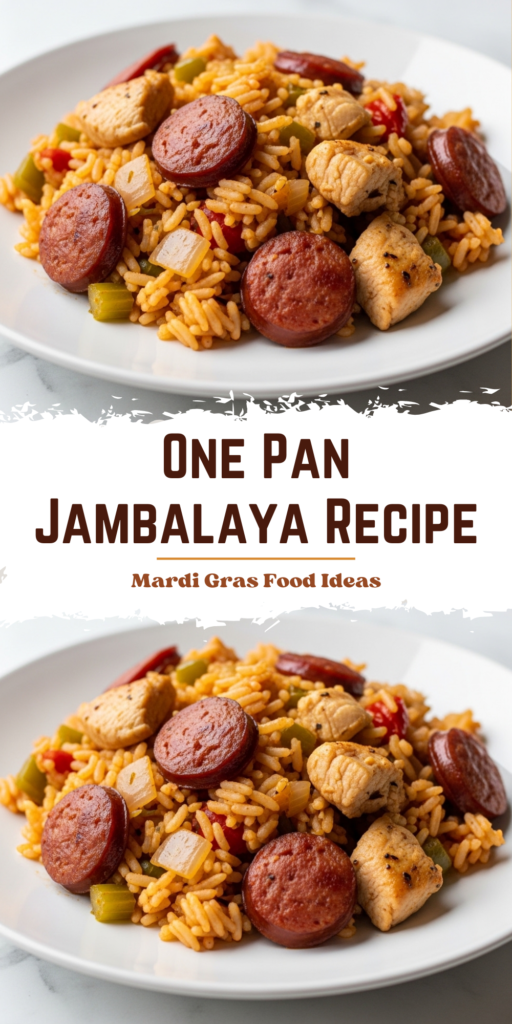
Step 1 – Brown the Meat
Heat the oil in a large skillet with a fitted lid over medium-high heat. Add the chicken pieces and let them brown, turning once or twice.
You’re not cooking the chicken through here. You’re just building flavor. Once browned, remove it to a bowl.
Add the sausage to the same pan and cook until both sides are nicely browned, then transfer it to the bowl with the chicken.
Step 2 – Build the Flavor Base
Lower the heat to medium and add the butter to the pan. Once melted, sprinkle in the flour and stir well.
Scrape up all the browned bits stuck to the bottom. That’s where the flavor lives.
Add the onion, garlic, celery, and bell pepper, then sauté for about three minutes until softened and fragrant.
Step 3 – Season and Combine
Stir in the dried basil, Cajun seasoning, salt, black pepper, and cayenne if using. Mix well so the spices coat the vegetables.
Add the diced tomatoes, then pour in the chicken broth and stir gently.
Once everything looks evenly combined, add the rice and bring the mixture to a gentle boil.
Step 4 – Simmer Together
Return the chicken and sausage to the pan, nestling them into the rice mixture.
Reduce the heat to low, cover with the lid, and let it cook for about 20 minutes.
Try not to peek too often. The steam is doing important work.
Step 5 – Rest and Finish
Remove the pan from the heat and keep the lid on for 10 minutes. This helps the rice finish absorbing the liquid.
Gently fluff the jambalaya with a fork, then let it rest for another five minutes.
Serve warm, straight from the pan.
Easy Variations to Try
This recipe is solid as written, but it’s also a great base for small changes. I tweak it depending on the season or what I need to use up.
Adding shrimp is one of my favorites. You can stir them in with the rice or cook them separately and fold them in at the end.
You can also increase the vegetables. Extra bell peppers, zucchini, or even diced tomatoes work well without changing the texture.
Tips
- Use a pan with a tight-fitting lid so the rice cooks evenly.
- Brown the meat well for deeper flavor.
- Don’t skip the resting time at the end.
- Adjust the spice level slowly, especially with cayenne.
- Long-grain rice works best for texture.
Serving Ideas
One Pan Jambalaya is filling on its own, but I sometimes like to add a simple side to round it out. Something fresh works especially well.
A crisp green salad or sliced cucumbers help balance the richness. Warm bread on the side never hurts either.
If I’m serving guests, I keep it casual. The pan goes right in the center of the table, and everyone helps themselves.
Storing and Reheating Leftovers
Leftovers store really well, which makes this dish even better the next day. I keep it in an airtight container in the fridge.
When reheating, I add a small splash of broth or water to loosen the rice. Gentle heat works best.
The flavors deepen overnight, so don’t be surprised if it tastes even better the second time around.
This One Pan Jambalaya is one of those recipes that earns a permanent spot in the rotation. It’s dependable, adaptable, and always satisfying, which is really all I ask from a weeknight dinner.
One Pan Jambalaya Recipe
Description
This easy Jambalaya recipe is full of bold cajun flavors, and made in just one pan. It's the kind of healthy comfort food I crave, since it's hearty but also loaded with protein, and veggies.
ingredients
Instructions
-
In a large skillet with a fitted lid, add the oil over medium high heat. Once hot, add the chicken and cook, flipping once or twice to brown on all sides (don't cook chicken through). Remove to a bowl.
-
Add sausage and cook until browned on both sides. Add to the bowl with the chicken.
-
Reduce heat to medium and add butter and flour to the pan and stir well, scraping up any leftover browned bits from the pan. Add onion, garlic, celery, and bell peppers and sauté for 3 minutes.
-
Add basil, cajun seasoning, diced tomatoes, salt, and pepper. Stir well to combine then add chicken broth and rice. Bring mixture to a gentle boil.
-
Add reserved meat to the pan. Reduce heat, cover pan with fitted lid, and cook for 20 minutes.
-
Remove from heat, and rest with the lid on for 10 minutes. Then gently fluff with a fork and rest again for 5 minutes before serving.
Nutrition Facts
Servings 6
Serving Size 1 serving
- Amount Per Serving
- Calories 485kcal
- % Daily Value *
- Total Fat 20g31%
- Saturated Fat 7g35%
- Cholesterol 95mg32%
- Sodium 1250mg53%
- Potassium 620mg18%
- Total Carbohydrate 42g15%
- Dietary Fiber 2g8%
- Sugars 3g
- Protein 34g68%
- Calcium 60 mg
- Iron 3 mg
* Percent Daily Values are based on a 2,000 calorie diet. Your daily value may be higher or lower depending on your calorie needs.
Note
- Sausage: Andouille sausage has a little bit of a kick. If you'd like mild sausage, substitute a Polska Kielbasa, or other pork sausage.
- Add Shrimp: Jumbo, uncooked shrimp could be added in the same time as the rice and cooked with everything together. Or you could cook the shrimp separately (or thaw frozen cooked shrimp) and add it at the end.
- Vegetarian Option: Omit meat and use vegetable broth instead of chicken broth.
- Make Ahead: Jambalaya tastes even better the next day! Store covered in the fridge for up to 4 days.
Frequently Asked Questions
Can I make this jambalaya ahead of time?
Yes! Jambalaya reheats beautifully. Store it in an airtight container in the refrigerator for up to 4 days or freeze for up to 3 months. Reheat gently on the stovetop or in the microwave with a splash of broth to keep it moist.
What’s the difference between gumbo and jambalaya?
Gumbo is a stew thickened with a roux and served over rice, while jambalaya is a rice dish where the rice cooks directly in the seasoned broth with meats and vegetables—similar in appearance to paella but with Cajun flavors.