

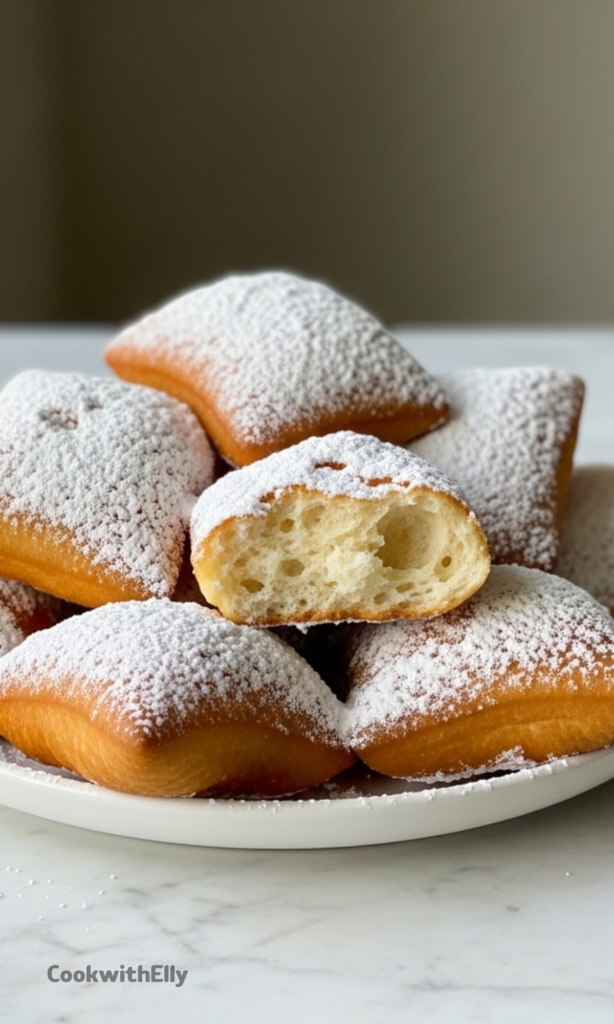

There are some recipes that feel like a little celebration the moment you start making them, and New Orleans-Style Beignets are exactly that kind of food. They are soft, puffy, lightly crisp on the outside, and unapologetically covered in powdered sugar. Messy, yes. Worth it, always.
ad-placeholder-119" data-inserter-version="2" data-placement-location="under_page_title">I fell for beignets long before I ever made them myself. There’s something comforting about fried dough done right, especially when it’s warm and tender inside. Making them at home felt intimidating at first, but once I tried, they became a ritual, not a challenge.
This recipe stays true to what makes New Orleans-Style Beignets special. The dough is rich, slightly sweet, and sturdy enough to puff beautifully in hot oil. When they come out golden and steaming, it feels like you’ve pulled a little piece of New Orleans straight into your kitchen.
These are not an everyday breakfast, and that’s part of their charm. Beignets are for slow mornings, late brunches, or afternoons when coffee deserves something indulgent on the side. They reward patience and care, and they disappear faster than you’d expect.
Ingredients Needed for the Recipe
- Warm water – activates the yeast and helps build the dough’s structure.
- Granulated sugar – lightly sweetens the dough and feeds the yeast.
- Active dry yeast – gives the beignets their signature puff and airy interior.
- Eggs – add richness and help create a tender crumb.
- Evaporated milk – brings creaminess without making the dough heavy.
- Vanilla extract – adds warmth and depth to the flavor.
- Bread flour – provides strength and elasticity for that chewy bite.
- Salt – balances sweetness and enhances every other flavor.
- Unsalted butter – softens the dough and adds richness.
- Peanut oil – ideal for frying thanks to its clean flavor and high heat tolerance.
- Confectioners’ sugar – finishes the beignets with their iconic snowy coating.
How to make New Orleans-Style Beignets?
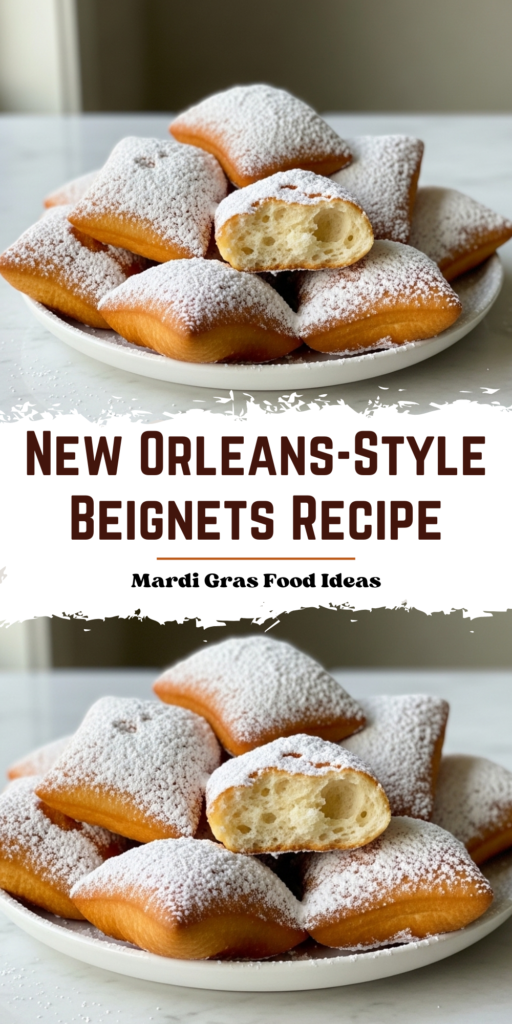
Step 1 – Wake Up the Yeast
I start by mixing warm water, sugar, and yeast in a bowl. This part always feels a little magical, watching the yeast bloom and foam after a few minutes. It’s a quiet signal that things are moving in the right direction.
The temperature matters here. Water that’s too hot can ruin the yeast, while cooler water won’t wake it up. I aim for comfortably warm, like bath water, and let the mixture sit until bubbly.
Step 2 – Build the Base
In a mixing bowl, I beat the eggs until smooth, then add the evaporated milk and vanilla. The mixture becomes pale and silky, already smelling comforting before flour even enters the picture.
This is where the richness starts. Eggs and milk work together to give beignets that soft interior that makes them feel indulgent without being dense.
Step 3 – Bring the Dough Together
I add half of the flour and mix until smooth, then slowly pour in the yeast mixture. Taking it slow avoids splashes and keeps everything cohesive. Butter goes in next, soft and ready to blend.
The remaining flour and salt come last, and the dough turns sturdy but still slightly sticky. It should feel alive, elastic, and willing to stretch rather than tear.
Step 4 – Chill and Rest
Once the dough is smooth, I cover it tightly and refrigerate it for at least two hours. This step is essential, not optional. Chilling makes the dough easier to handle and deepens the flavor.
Sometimes I leave it overnight, which works beautifully. It’s one of those recipes that rewards planning ahead, even if just a little.
Step 5 – Roll and Cut
After chilling, I roll the dough out on a lightly floured surface until it’s about a quarter-inch thick. The dough feels cool and cooperative, which makes this part surprisingly satisfying.
I cut it into squares, not worrying about perfection. Beignets are meant to look a little rustic, and uneven edges only add to their charm.
Step 6 – Fry to Golden Perfection
Heating the oil properly is crucial. I bring it to around 360°F and fry the dough in small batches. Each piece puffs almost instantly, floating and turning golden within a minute.
I flip them gently, watching for that even color. They come out crisp on the outside and soft inside, exactly what you want.
Step 7 – Sugar and Serve
The beignets go straight onto paper towels, and then straight into powdered sugar. I’m generous here. Light dusting just doesn’t do them justice.
They’re best served immediately, warm and pillowy, with extra sugar on top. Waiting too long turns them from magical to merely good, and that feels like a missed opportunity.
Serving Ideas That Feel Right
Beignets are traditionally served with coffee, and for good reason. The bitterness of a strong brew balances the sweetness perfectly. I usually keep it simple and let the beignets take center stage.
For a slightly different feel, café au lait pairs beautifully. The milkiness softens the coffee and mirrors the richness of the dough without overwhelming it.
If you’re serving these for brunch, keep the rest of the spread light. Fresh fruit, simple eggs, maybe some crisp bacon. Beignets don’t need competition.
Tips
- Use a thermometer to monitor oil temperature for consistent results.
- Do not overcrowd the pan, as it lowers the oil temperature quickly.
- Serve beignets immediately for the best texture.
- Shake powdered sugar on while they are still warm so it sticks.
- Plan ahead since chilling the dough improves flavor and handling.
Variations Worth Trying
Classic New Orleans-Style Beignets are perfect as they are, but small variations can be fun. A hint of cinnamon mixed into the powdered sugar adds warmth without changing the soul of the recipe.
Sometimes I add a touch of nutmeg to the dough. It’s subtle, barely noticeable, but it gives the beignets a cozy undertone that feels right on cooler mornings.
Chocolate lovers can drizzle melted chocolate on top instead of extra sugar. It’s not traditional, but it’s undeniably good, especially when the beignets are still hot.
Storing and Reheating
Beignets are at their absolute best fresh, and I won’t pretend otherwise. That said, leftovers can be stored in an airtight container at room temperature for a short time.
To reheat, a quick warm-up in the oven brings back some of the crispness. Avoid the microwave if you can, since it tends to make them chewy rather than tender.
If you know you won’t eat them all at once, frying only what you need and saving the dough in the fridge works surprisingly well. Freshly fried always wins.
New Orleans-Style Beignets are more than just fried dough. They’re an experience, a moment of indulgence, and a reminder that some recipes are meant to be enjoyed fully, powdered sugar and all.
New Orleans-Style Beignets Recipe
Description
Now you can enjoy authentic New Orleans-style beignets right at home! These soft, pillowy fried dough squares are crispy on the outside, chewy within, and generously dusted with powdered sugar. Best served hot alongside a strong cup of coffee or café au lait—just like at Café du Monde!
ingredients
Instructions
-
In a medium bowl, combine warm water, granulated sugar, and yeast. Whisk well and let sit for 10 minutes until foamy.
-
In the bowl of a stand mixer fitted with a paddle attachment, beat eggs until smooth. Add vanilla and evaporated milk; mix to combine.
-
Add 3½ cups of bread flour and mix until smooth. Reduce speed to low and slowly pour in the yeast mixture. Mix until incorporated.
-
Add softened butter and mix until fully incorporated. Gradually add remaining 3½ cups flour and salt. Beat until dough is smooth and cohesive (about 2 minutes).
-
Cover bowl tightly with plastic wrap and refrigerate for at least 2 hours or up to 24 hours.
-
Line a large baking sheet with three layers of paper towels; set aside.
-
Heat 4 inches of peanut oil in a heavy-bottomed pot or enameled cast-iron pan to 360°F (182°C).
-
On a lightly floured surface, roll chilled dough to ¼-inch thickness. Cut into 2½-inch squares.
-
Fry beignets in batches for about 1 minute per side, or until puffed and golden brown.
-
Transfer fried beignets to prepared baking sheet to drain excess oil.
-
Place warm beignets in a paper bag with confectioners’ sugar, shake gently to coat. Serve immediately.
Nutrition Facts
Servings 30
Serving Size 1 beignet
- Amount Per Serving
- Calories 252kcal
- % Daily Value *
- Total Fat 12g19%
- Saturated Fat 3.5g18%
- Cholesterol 15mg5%
- Sodium 180mg8%
- Potassium 60mg2%
- Total Carbohydrate 32g11%
- Dietary Fiber 1g4%
- Sugars 10g
- Protein 4g8%
- Calcium 30 mg
- Iron 1.5 mg
* Percent Daily Values are based on a 2,000 calorie diet. Your daily value may be higher or lower depending on your calorie needs.
Note
- Serve immediately: Beignets lose crispness quickly—enjoy them fresh and hot!
- Make ahead: Dough can be refrigerated up to 24 hours before frying.
- Frying tip: Maintain oil temperature at 360°F (182°C) for even browning and minimal oil absorption.
- Dusting hack: Use a paper bag with powdered sugar for easy, mess-free coating.
Frequently Asked Questions
Can I use all-purpose flour instead of bread flour?
Bread flour is highly recommended—it gives beignets their signature chew and structure due to higher gluten content. All-purpose flour will yield a softer, less resilient texture.
How do I store leftover beignets?
Beignets are best eaten fresh. If you must store them, keep unfrosted beignets in an airtight container for up to 1 day and reheat in a 350°F oven for 3–5 minutes before dusting with sugar.
Can I bake instead of fry?
Traditional beignets require frying for authentic texture. Baking won’t achieve the same puffiness or crisp exterior.