

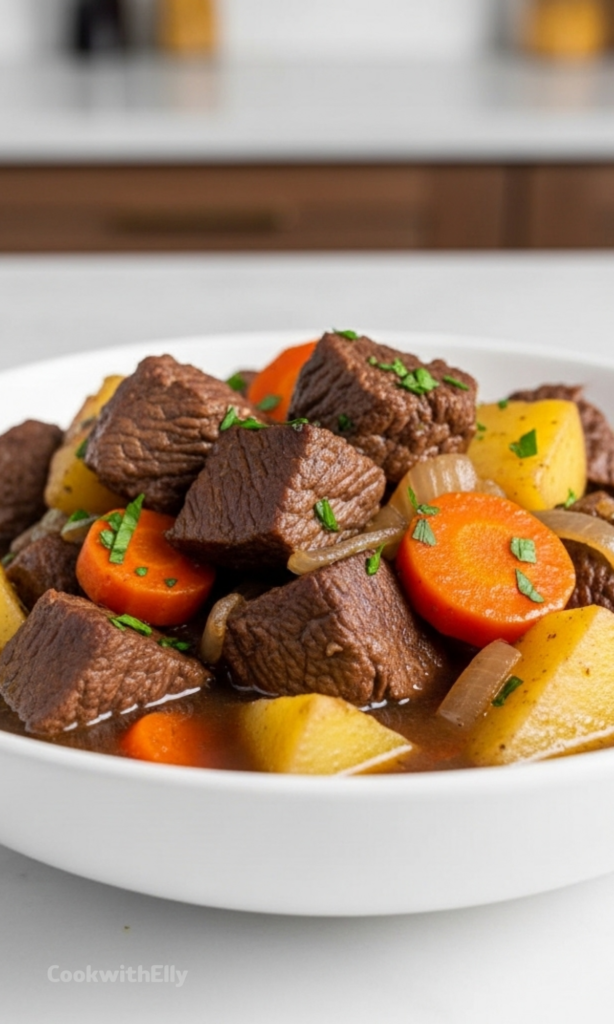

I have a soft spot for meals that sit quietly on the stove and make the whole house smell like you’ve been cooking all day, even if you haven’t fussed much. This Irish Beef Stew is exactly that kind of meal. It’s cozy, deeply savory, and the kind of thing I crave when the weather turns even slightly chilly.
- under_page_title -->I didn’t grow up eating traditional Irish food, but over time I found myself drawn to the simplicity of it. Meat, potatoes, carrots, a rich broth. Nothing fancy, just honest ingredients treated with patience and a little care.
What makes this version special is the addition of stout and red wine, which gives the stew a dark, complex flavor without making it heavy. It still feels rustic, still feels approachable, just with a little extra depth that keeps you going back for another spoonful.
And while classic Irish stew often uses lamb, I use beef because it’s easier to find and, honestly, it delivers that same slow-cooked satisfaction. This is the kind of dish that welcomes adaptation and still turns out wonderfully every single time.
Why This Stew Works So Well
This stew is built around hearty ingredients that hold up during long cooking, which means every bite feels substantial. Tender chunks of beef, soft potatoes, and sweet carrots create a balance that feels filling without being overwhelming.
The stout adds a slightly malty richness while the red wine rounds everything out. Neither one takes over the dish. Instead, they blend into the broth and make it taste like it’s been simmering in a countryside kitchen for hours.
- It’s deeply comforting and perfect for cold evenings or slow weekends.
- The ingredients are simple and easy to find at any grocery store.
- The long simmer transforms inexpensive cuts of beef into something incredibly tender.
- It tastes even better the next day, which makes leftovers something to look forward to.
Irish Stew vs. Beef Stew
Traditional Irish stew was historically made with lamb or mutton, along with potatoes and a few root vegetables. It was designed to be practical, filling, and made from what people had on hand.
Modern versions, especially outside Ireland, often use beef instead. That shift makes sense since beef is more widely available and brings a slightly richer flavor that works beautifully with slow braising.
Both versions rely on the same idea though. Simple ingredients, gentle cooking, and letting time do most of the work. There’s nothing complicated here, and that’s exactly the point.
Ingredients You’ll Need
The ingredient list is straightforward, but each one plays an important role in building flavor. This is not the place to rush or skip steps, because the magic comes from layering everything gradually.
Main Ingredients
- Beef chuck, cut into chunks
- Salt and black pepper
- Olive oil
- Garlic, minced
- Beef stock
- Water
- Stout beer
- Red wine
- Tomato paste
- A pinch of sugar
- Fresh thyme
- Worcestershire sauce
- Bay leaves
- Onions
- Carrots
- Potatoes
- Butter
- Fresh parsley for finishing
Start with Browning the Beef
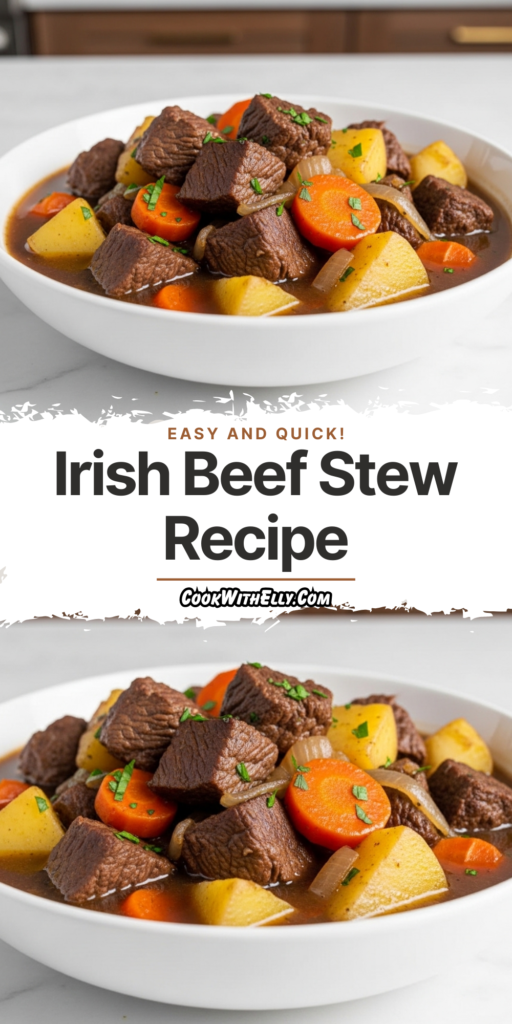
This first step matters more than people think. Browning the beef creates the deep flavor base that carries through the entire stew, so I always take my time here and avoid crowding the pot.
I pat the meat dry, season it, and sear it in batches until each piece develops a dark crust. That color equals flavor, and flavor is what transforms this from a basic soup into a true stew.
Build the Broth
Once the beef is browned, garlic goes in briefly just to release its aroma. Then comes the stock, water, stout, red wine, tomato paste, herbs, and seasonings.
The combination might seem bold at first glance, but it mellows beautifully as it cooks. After everything is stirred together, I bring it to a gentle simmer and let it cook low and slow.
This is where patience starts paying off. The beef begins to tenderize, and the broth starts developing that signature richness.
Let It Simmer Slowly
I keep the heat low and let the pot barely bubble for about an hour. Not a boil, not a rush, just a quiet simmer that allows everything to relax into itself.
During this time, I check occasionally and give it a stir, but mostly I leave it alone. Stew rewards restraint more than attention.
Sauté the Vegetables Separately
While the beef cooks, I sauté the onions and carrots in butter in another pan. Cooking them separately helps them develop sweetness and color before they ever enter the stew.
This extra step might seem unnecessary, but it adds another layer of flavor. The onions become golden and soft, and the carrots pick up a slight caramelized edge.
Bring Everything Together
After the beef has simmered, I add the sautéed vegetables along with the potatoes. At this stage the stew finally starts to look complete, full of color and texture.
I season again with salt and pepper, then let it continue simmering uncovered until the vegetables are tender and the broth thickens naturally. No shortcuts here, just letting the ingredients finish cooking together.
How the Stew Thickens Naturally
One of the things I love most about this recipe is that it doesn’t rely heavily on flour or starch. The potatoes release just enough to give the broth body without making it heavy.
If I want it slightly thicker, I sometimes mash a few potato pieces against the side of the pot. That small trick blends right in and keeps the texture rustic.
Final Touches Matter
Before serving, I remove the bay leaves and skim off any excess fat from the surface. It’s a small step, but it keeps the finished stew tasting clean rather than greasy.
A sprinkle of fresh parsley at the end brightens everything. After hours of slow cooking, that little bit of freshness really wakes the dish up.
What It Tastes Like
The beef becomes fork tender, almost falling apart when you scoop it. The carrots are soft but not mushy, and the potatoes absorb all that savory broth.
The stout gives a subtle maltiness while the wine adds warmth and depth. Neither stands out on its own, but together they create a flavor that feels layered and comforting.
Ways to Make It Your Own
This is the kind of stew people naturally adapt based on what they have. I’ve swapped in parsnips before, added a turnip once, and even tossed in a bit of cabbage when it needed using up.
Some cooks like to dust the beef in flour before browning for a thicker finish. Others grate a small potato into the stew to help it thicken as it cooks.
You can cook it longer if you want an even softer texture. A slow, extended simmer only deepens the flavor.
Serving Suggestions
I usually serve this stew in wide bowls with a chunk of crusty bread on the side. The bread is perfect for soaking up every last bit of broth.
It also pairs nicely with something simple and green, like a light salad, just to balance the richness. Nothing elaborate is needed since the stew is already the star.
Tips for the Best Irish Beef Stew
- Choose a well-marbled cut like chuck for the most tender results.
- Brown the meat in batches to avoid steaming.
- Keep the simmer low and slow for the best texture.
- Sautéing the vegetables separately adds noticeable flavor.
- Let the stew rest a few minutes before serving so everything settles.
Make-Ahead and Storage
This stew actually improves after a night in the refrigerator. The flavors meld together even more, making leftovers something I genuinely look forward to.
I store it in an airtight container and reheat gently on the stove with a splash of water or stock. It freezes well too, which makes it a great batch cooking option.
Irish Beef Stew Recipe
Description
This Irish Beef Stew is a rich, slow-simmered comfort dish filled with tender beef, potatoes, and carrots in a deeply flavorful broth. A combination of stout beer and red wine adds incredible depth, while herbs and aromatics create a classic, cozy meal perfect for cold evenings or festive gatherings.
Ingredients
For the Stew
Vegetables
Instructions
Brown the Beef
-
Season the beef with salt. Heat olive oil in a large heavy pot over medium-high heat.
-
Pat beef dry and brown in batches without overcrowding. Sear on all sides until deeply caramelized, then set aside.Proper browning builds flavor.
Build the Broth
-
Add garlic to the pot and cook for about 30 seconds until fragrant.
-
Pour in beef stock, water, stout beer, red wine, tomato paste, sugar, thyme, Worcestershire sauce, and bay leaves. Stir well.
-
Return beef to the pot, bring to a simmer, reduce heat to low, cover, and cook gently for 1 hour.Slow simmer ensures tender meat.
Cook the Vegetables
-
In a separate pan, melt butter over medium heat. Add onions and carrots and sauté until onions are golden, about 15 minutes.
Finish the Stew
-
Add sautéed vegetables and potatoes to the stew. Season with salt and pepper.
-
Simmer uncovered for about 40 minutes, until vegetables are tender and broth thickens slightly.
-
Remove bay leaves, skim excess fat if needed, adjust seasoning, and garnish with parsley before serving.
Nutrition Facts
Servings 6
Serving Size 1 bowl
- Amount Per Serving
- Calories 420kcal
- % Daily Value *
- Total Fat 17gg27%
- Saturated Fat 7gg35%
- Trans Fat 0.5gg
- Cholesterol 95mgmg32%
- Sodium 620mgmg26%
- Potassium 980mgmg29%
- Total Carbohydrate 28gg10%
- Dietary Fiber 4gg16%
- Sugars 5gg
- Protein 32gg64%
- Calcium 6% mg
- Iron 25% mg
* Percent Daily Values are based on a 2,000 calorie diet. Your daily value may be higher or lower depending on your calorie needs.
Note
- For deeper flavor: Make the stew a day ahead. It tastes even better the next day.
- Traditional variation: Substitute lamb for a more classic Irish version.
- To thicken naturally: Mash a few potato pieces into the broth.
- Serve with: Crusty bread or mashed potatoes to soak up the rich gravy.
Frequently Asked Questions
Can I make this stew without alcohol?
Yes. Replace the stout and wine with additional beef stock. The stew will still be rich and flavorful.
What cut of beef works best?
Chuck roast is ideal because it becomes tender and flavorful during long, slow cooking.
How do I store leftovers?
Refrigerate in an airtight container for up to 4 days or freeze for up to 3 months.