

 View Gallery
1 photo
View Gallery
1 photo
You know that feeling after a good workout, when your muscles are humming and your stomach is grumbling? It’s a clear signal, your body is asking for the right kind of fuel to rebuild and recharge.
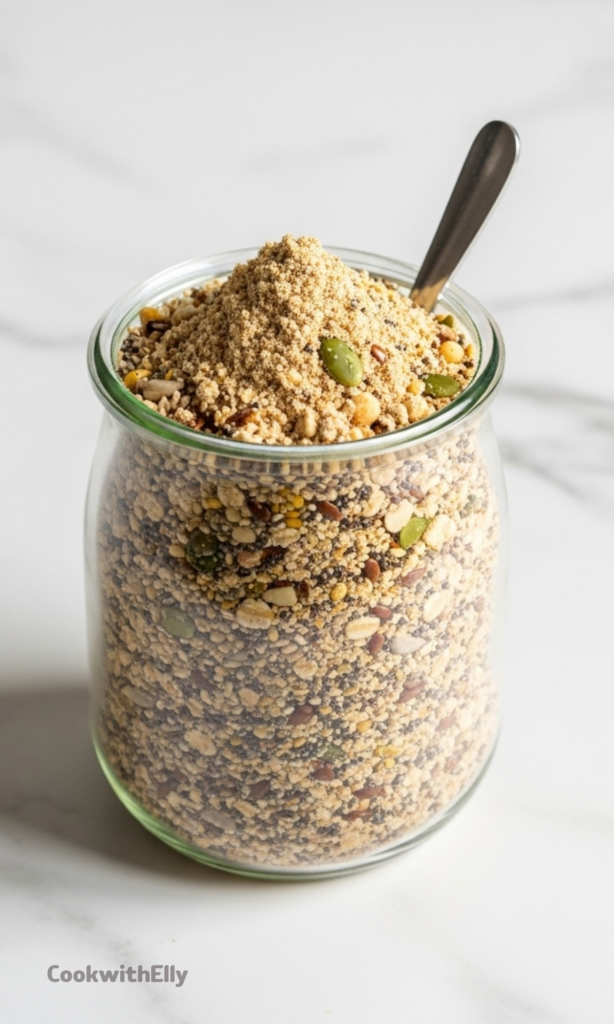
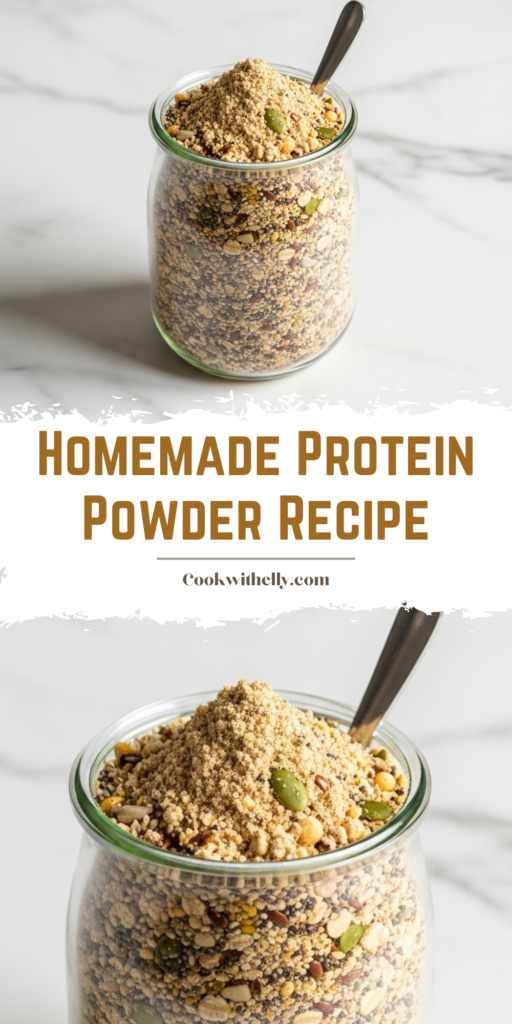
While the supplement aisles are packed with options, there’s a quiet confidence that comes from making your own. This homemade protein powder is that feeling, scooped into a jar.
Why Your Kitchen is the Best Supplement Lab
Store-bought powders can be a mystery, with ingredients lists that sound more like a chemistry experiment than food. It’s a bit strange, when you think about it.
Making your own puts you back in the driver’s seat. You control the quality, the flavor, and exactly what goes in—and just as importantly, what stays out. No fillers, no artificial sweeteners chasing a fake milkshake taste, just whole food goodness.
Ingredients Needed for the Recipe
This recipe is a blueprint, a fantastic starting point built on simple, powerful ingredients. Each one brings its own superpower to the mix.
- Chia Seeds (0.25 cups): These tiny nutritional powerhouses act as a thickening agent in shakes, creating a lovely, satisfying texture while packing in fiber and omega-3s.
- Flax Seeds (0.33 cups): For a nutty depth and a major boost of fiber. Grinding them unlocks all their benefits, helping everything blend smoothly.
- Pumpkin Seeds (0.5 cups): They give the powder a robust, earthy base and are fantastic for adding minerals like magnesium, which is great for recovery.
- Sunflower Seeds (0.33 cups): These lend a mild, slightly sweet note and contribute vitamin E, a helpful antioxidant after physical stress.
- Almonds (0.25 cups): They’re here for richness. Toasting them first intensifies their flavor, making your shakes taste indulgent.
- Oats (0.5 cups): The unsung hero that provides a creamy body and slow-releasing carbohydrates, for energy that lasts.
- Chana Dal (0.25 cups): This is the protein anchor. These split chickpeas are a concentrated, neutral-flavored protein source that makes this powder truly effective.
How to make ?
The process is straightforward, truly. The only real trick is patience—taking the time to toast each component gently unlocks their fullest flavor and ensures your powder stores well.
Step 1 – Toasting the Almonds
Start with the almonds. If you’re using an oven, spread them on a tray and toast at 160°C for just 4-5 minutes.
On the stovetop, use a dry pan over low heat, shaking often, until they become fragrant. You’re looking for a warm, golden scent, not a dark color.
Step 2 – Roasting the Seeds and Oats
This step is best done separately. In the same dry pan, roast the flax seeds, pumpkin seeds, sunflower seeds, and oats one after the other, each on low heat.
They toast at different rates, so this prevents the smaller seeds from burning. Let them all cool completely on a plate; warmth will create steam in the blender later.
Step 3 – The Grand Blend
Combine all the cooled, toasted ingredients in a clean, completely dry blender jar. A high-speed blender works best for a fine powder.
Blend in bursts, pausing to shake the jar, until you have a uniform, slightly coarse powder. A little texture is perfectly fine, it reminds you it’s real food.
Step 4 – Storing Your Creation
Transfer the fresh powder immediately into a clean, airtight container. A large mason jar is ideal.
This is crucial: always use a dry spoon to scoop it out, and keep it in a cool, dark cupboard. Moisture is the enemy of freshness here.
Beyond the Basic Shake: How to Use Your Powder
A simple shake with water or milk is just the beginning. This powder is a versatile kitchen ally, and it’s surprisingly adaptable.
Think of it as a supercharged flour. You can replace up to a quarter of the regular flour in pancake, muffin, or waffle batter for a protein boost. It works wonderfully in oatmeal, stirred right into the pot as it cooks.
Tips
- For a smoother powder, especially if your blender isn’t ultra-powerful, you can grind the chana dal into a flour first, before adding the other ingredients.
- Feel free to play with spices. A pinch of cinnamon or cardamom blended in can add a wonderful warmth to your shakes and baked goods.
- If you prefer a sweeter powder, don’t add liquid sweeteners to the batch. Instead, blend in a few tablespoons of powdered dry dates or coconut sugar after the main grind.
Making It Uniquely Yours: Variations & Swaps
The beauty of a DIY approach is customization. Can’t find pumpkin seeds? Try hemp hearts for a similar green boost.
Not a fan of almonds? Cashews will give you that same creamy richness. For a completely nut-free version, simply increase the sunflower and pumpkin seed quantities. You can even add a tablespoon of unsweetened cocoa powder to the final blend for a chocolatey version—just store it a bit sooner.
Keeping It Fresh: Storage & Shelf Life
Because we’re not using any preservatives, a little care goes a long way. Your homemade powder will stay fresh and potent for about a month in the pantry.
For longer storage, up to three months, tuck the airtight jar into the freezer. This locks in the nutritional value and the flavor perfectly, no clumping involved.
Homemade Protein Powder Recipe
Description
Tiring workout sessions need not lead to hunger anymore. Gaining lean muscle and boosting metabolism is easiest when you incorporate a lot of proteins in your diet—and what’s simpler than homemade protein powder to do that? Protein is a powerhouse of health benefits, and making your own ensures no additives, preservatives, or mystery ingredients. This plant-based blend is nutrient-dense, easy to store, and perfect for smoothies, baking, or shakes.
ingredients
Dry Grocery
Instructions
-
Preheat oven to 160°C (320°F). Spread almonds on a baking tray and toast for 4–5 minutes, or pan-roast on low flame until fragrant. Do not burn.
-
Dry roast flax seeds, pumpkin seeds, sunflower seeds, and oats separately in a pan over low heat. Each ingredient has different roasting times—avoid browning or burning. Let all cool completely on a clean surface.
-
Combine all cooled ingredients in a high-speed blender or spice grinder. Grind in batches if needed until you achieve a fine, uniform powder.
-
Transfer the powder to an airtight, moisture-free container. Store in a cool, dry place. Use a dry spoon each time to prevent clumping or spoilage.
Nutrition Facts
Servings 16
Serving Size 2 tablespoons (approx. 15g)
- Amount Per Serving
- Calories 96kcal
- % Daily Value *
- Total Fat 6g10%
- Saturated Fat 0.7g4%
- Sodium 5mg1%
- Potassium 180mg6%
- Total Carbohydrate 8g3%
- Dietary Fiber 4g16%
- Sugars 0.5g
- Protein 4g8%
- Calcium 80 mg
- Iron 1.8 mg
* Percent Daily Values are based on a 2,000 calorie diet. Your daily value may be higher or lower depending on your calorie needs.
Note
- Storage tip: Keeps fresh for up to 3 months in an airtight container in the fridge.
- Usage ideas: Add to smoothies, oatmeal, pancakes, muffins, or yogurt for a protein boost.
- Customize it: For sweetness, blend in 2–3 pitted dates or a pinch of cinnamon before grinding.
- Moisture warning: Always use dry utensils to scoop—moisture causes clumping and spoilage.
Frequently Asked Questions
Can I skip roasting the ingredients?
Roasting enhances flavor and shelf life, but you can use raw ingredients if preferred. However, raw flax and chia may have a slightly bitter taste, and the powder won’t store as long.
Is this protein powder suitable for weight loss or gain?
Yes! It supports both goals. For weight loss, it promotes satiety. For muscle gain, pair it with resistance training and adequate calories. Adjust serving size based on your needs.
Can I use this as a flour substitute?
Yes, but replace only up to 25% of regular flour with this protein powder in recipes (like pancakes or muffins) and add extra moisture (e.g., banana, yogurt, or applesauce) to prevent dryness.