

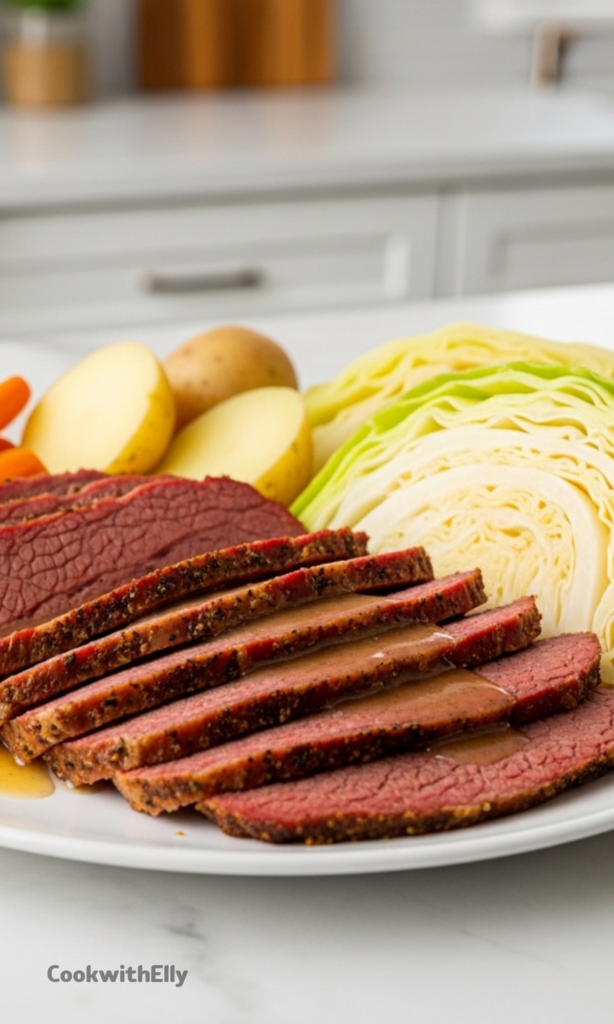

Corned Beef Brisket, Potatoes, Cabbage, and Carrots for St. Patrick’s Day is more than just a meal—it’s a celebration of tradition, flavor, and slow-cooked comfort. This iconic dish brings together tender, spice-infused beef with hearty vegetables to create a one-pot feast that’s deeply satisfying and perfect for sharing. While many peo
ple prepare it by simply simmering everything together, understanding the science and technique behind curing and cooking can transform this classic into something truly exceptional.This guide walks you through the process of making corned beef the right way, from dry-curing the brisket with spices and pink salt to carefully controlling temperature and cooking vegetables separately for ideal texture. The result is a meal that captures the spirit of St. Patrick’s Day while delivering unmatched flavor and tenderness.
Why This St. Patrick’s Day Classic Works So Well
- Dry-curing the brisket with pink salt, brown sugar, and spices intensifies flavor while creating the signature deep color and firm yet tender texture.
- Cooking the meat at a controlled temperature allows connective tissue to convert into gelatin, keeping the beef succulent.
- Preparing vegetables separately ensures they reach perfect doneness without overcooking the brisket.
These simple but important choices elevate the dish from a basic boiled dinner into a carefully crafted centerpiece worthy of a holiday gathering.
The Story Behind Corned Beef and St. Patrick’s Day
Despite its strong association with Irish culture today, corned beef was historically produced in Ireland mainly for export. During the 17th and 18th centuries, Irish cattle were raised to supply salted beef to British markets and naval fleets because the curing process extended shelf life for long journeys.
Ironically, most Irish families could not afford to eat beef themselves and relied more heavily on pork or lamb. It was only after Irish immigrants arrived in America that corned beef became a staple within Irish-American communities. Affordable beef and exposure to other cured-meat traditions helped shape the dish we now associate with St. Patrick’s Day celebrations.
Today, Corned Beef Brisket, Potatoes, Cabbage, and Carrots for St. Patrick’s Day stands as a symbol of cultural blending and culinary adaptation.
The Two Essential Steps: Cure and Cook
Making outstanding corned beef comes down to two fundamental stages: the curing process and the cooking process. Each plays a vital role in developing the dish’s signature flavor, texture, and appearance.
The Cure: Building Flavor from the Inside Out
The curing mixture is what gives corned beef its distinctive salty, slightly spiced profile. Traditional blends borrow heavily from seasoning combinations used in other cured meats.
- Mustard seeds
- Black peppercorns
- Coriander seeds
- Allspice berries
- Cloves
- Bay leaves
- Fennel seeds
- Ground ginger
- Brown sugar
- Kosher salt
- Pink curing salt (sodium nitrite blend)
This balance of warm spices complements the richness of brisket while enhancing preservation and texture.
Why Salt Is the Heart of Corned Beef
The term “corned” refers to the coarse grains—or “corns”—of salt historically used to preserve meat. Salt does far more than season the brisket. It changes the structure of muscle proteins, causing them to separate and weaken. This transformation tenderizes the meat while allowing it to retain moisture during cooking.
The curing action also concentrates flavor, giving corned beef its signature savory intensity.
Choosing the Right Brisket
For Corned Beef Brisket, Potatoes, Cabbage, and Carrots for St. Patrick’s Day, selecting the right cut is key. Brisket comes from the lower chest of the cow and contains a significant amount of connective tissue. This makes it tough when cooked quickly but incredibly tender when prepared slowly.
Look for a brisket with:
- Even marbling for flavor and moisture
- A thick, uniform shape for consistent curing
- A moderate fat cap to protect the meat during cooking
How to Cure the Brisket
Step 1: Prepare the Spice Mixture
Combine salt, pink curing salt, brown sugar, and the spice blend. The balance should be savory with subtle sweetness and aromatic warmth.
Step 2: Coat the Meat Thoroughly
Rub the mixture evenly over every surface of the brisket. This ensures consistent curing.
Step 3: Seal and Rest
Place the brisket in a sealed container or vacuum bag to keep the cure in constant contact with the meat. Refrigerate for several days, allowing the seasoning to penetrate fully.
Step 4: Rinse Before Cooking
After curing, rinse away excess salt to prevent the finished dish from becoming overly salty.
Cooking the Corned Beef to Perfect Tenderness
Cooking is where patience pays off. Instead of boiling aggressively, maintain a gentle simmer. Controlled heat gradually converts collagen into gelatin, creating a moist and tender texture.
- Place the cured brisket in a pot with fresh water and aromatics.
- Bring to a gentle simmer—not a rolling boil.
- Cook low and slow until fork-tender.
This gradual process prevents moisture loss and preserves the structure developed during curing.
Why Vegetables Should Be Cooked Separately
Traditional methods often cook cabbage, potatoes, and carrots alongside the beef. While convenient, this can result in mushy vegetables and diluted flavor.
Cooking them separately allows each ingredient to shine.
- Potatoes become creamy without absorbing excessive salt.
- Carrots stay sweet and tender rather than overcooked.
- Cabbage softens while maintaining structure and freshness.
Once prepared, the vegetables can be combined with sliced corned beef just before serving.
Preparing the Classic Vegetable Trio
Potatoes
Use waxy potatoes that hold their shape. Simmer them in lightly seasoned water or broth until just tender.
Carrots
Cut into large pieces and cook until soft but not falling apart. Their natural sweetness balances the salty beef.
Cabbage
Slice into wedges and cook briefly to retain a slight bite. Overcooking cabbage can introduce bitterness, so keep it simple and gentle.
Bringing the Dish Together
Once everything is cooked, slice the brisket against the grain. This shortens muscle fibers and ensures each bite is tender rather than chewy.
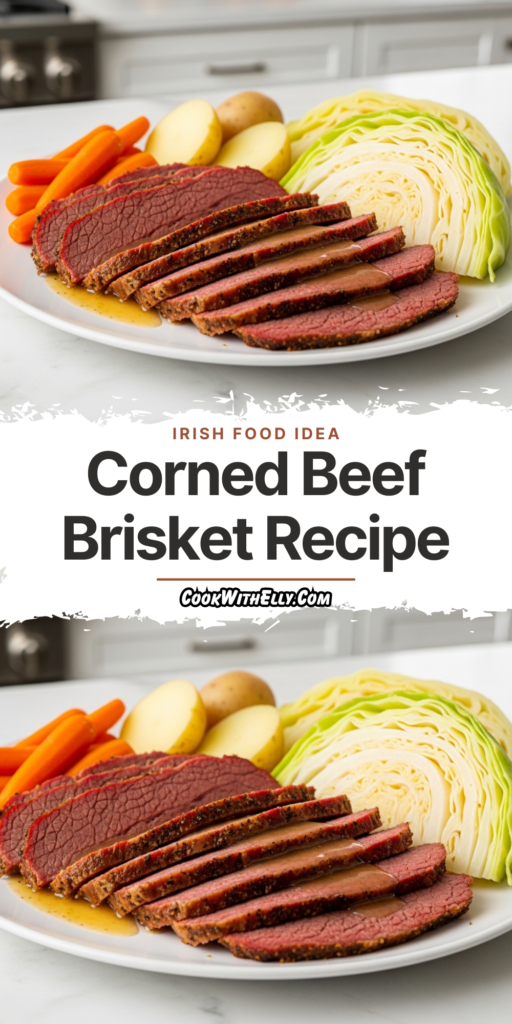
Arrange the beef on a platter surrounded by potatoes, cabbage, and carrots. Spoon a little of the cooking liquid over the top to keep everything moist and flavorful. and harmonious.
Tips for the Best Results
- Allow enough curing time for full flavor development.
- Keep cooking temperatures gentle to avoid drying the meat.
- Slice only after resting to retain juices.
- Season vegetables lightly—they should balance, not compete.
- Use the grain direction as your guide when slicing brisket.
Serving Ideas for a St. Patrick’s Day Feast
This dish is traditionally served family-style, encouraging guests to gather and share. Pair it with rustic bread, mustard, or horseradish for contrast. The leftovers are equally beloved, often used in sandwiches or hashes the next day.
Why This Dish Endures Year After Year
Corned Beef Brisket, Potatoes, Cabbage, and Carrots for St. Patrick’s Day remains popular because it combines culinary science with nostalgic comfort. The curing process transforms a tough cut of meat into something luxurious, while the vegetables provide warmth and familiarity.
It’s a dish rooted in preservation techniques, immigrant history, and the simple pleasure of slow cooking. Whether prepared traditionally or with refined technique, it continues to bring people together every March.
Corned Beef Brisket Recipe
Description
This corned beef brisket recipe delivers tender, flavorful meat with perfectly cooked vegetables. Using a dry-curing method with pink salt and spices, this recipe creates deeper flavor penetration and superior texture compared to traditional wet brining. Cooked at a precise temperature for optimal tenderness and moisture retention.
ingredients
Curing Rub
Main Ingredients
Instructions
Curing Process
-
Step 1
Eight days before serving, combine salt, pink salt (or saltpeter), and brown sugar in a small bowl and whisk until homogeneous. Rub evenly over every surface of brisket. -
Step 2
Combine peppercorns, mustard, coriander, allspice, cloves, ginger, and bay leaves and sprinkle evenly over both sides of beef, pressing spices gently into the meat until they stick. -
Step 3
Seal the beef in a vacuum sealed bag or a zipper-lock bag with all of the air pressed out of it. Place in the coldest part of the refrigerator and let rest for 7 days, flipping once a day.Curing time: 7 days
Cooking Process
-
Step 4
The day before serving, remove beef from the bag and rinse off all spices under cold, running water. Pat dry with paper towels. -
Step 5
To Cook in a Dutch Oven: Preheat oven to 200°F (93°C). Place brisket in large Dutch oven, cover with water by several inches, and bring to a simmer over high heat. Remove from heat, cover with lid slightly ajar, place in oven, and cook until completely tender, about 10 hours.Alternative: Use sous-vide at 180°F for 10 hours -
Step 6
Once beef is cooked, transfer to an airtight container along with cooking liquid. Let rest in refrigerator at least overnight, and up to 3 days.This makes slicing easier -
Step 7
The day of: Transfer cooking liquid to a large saucepan or Dutch oven along with carrots, potatoes, and cabbage. Top up with water until vegetables are submerged. -
Step 8
Slice beef thinly against the grain and fan slices out in large skillet. Add 1 cup of liquid from pot to skillet and place skillet on top of pot. Cover skillet. -
Step 9
Bring the pot to a boil over high heat, then reduce to a simmer. Cook until vegetables are completely tender and beef is heated through, about 45 minutes. Serve immediately with hot mustard.
Nutrition Facts
Servings 6
Serving Size 1 serving (approximately 8 oz beef with vegetables)
- Amount Per Serving
- Calories 450kcal
- % Daily Value *
- Total Fat 20gg31%
- Saturated Fat 7gg35%
- Trans Fat 0gg
- Cholesterol 95mgmg32%
- Sodium 1850mgmg78%
- Potassium 980mgmg29%
- Total Carbohydrate 28gg10%
- Dietary Fiber 5gg20%
- Sugars 8gg
- Protein 42gg84%
- Calcium 8% mg
- Iron 25% mg
* Percent Daily Values are based on a 2,000 calorie diet. Your daily value may be higher or lower depending on your calorie needs.
Note
- Make ahead: Corned beef can be cooked up to a week before serving. Once cooked, it can be kept well-wrapped and refrigerated for about two weeks.
- Store-bought option: You can also make this recipe using store-bought corned beef. Just skip to step 2 (cooking process).
- Slicing tip: Always slice against the grain for maximum tenderness. Cooling the beef overnight makes slicing much easier.
- Temperature control: For best results, maintain cooking temperature at 180°F (82°C). Use a thermometer to verify your slow cooker or oven temperature.
Frequently Asked Questions
Why is pink salt used in corned beef?
Pink salt (sodium nitrite) gives corned beef its characteristic pink color, tangy flavor, and helps preserve the meat by inhibiting bacteria growth. It also prevents the meat from turning brown during cooking.
Can I make corned beef without the 7-day curing process?
Yes! You can use store-bought corned beef and skip directly to the cooking instructions. The curing process enhances flavor but isn't required if you're short on time.
Why cook the vegetables separately from the beef?
Vegetables need a higher temperature (183°F) to soften properly compared to beef (180°F). Cooking them separately ensures both the meat and vegetables achieve their ideal textures.
How do I know when the corned beef is done?
The beef is done when it's completely tender and can be easily pierced with a fork. This typically takes about 10 hours at 180°F.