

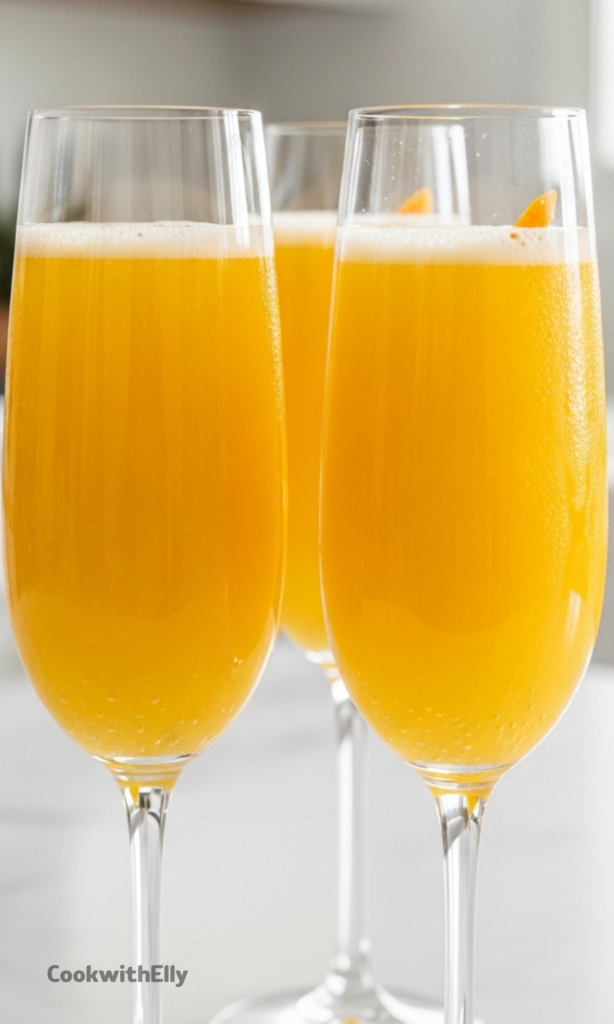

There is something about a mimosa that instantly makes a morning feel special. It does not matter if it is a holiday, a birthday brunch, or just a slow Sunday when I want to linger at the table a little longer. That soft sparkle and fresh citrus flavor always feels like a celebration in a glass.
I started making these at home years ago because they are almost effortless, yet people light up the second you hand them one. You do not need complicated tools or fancy techniques. Just good ingredients, chilled well, and a relaxed approach.
What I love most is how this drink sets the tone without stealing the show. It is light, refreshing, and easy to sip while chatting, cooking, or nibbling on brunch favorites. It quietly turns an ordinary morning into something memorable.
Once you see how simple it is, you will probably find yourself making mimosas more often than you expected. I definitely did, and no one in my house has complained about that.
Ingredients Needed for the Recipe
- Chilled sparkling wine (Champagne, Prosecco, or Cava) – This brings the bubbles and structure to the drink, giving it that crisp, celebratory feel.
- Orange juice – Adds brightness, natural sweetness, and the classic citrus flavor that defines a mimosa.
Choosing the Best Ingredients
Because this recipe has only two ingredients, each one really matters. I do not reach for the most expensive bottle, but I do choose something dry and clean tasting. A sweeter wine can make the drink feel heavy instead of refreshing.
Fresh, well chilled orange juice is just as important. If I am squeezing it myself, I always strain it so the texture stays smooth. Pulp can interrupt that light, bubbly experience we are going for.
The key is balance. You want the wine to feel lively and the juice to taste bright, not sugary. When both are cold and fresh, the whole drink comes together beautifully without any extra effort.
How to make Classic Mimosa Recipe?
Step 1 – Chill Everything Thoroughly
The night before I plan to serve mimosas, I place the sparkling wine and orange juice in the refrigerator. This step makes a huge difference because the drink stays crisp without needing ice.
Ice might seem helpful, but it actually dilutes the flavor and flattens the bubbles. Starting with properly chilled ingredients keeps the texture lively and the taste clean.
Step 2 – Prepare the Glassware
Champagne flutes are my favorite for serving because their tall shape helps preserve carbonation longer. The bubbles travel upward instead of disappearing quickly.
If I have time, I chill the glasses as well. A cold glass keeps everything refreshing from the first sip to the last, especially during longer brunch gatherings.
Step 3 – Pour the Sparkling Wine First
I tilt each glass slightly and pour the sparkling wine slowly along the inside. This gentle method keeps the bubbles intact instead of causing them to foam up too quickly.
Filling the glass about halfway gives you the perfect base. It also leaves enough room to adjust the ratio later, depending on taste.
Step 4 – Add the Orange Juice
Next, I top the wine with orange juice, pouring just enough to fill the glass. The juice naturally blends with the bubbles, creating that signature golden color.
There is no need to stir. The carbonation does the mixing for you, keeping the drink light and airy.
Step 5 – Taste and Adjust
I usually start with a 50-50 ratio, but this is flexible. Some mornings call for a stronger pour, while other times I add a bit more juice for a softer drink.
This is one of those recipes where preference matters more than rules. A quick taste lets you tailor each glass perfectly.
Tips
- Always use well chilled ingredients to avoid needing ice.
- Pour the sparkling wine first to maintain the best texture and bubbles.
- Use pulp-free juice for a smooth, clean sip.
- Tilt the glass while pouring to prevent losing carbonation.
- Choose a dry sparkling wine so the drink does not become overly sweet.
- Chill your glasses ahead of time for an extra refreshing result.
- Serve immediately after pouring so the bubbles stay lively.
- Avoid overmixing – let the natural fizz combine everything.
Simple Variations to Try
Once you are comfortable with the classic version, it is fun to change things up. Swapping the orange juice for blood orange juice gives the drink a deeper color and slightly richer citrus flavor.
Grapefruit juice adds a pleasant tartness that feels especially refreshing during warmer months. It creates a mimosa that is a little more grown-up, but still easy to enjoy.
Cranberry juice works beautifully for holiday tables, bringing a festive look without much extra effort. I sometimes use apple cider in the fall when I want something cozy yet still sparkling.
If I want to intensify the orange flavor, I add a tiny splash of orange liqueur. Just a little goes a long way, enhancing the aroma without overpowering the drink.
Serving Ideas for Brunch
Mimosas shine brightest when paired with relaxed, comforting foods. I like serving them alongside egg dishes, baked goods, and fresh fruit so guests can mix and match flavors.
They are especially nice with savory meals because the citrus cuts through richness. That contrast keeps everything tasting balanced rather than heavy.
For gatherings, I sometimes set up a small mimosa station with juice options and chilled bottles ready to go. It feels interactive without creating extra work for the host.
No matter how you serve them, these cocktails encourage people to slow down, talk a little longer, and enjoy the moment. That is really what makes them special.
At the end of the day, this recipe proves that simple can still feel thoughtful. Two ingredients, a few minutes, and you have something bright, festive, and welcoming.
I come back to this again and again because it never disappoints. It is easy, reliable, and always brings a little sparkle to the table, which honestly is reason enough to make it.
Classic Mimosa Recipe
Description
Learn how to make mimosas at home with this simple recipe! These easy 2-ingredient cocktails are guaranteed to be the star of your next brunch. Light, fresh, and festive, they're perfect for celebrating everything from Mother's Day to Christmas and New Year's.
Ingredients
Instructions
-
Chill Ingredients
Chill the sparkling wine and orange juice in the refrigerator the night before you plan to serve mimosas.For best results, also chill your champagne flutes ahead of time -
Pour Sparkling Wine
Pour the chilled sparkling wine into tilted champagne flutes, filling each glass about half full. Pour slowly down the side of the glass to preserve carbonation.Tilt the glass to minimize loss of bubbles -
Add Orange Juice
Top the wine with chilled orange juice to fill each glass.Use a 50/50 ratio of wine to juice, or adjust to taste -
Serve
Taste and adjust the ratio if needed. Some prefer 2 parts wine to 1 part juice, or vice versa for a less alcoholic cocktail. Serve immediately.Do not add ice as it will dilute and flatten the drink
Nutrition Facts
Servings 6
Serving Size 1 cocktail (about 5 oz)
- Amount Per Serving
- Calories 125kcal
- % Daily Value *
- Total Fat 0.2gg1%
- Saturated Fat 0gg0%
- Trans Fat 0gg
- Cholesterol 0mgmg0%
- Sodium 10mgmg1%
- Potassium 220mgmg7%
- Total Carbohydrate 11gg4%
- Dietary Fiber 0.1gg1%
- Sugars 9gg
- Protein 0.5gg1%
- Calcium 15mg mg
- Iron 0.2mg mg
* Percent Daily Values are based on a 2,000 calorie diet. Your daily value may be higher or lower depending on your calorie needs.
Note
- Use champagne flutes: They're designed to preserve carbonation for extra bubbly drinks.
- Chill your glasses: Since you don't want to add ice (it makes cocktails flat), chill your glasses ahead of time.
- Skip the pulp: Use pulp-free orange juice for smooth, bubbly cocktails. If squeezing fresh, strain it first.
- Mix it up: Try blood orange juice, cranberry juice, apple cider, grapefruit juice, or pomegranate juice. Add a splash of Grand Marnier for stronger orange flavor.
Frequently Asked Questions
What's the best ratio for mimosas?
I like a 50/50 ratio of sparkling wine to orange juice, but you can adjust to your preference. Try 2 parts wine to 1 part juice for a stronger cocktail, or more juice for a lighter drink.
Can I make mimosas ahead of time?
It's best to make mimosas just before serving to maintain carbonation. However, you can chill all ingredients and glasses the night before for quick assembly.
What type of sparkling wine should I use?
Champagne, prosecco, or cava all work great! Choose a dry sparkling wine for the best balance with the sweet orange juice. Prosecco is a budget-friendly option that works perfectly.
Why shouldn't I add ice to mimosas?
Ice dilutes the drink and causes the carbonation to escape faster, making your mimosa flat. Instead, chill your ingredients and glasses for a cold, bubbly cocktail.