

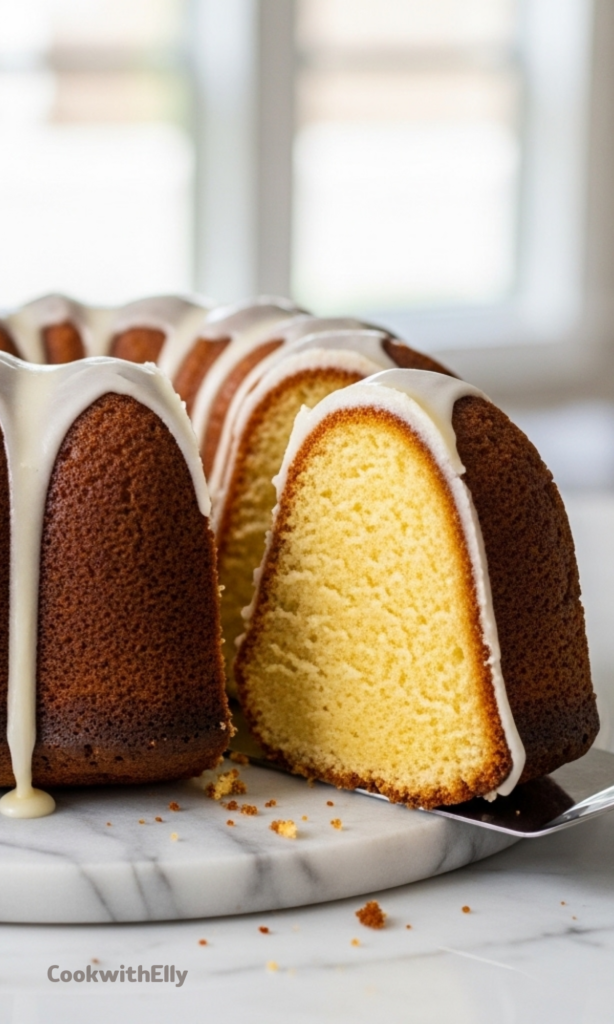

There is something quietly special about a classic Bundt cake. It is not flashy or over-decorated, yet it always feels like the centerpiece of the table. The moment I slice into it and see that soft, buttery crumb, I know it is going to be one of those desserts people remember.
ceholder-119" data-inserter-version="2" data-placement-location="under_page_title">I spent a long time testing this recipe because I wanted a cake that stayed moist for days, not just an hour after baking. Some versions looked beautiful but felt dry, others tasted good but lacked that rich texture. This one finally hit the sweet spot, and honestly, I still get excited every time I bake it.
The flavor leans deeply into vanilla with a gentle creaminess that makes each bite feel full and satisfying. It is the kind of cake you serve with coffee in the afternoon or bring out after dinner when everyone says they are full but still accepts a slice.
It is simple, dependable, and made with ingredients you probably already trust. No complicated tricks here, just good mixing, a little patience, and the reward of a cake that feels like home.
Ingredients Needed for the Recipe
- All-purpose flour – provides the structure and base of the cake.
- Cornstarch – softens the crumb and gives that tender, almost velvety texture.
- Salt – balances the sweetness and sharpens the flavors.
- Baking powder – helps the cake rise and stay light despite its richness.
- Baking soda – supports even lifting and proper browning.
- Unsalted butter – adds deep flavor and contributes to the moist texture.
- Vegetable oil – keeps the cake soft even after it cools.
- Granulated sugar – sweetens and helps create that golden crust.
- Cream cheese – the secret ingredient for richness and a delicate density.
- Eggs – provide structure, stability, and a smooth batter.
- Vanilla extract – gives the cake its signature warm flavor.
- Whole milk – loosens the batter and adds softness.
- Powdered sugar – forms the base of the glaze.
- Melted butter (for glaze) – adds shine and flavor to the finish.
- Vanilla extract (for glaze) – echoes the cake’s flavor in the topping.
- Milk (for glaze) – adjusts the glaze to the perfect pourable consistency.
Why This Cake Works So Well
This cake uses both butter and oil, which might seem unusual at first. Butter brings flavor, while oil quietly ensures the texture stays soft even the next day. Together they create balance, not heaviness.
The cream cheese is another small but important touch. It does not make the cake taste like cheesecake, instead it adds body and a gentle richness that makes the crumb feel luxurious without being dense.
Using cornstarch alongside flour lowers the overall protein just enough to keep things tender. The result is a cake that slices cleanly yet melts easily when you take a bite.
And then there is the mixing method. Taking time to cream the ingredients properly builds structure so the cake rises evenly and keeps that classic Bundt shape.
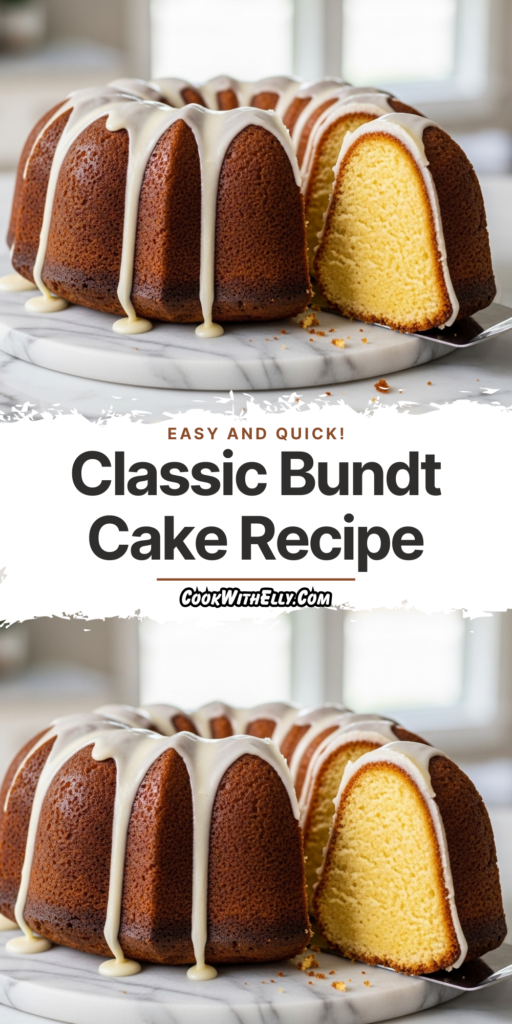
How to make Classic Bundt Cake (Super Moist!)?
Step 1 – Prepare the Pan and Oven
Start by preheating the oven to 180°C. Place the rack slightly lower than center so the cake bakes evenly without over-browning the top.
Grease the Bundt pan very generously and dust it with flour. I do not rush this step because a well-prepared pan means the cake releases cleanly later.
Step 2 – Combine the Dry Ingredients
Sift together the flour, cornstarch, salt, baking powder, and baking soda. Sifting helps remove lumps and distributes everything evenly.
Give it a gentle whisk so the mixture is uniform. Set it aside while you work on the wet ingredients.
Step 3 – Cream Butter, Oil, and Sugar
In a large bowl, beat the butter, oil, and sugar together for about three minutes. The mixture should become pale and fluffy.
This step builds the base texture of the cake, so let it fully aerate but do not overmix. Once it looks light and creamy, stop.
Step 4 – Add the Cream Cheese
Mix in the cream cheese on a lower speed until smooth and fully blended. Scrape the bowl to make sure no pockets remain.
The batter will start looking thicker and silkier at this stage, which is exactly what you want.
Step 5 – Incorporate the Eggs
Add the eggs two at a time, mixing slowly after each addition. Let each batch fully disappear into the batter before adding more.
This gradual process keeps the mixture stable and prevents it from curdling.
Step 6 – Add Vanilla
Stir in the vanilla extract until combined. The aroma at this point is warm and sweet, a small preview of what is coming.
Remove the mixer attachments now because the remaining steps are done gently by hand.
Step 7 – Alternate Dry Ingredients and Milk
Fold in half of the dry ingredients using a spatula. Mix just until you no longer see streaks of flour.
Add the milk and fold again, then finish with the remaining dry mixture. Be careful not to overwork the batter.
Step 8 – Transfer to the Pan
Pour the batter into the prepared Bundt pan and smooth the top. Give the pan a gentle shake so the batter settles into every curve.
Tap it lightly on the counter to release any trapped air bubbles.
Step 9 – Bake the Cake
Bake for 50 to 55 minutes, checking around the 45-minute mark. If the top browns too quickly, loosely cover it with foil.
The cake is done when a skewer inserted into the thickest part comes out clean or with a few moist crumbs.
Step 10 – Cool Before Removing
Let the cake cool in the pan for about 45 minutes. This allows the structure to set so it does not break apart.
Carefully invert it onto a wire rack and allow it to cool completely.
Step 11 – Prepare the Vanilla Glaze
Stir together powdered sugar, melted butter, vanilla, and milk until smooth. The glaze should be thick but still pourable.
Adjust with a little more sugar or milk if needed until it flows slowly from the spoon.
Step 12 – Glaze and Set
Pour the glaze evenly over the cooled cake, letting it cascade down the sides naturally. Do not rush this part, the drips are part of the charm.
Allow the glaze to set for 30 minutes before slicing and serving.
Serving Ideas
This cake is wonderful on its own, but I often serve it with fresh berries for a little brightness. The fruit cuts through the richness in a really pleasant way.
If I am making it for guests, I add a light dusting of powdered sugar just before serving. It gives that soft bakery-style finish without any extra effort.
For a cozy afternoon treat, I pair a slice with tea or coffee. The cake holds its texture beautifully, so it feels just as good hours later.
You can even warm a slice slightly and serve it with a spoonful of whipped cream. It turns into something that feels almost like a special occasion dessert.
Tips
- Bring all ingredients to room temperature so the batter mixes smoothly.
- Grease every curve of the Bundt pan thoroughly to prevent sticking.
- Cream the butter mixture long enough to lighten it, but avoid overmixing.
- Fold the flour gently to keep the cake tender.
- Tap the filled pan lightly to remove air pockets.
- Check the cake early if your oven runs hot.
- Let the cake cool before removing it from the pan to avoid breakage.
- Adjust glaze thickness slowly so it does not become too runny.
- Use a serrated knife for clean slices without squishing the crumb.
- Store covered at room temperature to maintain softness.
Classic Bundt Cake Recipe
Description
This classic vanilla Bundt cake recipe is rich, dense, and super moist, with pure buttery goodness in every bite! It has a deep vanilla flavor, a perfectly tender crumb, and is topped with a simple vanilla glaze that adds just the right touch of sweetness. The secret ingredient? Cream cheese! It ensures incredible moisture and a subtle richness that makes this cake truly unforgettable. Perfect for celebrations, afternoon tea, or any day you deserve something special.
ingredients
Vanilla Bundt Cake
Vanilla Glaze
Instructions
-
Preheat & Prepare Pan
Set oven rack in lower third of oven. Preheat to 180°C (350°F) conventional. Very generously grease and flour a 12-cup Bundt pan, or use baking spray with flour. Set aside.For convection ovens with fan, reduce temperature to 160°C (320°F) -
Mix Dry Ingredients
Sift together flour, cornstarch, salt, baking powder, and baking soda. Whisk until well combined and set aside.Sifting ensures a light, lump-free batter -
Cream Butter, Oil & Sugar
In a large bowl, cream together butter, oil, and sugar for 3 minutes on medium-high speed until light and creamy. Do not overcream.Proper creaming incorporates air for texture -
Add Cream Cheese
Add cream cheese and mix on low-medium speed until well combined. Scrape down sides of bowl as needed.Cream cheese is the secret to moisture! -
Incorporate Eggs
Add eggs two at a time, mixing on low speed until each addition is fully incorporated before adding the next. Continue until all 6 eggs are used.Room temperature eggs blend more easily -
Add Vanilla
Add vanilla extract and mix on low until well combined. Remove any batter from attachments; remaining mixing will be done by hand. -
Fold in Dry Ingredients & Milk
Add half of the sifted dry ingredients to wet ingredients; fold with spatula until just combined. Pour in milk and fold until just incorporated. Add remaining dry ingredients and fold until batter is uniform with no flour streaks. Do not overmix.Overmixing leads to a tough cake -
Bake
Pour batter into prepared Bundt pan, smoothing top. Shake pan gently to settle batter, then tap lightly on counter twice to release air bubbles. Bake 50–55 minutes, or until a skewer inserted into thickest part comes out clean or with few moist crumbs. Check at 45 minutes; if browning too fast, loosely cover with foil.Every oven varies; use visual and skewer tests -
Cool in Pan
Allow cake to cool in pan for 45 minutes before turning out onto a wire rack to finish cooling completely.Cooling too little may cause cake to break -
Make & Apply Glaze
Once cake is completely cool, prepare glaze: combine powdered sugar, melted butter, vanilla, and milk; stir until smooth and thick but still pourable. Adjust with more sugar or milk as needed. Pour evenly over cooled cake. Let set 30–60 minutes before slicing.Glaze should coat the back of a spoon
Nutrition Facts
Servings 12
Serving Size 1 slice
- Amount Per Serving
- Calories 617kcal
- % Daily Value *
- Total Fat 25gg39%
- Saturated Fat 13gg65%
- Trans Fat 1gg
- Cholesterol 142mgmg48%
- Sodium 342mgmg15%
- Potassium 149mgmg5%
- Total Carbohydrate 89gg30%
- Dietary Fiber 1gg4%
- Sugars 62gg
- Protein 10gg20%
- Calcium 132mg mg
- Iron 2mg mg
* Percent Daily Values are based on a 2,000 calorie diet. Your daily value may be higher or lower depending on your calorie needs.
Note
- Pan prep is critical: Use homemade cake release or thoroughly grease and flour your Bundt pan to prevent sticking.
- Room temperature ingredients: Ensure butter, cream cheese, eggs, and milk are at room temperature for smooth, even mixing.
- Don't overmix: Fold dry ingredients just until combined to keep the crumb tender.
- Glaze consistency: Aim for a thick but pourable glaze; adjust with extra powdered sugar or milk as needed.
- Storage: Keep covered at room temperature up to 3 days, refrigerate up to 1 week, or freeze slices for up to 3 months.
Frequently Asked Questions
Can I make this Bundt cake ahead of time?
Yes! Bake the cake 1–2 days in advance, cool completely, wrap tightly, and store at room temperature. Add the glaze the day you plan to serve for the freshest finish.
What if my cake sticks to the Bundt pan?
Let the cake cool in the pan for 45 minutes first. Then gently run a thin knife around the edges and center tube. If needed, place a warm, damp towel over the inverted pan for 5–10 minutes to help release.
Can I use a different pan?
This recipe is designed for a 12-cup Bundt pan. You can use a 10-cup Bundt pan if there's room for rising, or divide batter between two loaf pans (adjust baking time to 40–45 minutes).
Can I add mix-ins?
Absolutely! Fold in 1 cup of fresh berries, chocolate chips, or toasted nuts after the final fold for a fun variation.