

 View Gallery
1 photo
View Gallery
1 photo
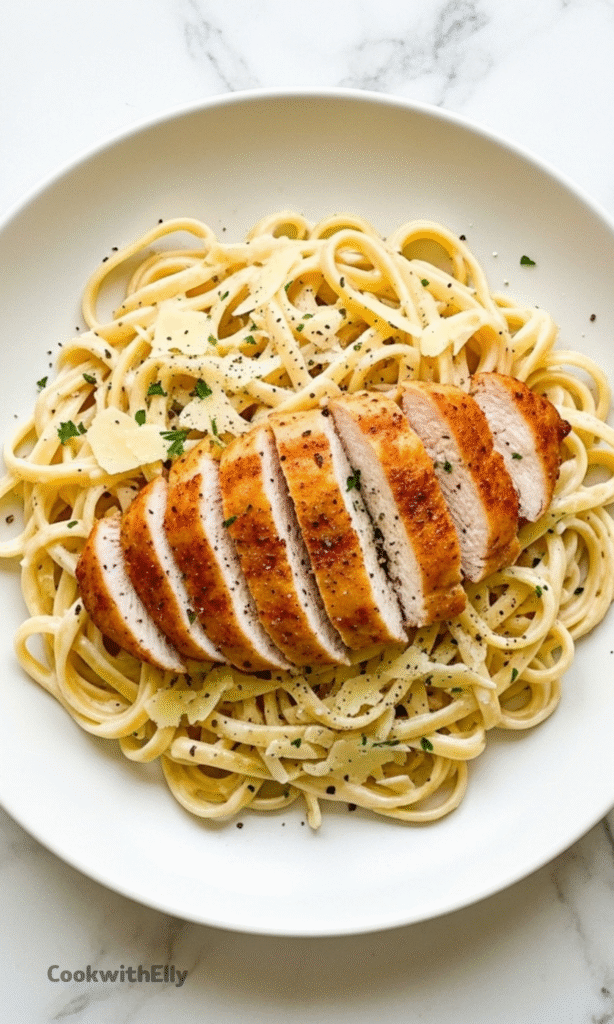
Let’s talk about Chicken Alfredo, that glorious hug of a meal that turns a regular Tuesday into something worth celebrating.
It’s the perfect union of tender chicken and pasta swathed in a creamy, cheesy embrace, feeling fancy without any of the fuss.
A Tale of Two Continents
The story of Alfredo sauce begins, quite sweetly, in a Roman kitchen in the early 1900s. A man named Alfredo di Lelio wanted to cook something comforting for his wife who wasn’t feeling well.
His original creation was elegant in its simplicity: just butter and Parmigiano-Reggiano tossed with fettuccine until it became a velvety coating. It was about quality, not quantity.
When that dish crossed the Atlantic, it found a new home in Italian-American kitchens where a little more decadence was welcomed. Cream found its way into the pan, creating the lush sauce we know today.
Adding a perfectly seared chicken breast on top was a natural next step, transforming a rich pasta side into a hearty, protein-packed main event that satisfies completely.
Ingredients Needed for the Recipe
Gathering your ingredients first makes the whole process feel like a breeze, trust me. Here’s what you’ll need, and why each one matters.
- Boneless, Skinless Chicken Breasts: The main protein; slicing them thin ensures they cook quickly and stay juicy.
- Olive Oil: For searing the chicken and sautéing our aromatics, building flavor in the pan bit by bit.
- Coarse Salt & Freshly Cracked Black Pepper: These fundamentals enhance every other flavor in the dish, from chicken to sauce.
- Garlic Cloves & Shallot: Our aromatic base; they create a savory, fragrant foundation that makes the sauce taste complex.
- Heavy Whipping Cream: The backbone of the sauce, providing that luxurious, rich texture and mouthfeel.
- Freshly Grated Parmigiano-Reggiano: The star of the sauce, offering a salty, nutty punch that melts into silky perfection.
- Fettuccine Pasta: The classic carrier; its wide, flat shape is ideal for holding onto every drop of that creamy sauce.
The Heart of the Meal: Building Flavor
Cooking is about layering, and Chicken Alfredo is a masterclass in that. You start with the chicken, building a beautiful golden crust in a hot pan.
Those little browned bits left behind aren’t just crumbs, they’re flavor gold, waiting to be dissolved into your sauce.
Then comes the gentle sizzle of shallot and garlic, a smell that instantly makes a kitchen feel like home. You’re building a flavor base without even realizing it.
When the cream hits that warm, aromatic pan, it’s like the opening act for the cheese. The whole thing starts to bubble and thicken, promising something wonderful.
How to make Chicken Alfredo?
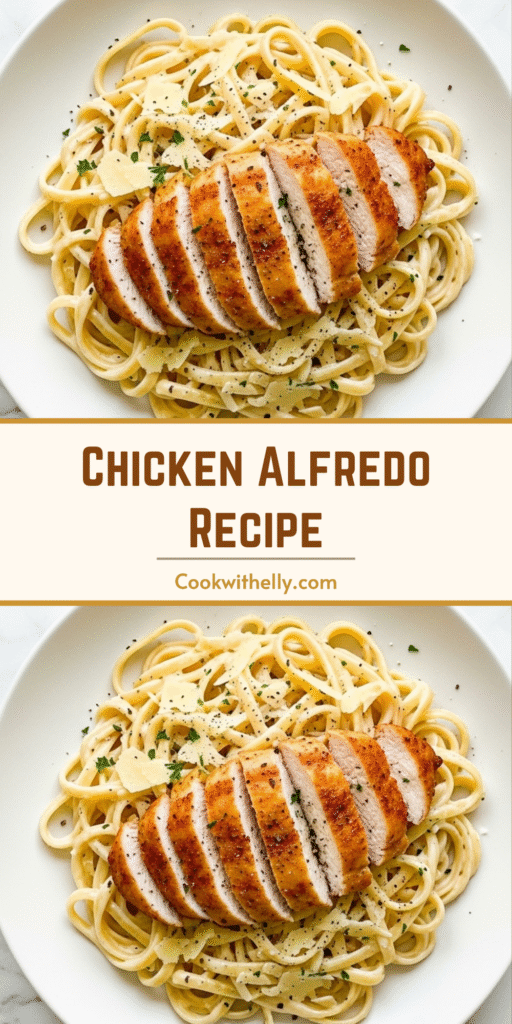
Step 1- PREPARE THE CHICKEN
Place your chicken breast flat on a cutting board. Carefully slice each one horizontally through the middle to create two thinner cutlets.
This isn’t just about speed; thinner pieces ensure even cooking and a gorgeous sear on every single bite. Pat them dry, then season generously on both sides with salt and pepper.
Step 2- SEAR TO PERFECTION
Heat two tablespoons of olive oil in a large, deep skillet or Dutch oven over high heat. Wait until the oil shimmers, almost whispering it’s ready.
Add the chicken in a single layer, listening for that confident sizzle. Cook for 4-5 minutes without moving it, letting a deep golden crust form. Flip, reduce heat to medium, and cook until done. Set aside on a plate.
Step 3- CREATE THE AROMATIC BASE
In that same beautiful, flavorful pan, add the remaining tablespoon of oil. Toss in the diced shallot and minced garlic.
They only need about 45 seconds in the warmth, just until fragrant. You’re waking up their flavors, not browning them. This step happens fast, so stay close.
Step 4- CRAFT THE ALFREDO SAUCE
Pour in the heavy cream, gently scraping up any tasty bits from the chicken. Let it warm over medium heat for a few minutes, just until you see tiny bubbles at the edges.
Reduce the heat to low. Now, gradually sprinkle in your freshly grated cheese, stirring constantly until it’s fully melted and the sauce is gloriously smooth. Taste, and season with a pinch more salt or pepper if needed.
Step 5- COOK THE PASTA
While you make the sauce, bring a large pot of well-salted water to a rolling boil. Add the fettuccine and cook according to package directions until al dente.
Just before draining, scoop out about one cup of that starchy pasta water. This liquid is your secret weapon for adjusting the sauce later.
Step 6- BRING IT ALL TOGETHER
Drain the pasta and add it directly to the pan with your alfredo sauce. Toss everything together with a confident lift and fold, coating every strand.
If the sauce seems too thick, add a splash of that reserved pasta water, a little at a time, until it reaches a creamy, flowing consistency that clings to the noodles.
Step 7- SLICE, PLATE, AND SERVE
Slice your rested chicken against the grain into beautiful strips. Divide the creamy pasta among plates or a large serving platter.
Artfully arrange the sliced chicken on top. A final dusting of black pepper or grated cheese is never a bad idea, then dig in immediately.
Tips
- Grate your own cheese from a block. Pre-grated cheese contains anti-caking agents that can make your sauce grainy or stubborn to melt.
- Let the chicken rest for five minutes after cooking. This allows the juices to redistribute throughout the meat, guaranteeing a moist bite.
- Don’t rush the cheese into the cream. Low heat and patience are the keys to a smooth, unbroken sauce that won’t separate or clump.
Simple Swaps and Clever Variations
No heavy cream? A full-fat half-and-half can work in a pinch, though your sauce will be a touch lighter. For the cheese, Grana Padano is a superb sibling to Parmigiano-Reggiano.
If you prefer a sharper bite, Pecorino Romano brings a bold, salty character that’s absolutely delightful.
Chicken thighs are a fantastic alternative to breasts, offering richer flavor and a more forgiving texture. Just adjust the cooking time slightly.
And for the pasta, any long, ribbon-like noodle like tagliatelle or pappardelle is perfect. Short, sturdy shapes like rigatoni or campanelle are excellent for trapping pockets of sauce.
What to Serve Alongside
This rich pasta begs for something fresh and crisp to balance it. A simple arugula salad with lemon vinaigrette cuts through the creaminess beautifully.
Or, roast some broccoli florets with olive oil and garlic until the edges are crispy for a warm, savory vegetable component.
Never forget the bread. A loaf of crusty Italian bread or a few slices of toasted garlic bread are non-negotiable for most folks.
It’s the best tool for ensuring not a single drop of that luxurious sauce goes to waste, and it completes the comfort-food experience.
Storing and Reviving Leftovers
Store any leftovers in an airtight container in the refrigerator for up to three days. The sauce will thicken significantly as it chills.
Freezing is not recommended, as the dairy-based sauce is likely to separate and become grainy when thawed and reheated.
To reheat, place the pasta in a skillet over low heat. Add a small splash of water, milk, or cream, and stir gently until warmed through and creamy again.
The microwave can work in a pinch, but use a lower power setting and stir frequently to prevent the sauce from breaking. A little patience brings it right back to life.
Chicken Alfredo Recipe
Description
Chicken Alfredo is an indulgent pasta dinner that tosses fettuccine in a luxurious homemade alfredo sauce and finishes it with juicy pan-seared chicken on top. It’s one of the ultimate 30-minute comfort foods—rich, creamy, and perfect for a satisfying family dinner.
Ingredients
Instructions
-
Carefully slice each chicken breast in half horizontally to create thin cutlets.
-
Season both sides of the chicken cutlets generously with salt and pepper.
-
Heat 2 tablespoons of olive oil in a large skillet or rondeau over high heat until lightly smoking. Add chicken and sear for 4–5 minutes per side, or until golden brown and cooked through (internal temp of 165°F). Transfer to a plate and let rest for 5 minutes.
-
In the same pan, add remaining 1 tablespoon olive oil, then sauté garlic and shallot for 30–45 seconds until fragrant.
-
Pour in heavy cream and heat over medium for 2–3 minutes. Reduce heat to low-medium and gradually stir in grated Parmigiano Reggiano until melted and smooth (about 3–4 minutes). Season with salt and pepper to taste. Remove from heat.
-
Meanwhile, cook fettuccine in a large pot of salted boiling water until al dente. Reserve 1 cup of starchy pasta water before draining.
-
Add drained pasta directly to the alfredo sauce and toss to coat. Add reserved pasta water, a ladle at a time, until the sauce reaches a creamy, silky consistency that clings to the noodles.
-
Slice the rested chicken and serve on top of the creamy fettuccine alfredo.
Nutrition Facts
Servings 4
Serving Size 1 serving (1/4 of recipe)
- Amount Per Serving
- Calories 720kcal
- % Daily Value *
- Total Fat 42gg65%
- Saturated Fat 22gg111%
- Trans Fat 0gg
- Cholesterol 185mgmg62%
- Sodium 580mgmg25%
- Potassium 420mgmg12%
- Total Carbohydrate 52gg18%
- Dietary Fiber 3gg12%
- Sugars 4gg
- Protein 35gg70%
- Calcium 25 mg
- Iron 10 mg
* Percent Daily Values are based on a 2,000 calorie diet. Your daily value may be higher or lower depending on your calorie needs.
Note
- Avoid dry chicken: Slice breasts thin and don’t overcook—rest for 5 minutes before slicing.
- Use freshly grated Parmigiano Reggiano: Pre-grated cheese contains anti-caking agents that cause clumping.
- Save pasta water! The starchy liquid helps emulsify and thin the sauce perfectly.
- Storage: Keep in an airtight container in the fridge for up to 3 days. Do not freeze—alfredo sauce may separate.
- Reheat gently: Warm in a skillet over low heat with a splash of water or cream, stirring constantly.

Frequently Asked Questions
Can I use chicken thighs instead of breasts?
Yes! Boneless, skinless chicken thighs work well—they’re more forgiving and stay juicy longer, but may need 1–2 extra minutes per side.
Why did my alfredo sauce break or become grainy?
This usually happens if the heat is too high or if pre-grated cheese is used. Always use freshly grated Parmigiano Reggiano and stir over low-medium heat.
Can I make this ahead of time?
It’s best served fresh, but you can prep components ahead: cook and slice chicken, grate cheese, and boil pasta (shock in cold water to stop cooking). Reheat everything together just before serving.