

 View Gallery
1 photo
View Gallery
1 photo
There’s something almost magical about gathering around a pot of warm, melted cheese, don’t you think?
It turns an ordinary evening into a shared, interactive meal that feels both special and wonderfully simple.
A Little Backstory on Sharing Food
I’ve always believed the best meals are the ones where you talk, dip, and laugh between bites.
This fondue recipe is my personal favorite for creating those moments, and it comes straight from my own kitchen adventures.
Ingredients Needed for the Recipe
Here’s what you’ll need to gather. Using the right cheeses is the secret, trust me on this.
- 1 garlic clove, halved: This isn’t for eating, but for gently scenting the pot with a warm, aromatic base.
- 1 ½ cups sauvignon blanc wine: The wine adds a necessary tang that cuts through the richness, and its acidity helps the cheese melt smoothly.
- 1 tablespoon cornstarch + 1 tablespoon water: Mixed together, this quick slurry is your insurance policy against a greasy, separated mess.
- ½ lb. Swiss cheese, coarsely grated: Look for a good Emmental or a mild, nutty Swiss; it provides the classic, buttery flavor backbone.
- ½ lb. Gruyere cheese, coarsely grated: This is where the deep, slightly salty, and complex flavor comes from, it’s absolutely non-negotiable.
- Assorted Dippers: This is where the fun begins, and your personal preferences get to shine through.
The Joy of Choosing Your Dippers
The dippers are more than just vehicles for cheese, they’re a way to play with textures and tastes.
I love a mix of soft, crunchy, sweet, and savory for a truly engaging experience.
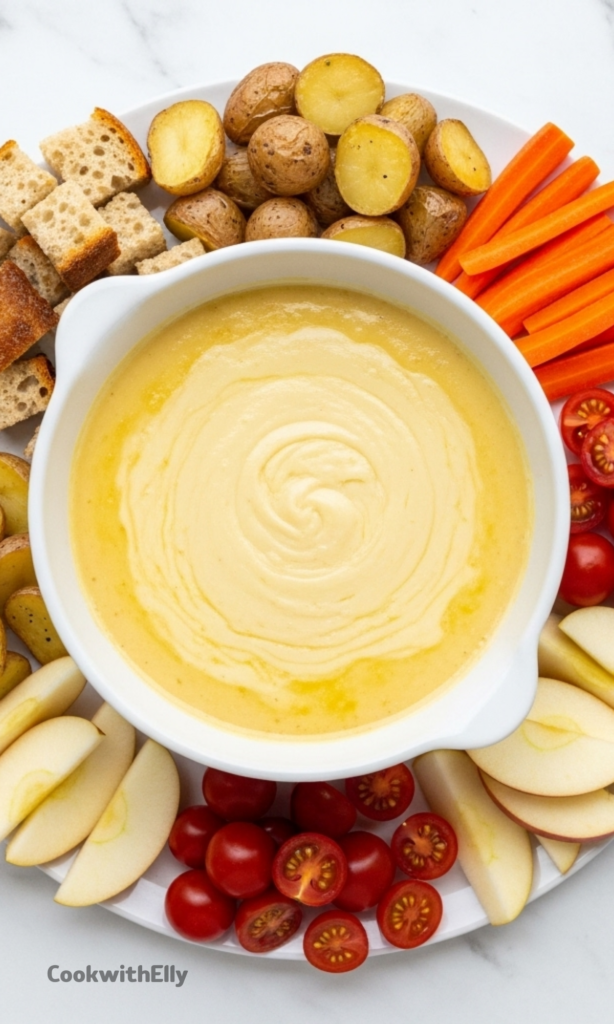
- French bread cubes: Go for a crusty baguette; the soft inside soaks up the cheese while the crust gives a satisfying chew.
- Roasted fingerling potatoes: These were a game-changer for me, their earthy flavor and creamy interior pair perfectly with the cheese.
- Apple slices: A crisp, sweet apple offers a refreshing break that makes you ready for the next cheesy bite.
- Carrot sticks & grape tomatoes: These add a fresh, clean crunch and a little burst of juiciness that balances everything out.
How to make Classic Cheese Fondue?
The process is a gentle dance, really. It requires a bit of attention, but the result is so worth the focus.
Just follow these steps, and you’ll have a perfectly silky, cohesive fondue every single time.
Step 1 – Prepare Your Pot
Take that halved garlic clove and rub it firmly all over the inside of a medium saucepot.
You’re just after a whisper of flavor here, so once the pot smells fragrant, you can toss the garlic piece away.
Step 2 – Simmer and Slurry
Pour the wine into the garlic-kissed pot and let it come to a gentle simmer over medium heat.
While that warms, stir the cornstarch and water together in a little cup until it’s completely smooth, then set it aside for later.
Step 3 – The Cheese Addition
This is the critical moment. Add your handfuls of grated cheese to the simmering wine gradually, not all at once.
Stir in a slow, deliberate figure-eight or zigzag pattern, which helps the cheese melt evenly without clumping into a tight ball.
Step 4 – Thicken to Perfection
Once the cheese is fully melted and creamy, give your cornstarch slurry another stir and drizzle it into the pot.
Keep stirring in those figure-eight motions for about five to eight minutes, until the fondue thickens beautifully and coats your spoon.
Step 5 – Serve and Enjoy
Quickly transfer your glorious cheese mixture to a pre-warmed fondue pot or a sturdy serving bowl placed on a trivet.
Gather your friends, spear your chosen dippers, and dive right into the communal, delicious fun.
If You Don’t Have a Fondue Pot
Please, don’t let the lack of specialized equipment stop you from making this.
A regular heavy-bottomed saucepan is a perfectly fine vessel for melting and serving.
To keep it warm at the table, simply place the saucepan on a trivet or a thick potholder.
You can also pre-warm your serving bowl by filling it with hot water for a minute before drying it and adding the fondue.
Tips
A few little insights from my own trial and error can make your first fondue a total success.
- Grate the cheese yourself from a block. Pre-shredded bags contain anti-caking agents that can make your fondue grainy and prevent it from melting smoothly.
- Stir with purpose. That figure-eight motion isn’t just for show, it incorporates air and keeps the cheese from seizing or becoming stringy.
- Control the heat. If using a fondue pot with a flame, turn it off periodically so the cheese doesn’t overcook and become tough. You can always re-light it.
Thinking About Leftovers
You might have some left, though in my house it’s a rare event.
Instead of trying to re-melt it, which can be tricky, I embrace the transformed texture.
Chill it overnight in a container, then slice the firm cheese into little squares or rectangles.
It makes a fantastic addition to a lunch plate, served cold with crackers, cured meats, and pickles.
A Note on Authenticity & Flair
Some traditional recipes call for a splash of kirsch, a clear cherry brandy, stirred in at the end.
It adds a subtle, complex fruit note that’s quite lovely, but it’s entirely optional.
A tiny grating of fresh nutmeg over the finished fondue is another classic touch that adds a layer of warmth.
At its heart, this recipe is about the beautiful partnership of two fantastic cheeses and good company, and that’s what makes it a classic for me.
Classic Cheese Fondue Recipe
Description
Cozy up to a warm bowl of gooey Classic Cheese Fondue accompanied by plenty of fruit and vegetable dippers. It’s easy to make at home for a special night in.
This is a bit of a departure from the mostly sweet menu here on the blog. But I’ve always loved a good fondue and this is my all-time favorite cheesy recipe. The melted wine and cheese concoction along with the right other ingredients (dippers!) makes a lovely, intimate meal. It is easily made at home—and for a fraction of the cost that you’d pay at a fancy fondue restaurant!
Ingredients
Fondue Base
Assorted Dippers (served on the side)
Instructions
-
Rub the interior of a 4-quart saucepot with the cut sides of the garlic clove. Discard the garlic.
-
Pour the wine into the pot and bring to a simmer over medium heat.
-
In a small bowl, stir cornstarch and water together to form a smooth slurry. Set aside.
-
Gradually add the grated cheeses to the simmering wine, stirring constantly in a figure-8 or zigzag motion (avoid circular stirring to prevent clumping). Continue until cheese is fully melted and mixture is creamy. Do not let it boil.
-
Re-stir the cornstarch slurry (it may have settled), then add it to the fondue. Stir continuously in the same figure-8 motion until the mixture thickens slightly—about 5 to 8 minutes.
-
Transfer the fondue to a fondue pot set over a low flame, or serve directly from the saucepan placed on a trivet. Serve immediately with assorted dippers on the side.
Nutrition Facts
Servings 10
Serving Size 1/10 of recipe
- Amount Per Serving
- Calories 320kcal
- % Daily Value *
- Total Fat 23g36%
- Saturated Fat 14g70%
- Cholesterol 65mg22%
- Sodium 380mg16%
- Potassium 120mg4%
- Total Carbohydrate 4g2%
- Sugars 1g
- Protein 22g44%
- Calcium 600 mg
- Iron 1 mg
* Percent Daily Values are based on a 2,000 calorie diet. Your daily value may be higher or lower depending on your calorie needs.
Note
Optional Authentic Touch: Add 2 tablespoons of kirsch (cherry eau-de-vie) and a pinch of freshly grated nutmeg to the fondue for a truly Swiss experience.
Wine Tip: Almost any dry white wine works, but Sauvignon Blanc is preferred for its clean, crisp acidity that balances the richness of the cheese.
Leftovers? Chill and slice the set fondue to serve cold with charcuterie and crudités—it still carries the delicious wine notes!
Frequently Asked Questions
Do I need a fondue pot to make this?
No! A regular saucepan works perfectly. Just keep it on a trivet at the table and use dinner forks for dipping. If you enjoy fondue regularly, then consider investing in a pot later.
Why shouldn’t I use pre-shredded cheese?
Pre-shredded cheese contains anti-caking agents like cellulose that prevent smooth melting and can cause the fondue to separate or become grainy. Always use freshly grated block cheese for best results.
How do I keep the fondue from hardening or separating?
Stir frequently in a figure-8 motion, avoid boiling, and use the cornstarch slurry as directed. The cornstarch stabilizes the emulsion of wine and fat, keeping the fondue smooth and creamy.