

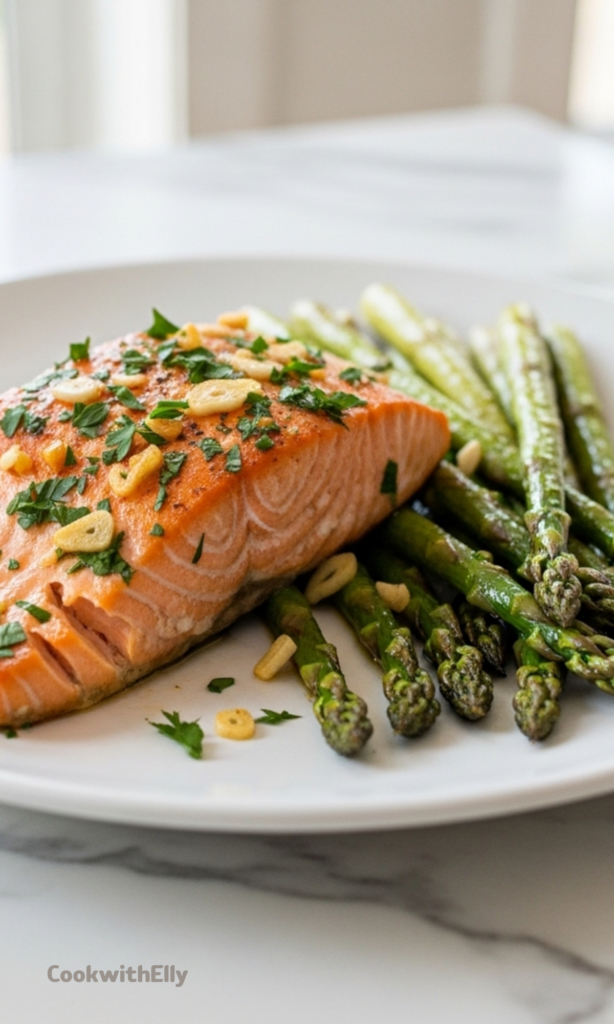

Some dinners just make life easier, and this is one of them. When I want something that feels fresh, satisfying, and not overly complicated, I reach for this baked salmon and asparagus. It’s simple food, done well, and it never lets me down.
There’s also something comforting about cooking everything on one pan. Less mess, fewer dishes staring at me later, and more time to actually sit down and enjoy the meal. That alone makes this recipe worth keeping on repeat.
The flavors are bright but not loud. Lemon, garlic, and herbs gently soak into the salmon while the asparagus roasts alongside it. It feels clean, balanced, and just a little bit special without asking much effort from you.
And yes, the whole thing comes together in under 20 minutes. That’s faster than deciding what to order, which is exactly why I keep coming back to it.
Ingredients Needed for the Recipe
- Salmon fillets – The star of the dish, providing rich flavor and a tender, flaky texture.
- Asparagus – Adds a fresh, slightly crisp contrast that cooks perfectly alongside the salmon.
- Olive oil – Helps everything roast evenly while adding a smooth, subtle richness.
- Lemon (zested and juiced) – Brings brightness and keeps the flavors light and fresh.
- Garlic cloves (minced) – Infuses the dish with warmth and depth without overpowering.
- Salt – Enhances all the natural flavors.
- Pepper – Adds a gentle hint of spice.
- Fresh chopped parsley – Finishes the dish with color and a clean herbal note.
Why This One-Pan Method Works So Well
Cooking everything together is not just about convenience. The salmon releases its natural juices as it bakes, and those mingle with the lemon, garlic, and oil, lightly coating the asparagus.
The result is a meal where nothing tastes separate or disconnected. Every bite feels like it belongs together, which is what makes such a simple recipe feel thoughtfully put together.
Lining the pan with foil also means cleanup is almost nonexistent. After dinner, the foil goes away and that’s it. No soaking pans or scrubbing stubborn bits.
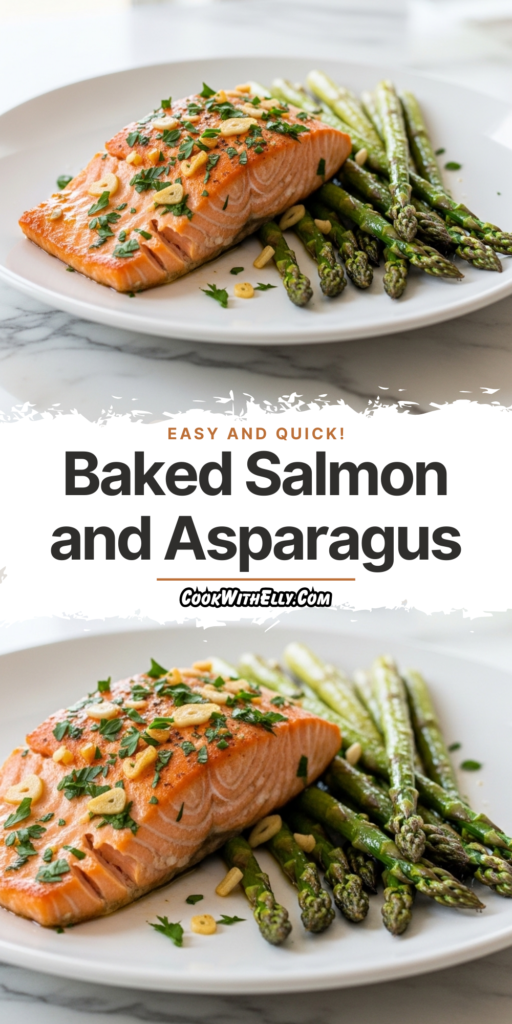
How to make Baked Salmon and Asparagus?
Step 1 – Preheat the Oven
Start by preheating your oven to 400°F (200°C). This temperature is ideal for roasting because it cooks the salmon quickly while allowing the asparagus to become tender without going soggy.
Line a baking sheet with aluminum foil. This small step makes cleanup incredibly fast and also helps prevent sticking.
Step 2 – Arrange the Salmon and Asparagus
Place the salmon fillets in the center of the baking sheet, leaving space around each piece so heat can circulate evenly. Spread the asparagus spears along one side in a single layer.
Keeping everything in one layer ensures the vegetables roast instead of steam. That little bit of spacing matters more than people think.
Step 3 – Make the Lemon Garlic Mixture
In a medium bowl, combine the olive oil, lemon zest, lemon juice, minced garlic, salt, pepper, and chopped parsley. Stir until everything looks blended and glossy.
This mixture is the flavor backbone of the recipe. It’s bright, savory, and just rich enough to bring everything together.
Step 4 – Coat the Salmon and Asparagus
Spoon or brush the mixture over the salmon fillets first, making sure the tops are well covered. Then drizzle the remaining mixture over the asparagus.
You don’t need to drown anything. A light, even coating is perfect and allows the natural ingredients to shine.
Step 5 – Bake
Place the baking sheet into the oven and bake for 12 to 15 minutes. The exact time depends on how thick your salmon fillets are.
Thinner pieces cook faster, while thicker cuts need the full time. Keep an eye on them near the end so they don’t overcook.
Step 6 – Check for Doneness
Use a fork to gently test the salmon. If it flakes easily and looks tender, it’s ready. The asparagus should be fork-tender but still have a slight bite.
You can also check that the internal temperature of the salmon reaches about 130°F for perfectly cooked fish.
Serving Ideas That Make It Feel Like a Full Meal
This dish already feels complete, but sometimes I like adding one simple side to round things out. Something light works best so the salmon stays the focus.
A small salad, some cauliflower rice, or even sliced tomatoes with a pinch of salt can make the plate feel more abundant without adding extra work.
If you want something heartier, a scoop of warm grains like rice or quinoa pairs beautifully with the lemony juices from the pan.
Tips
- Choose salmon fillets that are similar in thickness so they cook evenly.
- Trim the woody ends of the asparagus to avoid tough bites.
- Do not overcrowd the baking sheet or the vegetables will steam instead of roast.
- Fresh garlic gives the best flavor, but garlic powder works in a pinch.
- If using frozen salmon, thaw it completely and pat it dry before baking.
- Add extra lemon slices on top before baking for a brighter finish.
- Watch closely after the 12-minute mark to prevent overcooking.
- Let the salmon rest for a minute or two after baking to keep it juicy.
- Use fresh parsley at the end for the cleanest flavor.
- Keep the seasoning simple so the natural taste of the salmon stands out.
Easy Variations to Try When You Want Something Different
Once you’ve made this a few times, it’s fun to change small things. The base recipe is flexible, which means you can adjust it depending on what you have in the kitchen.
Swap lemon for lime to create a slightly sharper citrus flavor. Or add a pinch of chili flakes if you want a bit of heat without overpowering the dish.
You can also experiment with herbs. Dill, thyme, or even a touch of rosemary can shift the personality of the meal while keeping it just as easy.
Another option is adding thin slices of zucchini or cherry tomatoes to the pan. They roast quickly and blend naturally with the existing flavors.
Storing and Reheating Leftovers
If you happen to have leftovers, they store surprisingly well. Place the cooled salmon and asparagus in an airtight container and refrigerate for up to two days.
To reheat, warm it gently in the oven instead of the microwave. This helps the salmon stay tender rather than drying out.
A splash of fresh lemon juice before serving can bring everything back to life. It’s a small trick, but it makes the meal taste freshly made again.
Leftover salmon also flakes beautifully into salads or wraps the next day. Nothing goes to waste, which makes this recipe even more practical.
This baked salmon and asparagus is one of those meals that proves cooking doesn’t have to be complicated to be good. It’s quick, flavorful, and refreshingly simple, the kind of dinner that fits into real life.
Once you try it, you may find yourself coming back to it again and again. I know I do, especially on evenings when I want something wholesome without turning the kitchen upside down.
Baked Salmon and Asparagus Recipe
Description
This Baked Salmon and Asparagus will have you devouring dinner, and loving that clean-up is a breeze! In less than 20 minutes, you'll have a delicious and healthy salmon recipe that's loaded with flavor with a built-in side dish. The classic salmon and asparagus combination creates a healthy and flavorful dinner that's going to become part of your rotation.
ingredients
Instructions
-
Preheat the oven to 400°F (200°C). Line a baking sheet with aluminum foil.
-
Place the salmon fillets in the middle of the baking sheet and arrange asparagus spears on one side.
-
In a medium bowl, combine the olive oil, lemon zest and juice, minced garlic, salt, pepper, and chopped parsley.
-
Spread the mixture evenly over the tops of the salmon fillets and asparagus.
-
Bake in the preheated oven for 12-15 minutes (time varies based on salmon thickness).
-
Remove from oven and check for doneness: salmon should flake easily with a fork and asparagus should be fork-tender.Internal temperature of salmon should reach 130°F for medium or 145°F for well-done [[28]]
Nutrition Facts
Servings 4
Serving Size 1 salmon fillet with asparagus
- Amount Per Serving
- Calories 385kcal
- % Daily Value *
- Total Fat 22gg34%
- Saturated Fat 4gg20%
- Trans Fat 0gg
- Cholesterol 94mgmg32%
- Sodium 420mgmg18%
- Potassium 920mgmg27%
- Total Carbohydrate 7gg3%
- Dietary Fiber 3gg12%
- Sugars 3gg
- Protein 38gg76%
- Calcium 65mg mg
- Iron 3mg mg
* Percent Daily Values are based on a 2,000 calorie diet. Your daily value may be higher or lower depending on your calorie needs.
Note
- Salmon thickness matters: Adjust baking time based on fillet thickness—12 minutes for thin, 15 for thick [[28]].
- Check doneness easily: Salmon is done when it flakes easily with a fork and reaches 130-145°F internally [[28]].
- Asparagus tip: Use medium stalks for even cooking; thick stalks may need extra time.
- Make it your own: Swap parsley for dill or cilantro, or add red pepper flakes for heat.
Frequently Asked Questions
How do I know when the salmon is done?
The easiest way is to use a fork—salmon should flake easily. For precision, use a meat thermometer; the USDA recommends 145°F for fully cooked salmon, though many prefer 130°F for medium [[28]].
Can I use frozen salmon?
Yes! Thaw frozen salmon completely in the refrigerator overnight before baking. Pat dry thoroughly before seasoning for best results.
What sides pair well with this dish?
This is a complete meal, but you can add Mexican Cauliflower Rice, Corn and Tomato Salad, or a simple side salad for extra variety.