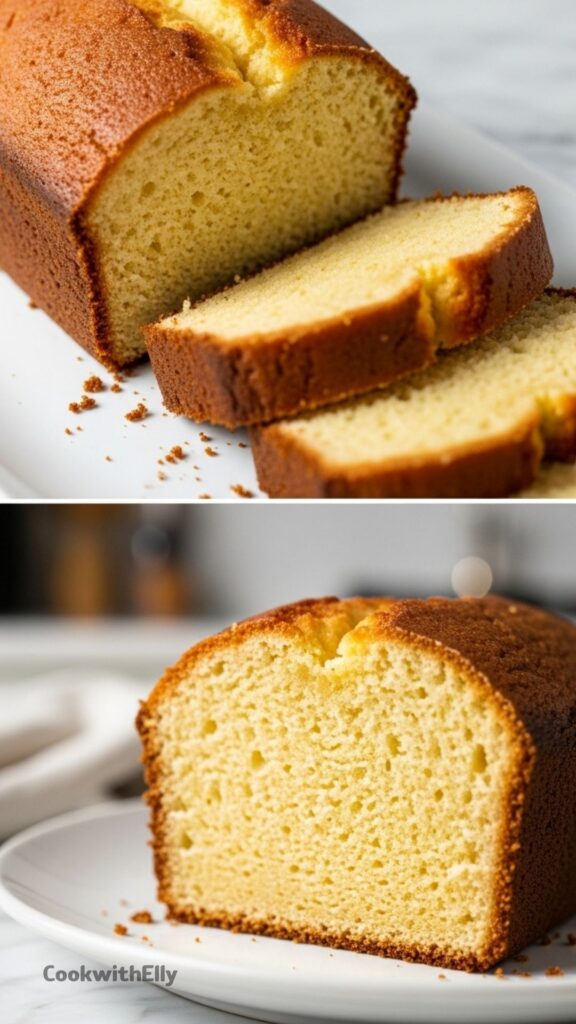
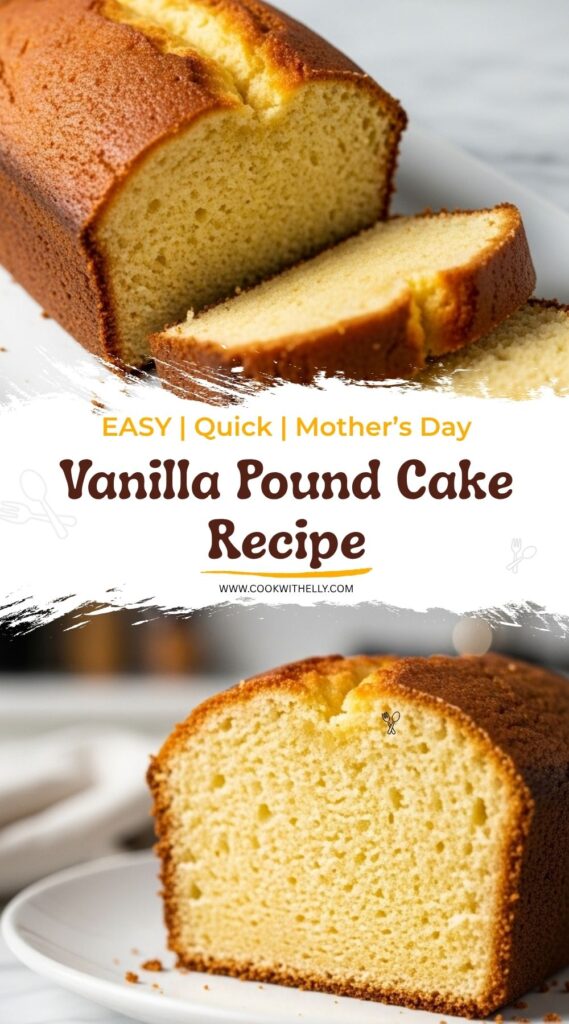
The smell hits before anything else. Warm butter, a little sweet, a little toasted, and something almost creamy drifting out of the oven. I always stand there a second too long, just letting it settle in.
I usually tap the top with my fingertips even though I know it’s hot. It springs back slowly, and that’s when I know I got it right this time. Not too firm, not too soft. Somewhere in that perfect middle.
Pound cake doesn’t try too hard, and I like that. It’s dense, yes, but not heavy in a bad way. More like it sits with you, quietly, while you sip coffee and take another slice without thinking much about it.
There’s something steady about it. No frosting drama, no layers slipping around. Just a solid, buttery cake that shows up exactly how you expect it to.
Ingredients Needed for the Recipe
1½ cups all-purpose flour - gives the cake its structure and body
½ teaspoon salt - balances sweetness and sharpens flavor
½ teaspoon baking powder - adds a slight lift without making it airy
½ cup unsalted butter (room temperature) - creates richness and a soft crumb
1½ cups granulated sugar - sweetens and helps form that crisp crust
4 large eggs (room temperature) - add moisture and help the cake rise gently
½ cup sour cream (full-fat, room temperature) - keeps the cake moist with a slight tang
2 teaspoons vanilla extract - adds a warm, subtle flavor
Something That Almost Went Wrong
One time I got distracted and let the butter and sugar whip longer than I should have. It looked beautiful, pale and fluffy, but the cake baked up with that weird dense line running through it.
It wasn’t raw, just… compressed. That’s when I realized more mixing isn’t always better. Now I stop as soon as it looks light and combined, not overly airy.
It’s a small thing, but it changes everything. Pound cake likes a bit of restraint.
How to make Pound Cake?
Step 1 - Prep the pan and oven
I start by preheating the oven to 350°F and greasing my loaf pan well. Sometimes I add a parchment strip if I feel like being careful, but honestly, greasing and flouring works just fine.
Step 2 - Mix the dry ingredients
In a bowl, I whisk together the flour, salt, and baking powder. Nothing fancy here, just making sure there are no lumps hiding in the flour.
Step 3 - Cream butter and sugar
I beat the butter first until it softens, then add sugar and mix until it turns pale and fluffy. I keep an eye on it so I don’t overdo it. This part is easy to push too far.
Step 4 - Add eggs one at a time
I crack in one egg at a time, mixing gently after each. If the batter looks slightly curdled at any point, I just keep going - it smooths out.
Step 5 - Add sour cream and vanilla
The sour cream goes in next along with the vanilla. The batter thickens and gets that silky look. I always scrape the sides because pockets of butter love to hide there.
Step 6 - Combine dry and wet
I add the flour mixture in and mix just until everything comes together. No aggressive mixing here. I stop as soon as I don’t see dry streaks.
Step 7 - Transfer and smooth
I pour the batter into the pan and smooth the top. Sometimes I tap the pan lightly to settle it, but not always.
Step 8 - Bake
It goes into the oven for about 60 to 65 minutes. Around the 40-minute mark, I peek in. If it’s browning too fast, I loosely cover it with foil.
Step 9 - Check and cool
I use a long skewer right through the center crack. If it comes out clean or with a few crumbs, it’s ready. I let it sit for 10 minutes, then move it to a rack so the crust stays crisp.
How It Actually Tastes
The first bite is always about texture. Slightly crisp edges, then soft and dense inside. Not dry, not airy, just smooth and rich.
The vanilla is there but quiet. The sour cream adds this gentle tang that keeps it from feeling too sweet. I notice that more on the second slice than the first.
It’s the kind of cake that doesn’t need anything, but somehow goes well with everything. Coffee, tea, even just a glass of milk.
Tips
Use room temperature butter and eggs - they mix smoother and give better texture
Don’t rush the creaming step, but don’t overdo it either
Measure flour carefully - too much makes the cake dense in a bad way
Stop mixing as soon as the batter comes together
Use a long skewer instead of a toothpick to check doneness
Remove the cake from the pan after 10 minutes to keep the crust crisp
If the top browns too quickly, cover loosely with foil
Let the cake cool completely before slicing for clean cuts
Store tightly wrapped to keep it moist for days
Freeze slices individually if you want easy portions later
Sometimes I double the recipe and use a larger pan when I know people are coming over. It takes longer to bake, but the result feels a bit more special sitting there in a bigger shape.
And sometimes I don’t change anything at all. Just follow the same steps, same timing, same quiet moment when the smell fills the kitchen again.
That’s the thing about pound cake. It doesn’t need reinventing. It just needs a little attention and a bit of patience.
This traditional pound cake is shockingly moist with a soft, smooth crumb and a perfectly balanced vanilla flavor. Enriched with sour cream for tanginess and moisture, it’s not overwhelmingly sweet, making it ideal for breakfast with coffee or as an afternoon treat. Far from boring, this dense yet tender cake travels well and keeps beautifully, ensuring you always have a delicious slice on hand.
PrepPreheat oven to 350°F (175°C). Grease and flour a 9x5 inch loaf pan, or line with parchment paper for easy removal.
2
Mix Dry IngredientsIn a medium bowl, whisk together the all-purpose flour, salt, and baking powder. Set aside.
3
Cream Butter and SugarIn a stand mixer fitted with a whisk attachment (or paddle for a denser texture), beat the room temperature butter on medium speed for 2 minutes until creamy. Add the sugar and mix for another 2 minutes until light and fluffy. Scrape down the sides of the bowl.
4
Add EggsWith the mixer on medium-low speed, add the eggs one at a time, mixing well after each addition. Scrape down the bowl to ensure everything is incorporated.
5
Add Wet FlavoringsAdd the sour cream and vanilla extract. Mix until just combined. Scrape down the bowl again.
6
CombineAdd the flour mixture to the wet ingredients. Mix on low speed until just combined. Do not overmix. Use a spatula to fold in any remaining pockets of flour or butter.
7
BakeTransfer batter to the prepared loaf pan and smooth the top. Bake for approximately 65 minutes, or until a long wooden skewer inserted into the center comes out clean or with a few moist crumbs. If the top browns too quickly, tent with foil after 40 minutes.
8
CoolAllow the cake to cool in the pan for 10 minutes to set the crust. Then, remove from the pan and transfer to a wire rack to cool completely before slicing.
Nutrition Facts
Servings 12
Serving Size 1 slice
Amount Per Serving
Calories420kcal
% Daily Value *
Total Fat20g31%
Saturated Fat11g56%
Trans Fat0.5g
Cholesterol110mg37%
Sodium150mg7%
Potassium85mg3%
Total Carbohydrate56g19%
Dietary Fiber0.5g2%
Sugars38g
Protein5g10%
* Percent Daily Values are based on a 2,000 calorie diet. Your daily value may be higher or lower depending on your calorie needs.
Note
For a Dome Top: Place two thin sticks of butter lengthwise down the center of the batter before baking. This helps the center rise and crack beautifully.
Storage: Store tightly wrapped at room temperature for up to 3 days, or in the refrigerator for up to 5 days. Freezes well for up to 3 months.
Variations: Add lemon zest for a citrus kick, or substitute vanilla with almond extract for a different flavor profile.