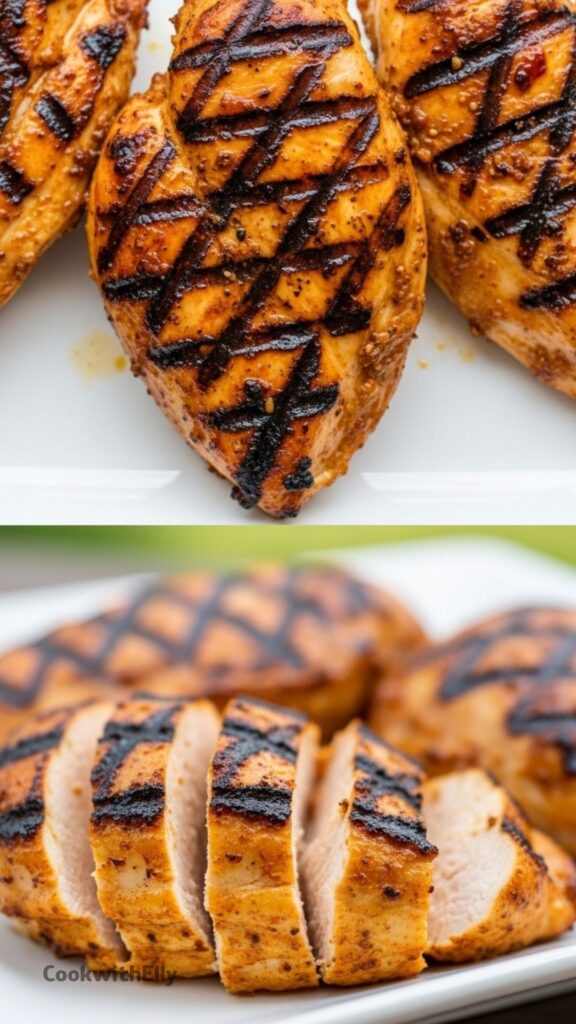
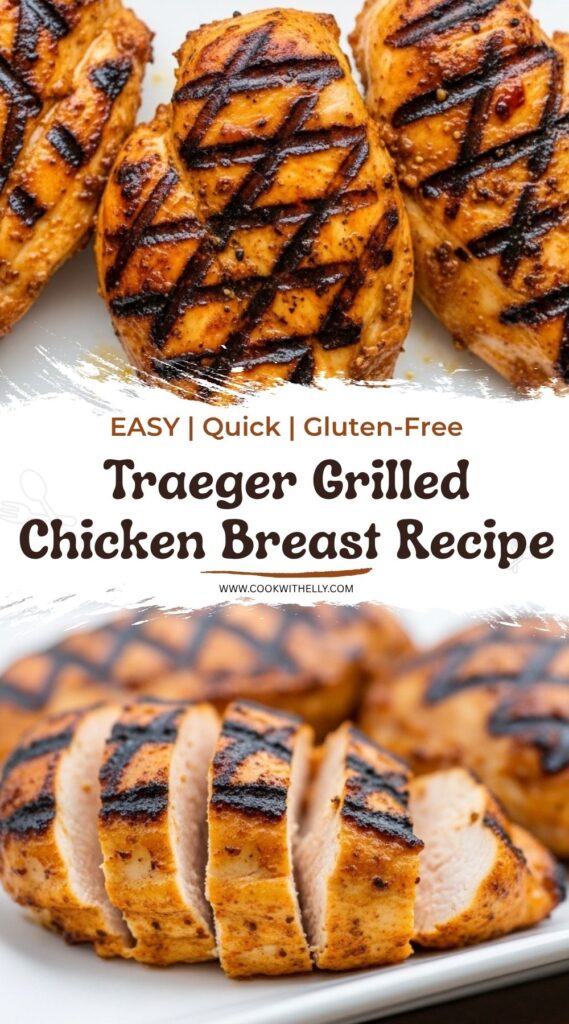
The grill hissed the second the chicken hit the grates, and I knew right away I forgot to shake off some of the extra marinade. Tiny flames jumped up around the edges while the smell of lime and chipotle drifted across the backyard. Not a bad problem to have, honestly.
I make chicken breast on the Traeger more than almost anything else because it feeds people without turning into a whole production. A quick marinade, high heat, a little patience, and dinner suddenly looks like I planned my life better than I actually did.
Some days I slice it for tacos. Other days I throw it into bowls with rice and beans because I’m tired and hungry and that combo never fails me. The nice part is the chicken stays juicy if I don’t overthink it.
I used to assume pellet grills were only good for long smoky cooks that take half the afternoon. Turns out blasting chicken breast at high heat works ridiculously well too, especially when those grill marks show up right at the end.
Ingredients Needed for the Recipe
3 pounds boneless skinless chicken breast - the main protein and perfect for meal prep
1/3 cup fresh orange juice - adds sweetness and balances the smoky heat
1/4 cup lime juice - brightens everything and helps tenderize the chicken
4 garlic cloves - gives the marinade a deeper savory flavor
1 can chipotle peppers in adobo - smoky heat with a little richness
2 handfuls cilantro - fresh flavor that cuts through the spice
1 tablespoon olive oil - helps the marinade coat the chicken evenly
1 tablespoon kosher salt - seasons the chicken all the way through
1 tablespoon paprika - adds warmth and color
1 teaspoon ground cumin - gives the chicken a Tex-Mex feel
A Few Things I Do Before the Grill Even Turns On
I usually pull the chicken breasts out about twenty minutes before cooking. Cold chicken straight from the fridge tends to cook unevenly for me, especially the thicker pieces that already take longer.
If one breast is huge and another looks tiny, I flatten the thick one a little with my hand or the bottom of a mug. Nothing fancy. I just try to get them somewhat close in thickness so one piece doesn’t dry out while another still needs time.
I also wipe the grill grates while the Traeger heats up. I skipped that once and ended up with bits of old barbecue sauce stuck to the chicken. Not terrible, but definitely weird with the citrus marinade.
How to make Traeger Grilled Chicken Breast?
Step 1 - Blend the Marinade
Add the orange juice, lime juice, garlic, chipotle peppers, cilantro, olive oil, salt, paprika, and cumin to a blender or food processor. Blend until smooth and slightly thick.
The smell hits fast here. Smoky, sharp, citrusy. I usually dip a spoon in just to check the balance, and sometimes I add an extra squeeze of lime if the orange comes through too sweet.
Step 2 - Marinate the Chicken
Place the chicken breasts in a large container or zip-top bag and pour the marinade over everything. Move the chicken around a bit so every piece gets coated.
Two to three hours is usually enough. I’ve left it overnight before, and the texture started getting softer than I wanted because of all the citrus. Still edible. Just a little too tender.
Step 3 - Preheat the Traeger
Set the Traeger to 500 degrees F and let it heat with the lid closed for about 15 minutes. I know it feels hot for chicken breast, but that heat gives great color fast.
The grill gets loud at this stage with that deep roaring pellet sound. I like using a blend of hickory and cherry pellets because the smoke stays subtle and doesn’t overpower the marinade.
Step 4 - Grill the Chicken
Place the chicken directly on the grates and close the lid. Smaller chicken breasts usually finish in 20 to 25 minutes while larger ones need closer to 30.
I flip mine during the last 5 to 10 minutes once the first side has strong grill marks. Sometimes the pieces near the outer edges cook faster, so I swap positions halfway through if things look uneven.
Step 5 - Check the Temperature
Pull the chicken once the thickest part reaches 160 degrees F. The temperature keeps climbing a little while the meat rests.
I used to cut into chicken to check doneness, which basically lets all the juices escape immediately. A thermometer saves dinner and keeps the chicken from turning dry.
Step 6 - Let It Rest
Transfer the chicken to a plate or cutting board and let it rest for about 5 minutes before slicing. The smell at this point is unreal. Smoky peppers, grilled citrus, charred edges.
I usually slice one piece early because I lack patience, then regret it when juice runs all over the board. The resting part matters more than I want it to.
When I Usually End Up Making This
This recipe shows up a lot when I know the week is going to get busy. I grill a big batch on Sunday, dice everything up, and suddenly lunches stop feeling annoying.
The chicken works cold straight from the fridge too. I throw it into wraps, salads, quesadillas, or rice bowls without reheating sometimes, especially during warmer weather when turning on the stove feels criminal.
It also saves me when people come over unexpectedly. Chicken breast cooks fast enough that I can still act casual while secretly rushing around the kitchen trying to get toppings and sides together.
Tips
Don’t overcrowd the grill or the chicken steams instead of getting good color.
If the marinade looks too thick, add a splash of orange juice before blending.
Use chicken breasts that are close in size for more even cooking.
Flip the chicken gently so the marinade crust stays attached.
Keep an eye on pieces near the hotter outer edges of the grill.
Let the grill fully preheat before adding the chicken.
Resting the chicken keeps the juices from running out immediately.
Dice leftovers while the chicken is still slightly warm because it cuts cleaner.
If you want more smoke flavor, cook at a lower temperature for a longer time.
A little extra cilantro on top right before serving wakes everything up.
Serving Ideas That Usually Happen Around My Kitchen
Most of the time I chop the chicken into small pieces and pile it into tacos with shredded lettuce, onions, and way too much queso. The smoky chipotle flavor works perfectly with melted cheese.
Rice bowls happen constantly too. I add black beans, avocado, grilled corn, and whatever salsa is already open in the fridge. Sometimes dinner is basically built from leftovers and somehow tastes better because of it.
If I’m extra hungry, I stuff the chicken into giant burritos with refried beans and rice. They barely close properly, and I always overfill them anyway.
The leftovers are solid for quesadillas the next day because the chicken stays flavorful even after reheating. I crisp the tortilla in a skillet until the edges almost burn a little. That part matters.
You can also slice the chicken thin for salads if you want something lighter. The citrus marinade keeps the meat bright enough that the salad doesn’t taste boring or sad.
I’ve even tossed leftover diced chicken into fried rice late at night when I didn’t feel like grocery shopping. The smoky flavor somehow works there too.
Discover how to make perfectly tender and juicy Traeger grilled chicken breast every time. This recipe features a zesty Tex-Mex inspired chipotle and citrus marinade that infuses the meat with bold flavors while keeping it moist. Whether you are making tacos, burrito bowls, or salads, this high-heat grilling method delivers signature grill marks and delicious results in under 30 minutes.
Ingredients
Chicken
3lbs boneless skinless chicken breasts (approx. 6-8 oz each)
Chipotle Citrus Marinade
1/3cup fresh orange juice (about 1 large navel orange)
1/4cup fresh lime juice (about 2 limes)
4cloves garlic, peeled
1can chipotle peppers in adobo sauce (3.7 oz can)
2handfuls fresh cilantro (approx. 10g)
1tbsp olive oil
1tbsp kosher salt (Diamond Crystal preferred)
1tbsp paprika
1tsp ground cumin
Instructions
1
Prepare the MarinadeCombine all marinade ingredients (orange juice, lime juice, garlic, chipotle peppers in adobo, cilantro, olive oil, salt, paprika, and cumin) in a food processor or blender. Blend until smooth.
2
Marinate the ChickenPlace the chicken breasts in an airtight container or resealable bag. Pour the marinade over the chicken, ensuring it is well coated. Seal and refrigerate for at least 2 hours, or up to 12 hours overnight. Do not marinate longer than 12 hours as the acidity may change the texture of the meat.
3
Preheat the TraegerWhen ready to cook, preheat your Traeger pellet grill to 500°F (260°C) with the lid closed for about 15 minutes.
4
Grill the ChickenRemove chicken from the marinade and shake off excess. Place the chicken breasts on the grill grates. Close the lid and grill for approximately 20-30 minutes. Flip the chicken during the last 5-10 minutes of cooking. Smaller breasts (6-8 oz) will take 20-25 minutes, while larger ones (10-12 oz) may take 25-30 minutes.
Cook time varies based on thickness and placement on the grill.
5
Check TemperatureUse an instant-read thermometer to check the internal temperature at the thickest part of the breast. Remove from grill when it reaches 160°F (71°C).
6
Rest and ServeTransfer the chicken to a cutting board or plate and let it rest for 5 minutes before slicing or serving. This allows the juices to redistribute throughout the meat.
Nutrition Facts
Servings 6
Serving Size 1 breast (approx. 6-8 oz)
Amount Per Serving
Calories245kcal
% Daily Value *
Total Fat5g8%
Saturated Fat1g5%
Cholesterol95mg32%
Sodium680mg29%
Potassium450mg13%
Total Carbohydrate4g2%
Dietary Fiber1g4%
Sugars2g
Protein46g92%
* Percent Daily Values are based on a 2,000 calorie diet. Your daily value may be higher or lower depending on your calorie needs.
Note
For a smokier flavor, you can cook at a lower temperature (225°F-250°F) for 90-120 minutes, but high heat provides better grill marks and faster cooking for weeknight meals. Leftovers can be diced and used for tacos, quesadillas, or salads.