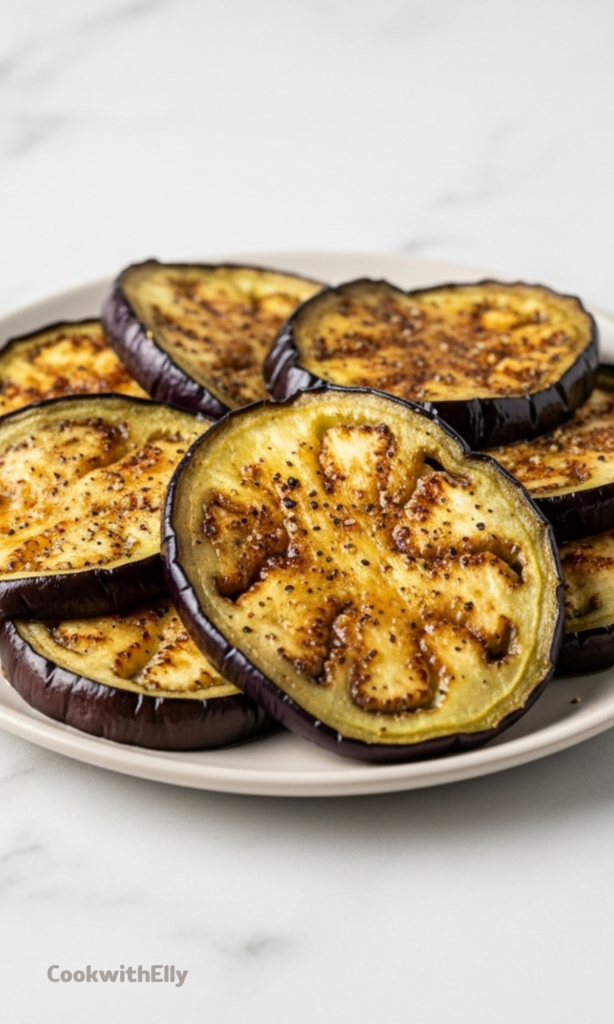
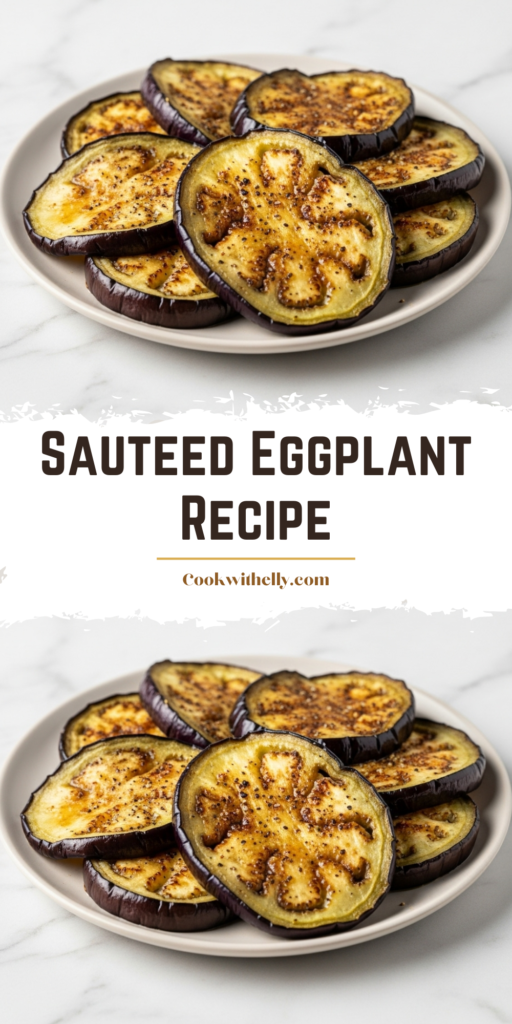
This recipe started as a happy kitchen accident, born on a sweltering day when turning on the oven felt unthinkable.
What I discovered was not just a workaround, but my new favorite way to cook eggplant, period.
The Charm of the Simple Slice
There's a quiet magic to a humble vegetable cooked just right.
This method coaxes out a deep, caramelized sweetness you might not expect from such a simple process.
Ingredients Needed for the Recipe
This is a five-ingredient symphony where each player has a clear, important role.
Let's talk about what each one does, and how you can swap things if you need to.
Eggplant (1 medium, about 1 pound): The star of the show. Look for a firm one with shiny, taut skin; it should feel heavy for its size. This firmness ensures a meaty, not mushy, texture.
Olive Oil (1/4 cup, more as needed): Our cooking medium and a key flavor. Extra virgin olive oil adds a fruity, peppery note that pairs perfectly with the eggplant's sweetness. It also helps create those glorious browned edges.
Garlic Powder (1/2 teaspoon): We use powder instead of fresh here for a very good reason. It coats the slices evenly without burning, giving you consistent garlic flavor in every single bite.
Sea Salt (1/4 teaspoon): It’s not just for seasoning. Salt draws out moisture subtly, helping the eggplant caramelize instead of steam in the pan. It makes the natural flavors pop.
Black Pepper (1/4 teaspoon): That warm, aromatic bite is the perfect counterpoint to the sweet, mellow eggplant. Freshly cracked is always lovely if you have it.
Selecting Your Eggplant Hero
Not all eggplants are created equal, at least not for this quick saute.
While the common globe variety is perfect, you can absolutely use longer Japanese or Chinese eggplants if that's what you find.
They might cook a touch faster, so keep an eye on them.
The universal rule? Firmness is non-negotiable. Give it a gentle press with your thumb; the skin should spring back without leaving a dent.
How to make Sauteed Eggplant Recipe?
The process is beautifully straightforward, but a few focused steps make all the difference.
Make this recipe yours—just save it to your Pinterest board!”
Here’s exactly how to get those tender, golden-brown slices.
Step 1- Slice and Season
Wash your eggplant and pat it dry. Leave the green stem on for now—it makes a great handle.
Using a sharp knife, slice the eggplant crosswise into rounds about 1/4-inch thick. Consistency here helps them cook evenly.
Lay the slices out on a cutting board or plate. Sprinkle both sides evenly with the garlic powder, sea salt, and black pepper.
You can do this right before cooking; no need to wait. If the slices seem damp, just give them a quick pat with a paper towel.
Step 2- Heat and Batch
Place a large, heavy-bottomed skillet (nonstick is a big help here) over medium-low to medium heat.
Add about 2 tablespoons of the olive oil and let it warm up. You want it shimmering, not smoking.
Now, add your first batch of eggplant slices in a single layer. Don’t crowd the pan.
This is the secret for browning, not steaming. You’ll probably need 2 or 3 batches.
Step 3- Saute to Caramelized Perfection
Let the slices cook, undisturbed, for about 3-4 minutes. This patience is what builds the caramelization.
Peek underneath; when they’re a deep golden brown, it’s time to flip.
Use a thin spatula to carefully turn each slice. Cook for another 3-4 minutes on the second side.
They’re done when they are very tender all the way through and beautifully browned on both sides. Transfer them to a plate.
Step 4- Repeat and Finish
Add another tablespoon or two of oil to the pan for your next batch, and repeat the process.
Eggplant does absorb oil, so adding it fresh for each batch ensures every slice gets its share without the pan going dry.
Once all your eggplant is cooked and stacked on the plate, you’re done. Really, that’s it.
For a little brightness, a squeeze of lemon juice or a scatter of fresh herbs right at the end is wonderful.
Why Slices Work Best
You could cut this vegetable into cubes or strips, and I sometimes do for other dishes.
For this specific recipe, slices are the undisputed champion. Here's why.
First, they offer maximum surface area for browning. You get that caramelized edge on every single piece.
Second, they’re incredibly easy to manage—just one flip and you’re done, no constant stirring required.
Finally, they hold their shape beautifully, yielding a tender but substantial bite.
Cubes tend to tumble and break down more, while slices proudly stay intact on your fork.
Tips
These aren't strict rules, just the little nudges I've learned that nudge the recipe from good to great.
Skin On, Always: Keep the purple skin on. It helps the slices hold together, adds a bit of texture, and locks in nutrients. It becomes tender and delicious as it cooks.
Embrace the Wait (Mostly): Don’t move the slices around in the pan while they’re cooking. Let them sit and develop that gorgeous, flavorful crust. Disturb them only when it’s time to flip.
Trust the Touch Test: Color is a good guide, but the true test of doneness is tenderness. Gently press the center of a slice with your spatula. It should yield easily without resistance.
Manage Your Heat: If your slices are browning too fast before the inside softens, don’t hesitate to lower the heat. A steady medium-low is often better than a rushing medium.
To Salt or Not to Salt: Modern eggplants are less bitter, so pre-salting and draining isn’t usually needed. If you have a very large, seedy one, a light salt and 30-minute rest can help, but for standard medium ones, you can skip it.
Breathing New Life into Leftovers
If you somehow have leftovers, they are a fantastic ingredient waiting for their next act.
Store them in an airtight container in the fridge for up to 4 days.
Chop them up and fold them into a morning omelet or scramble.
Layer them into a sandwich with fresh mozzarella, basil, and a drizzle of balsamic for a killer lunch.
You can also roughly chop the cold slices and toss them into a grain bowl or pasta salad.
They add a wonderful, savory-sweet depth that makes everything taste more interesting.
Flavor Variations
The basic recipe is a masterpiece of simplicity, but it’s also a wonderful canvas.
Here are a few easy ways to play with the flavors when the mood strikes.
Herbaceous: In the last minute of cooking, add a teaspoon of dried oregano or Italian seasoning to the pan. Or, finish the plated dish with a handful of fresh chopped parsley, basil, or mint.
Spicy: Add a pinch of red pepper flakes to the seasoning mix. For a different kind of warmth, a light dusting of smoked paprika is fantastic.
Umami-Rich: Right after removing the eggplant from the pan, while it’s still piping hot, shower it with a fine grating of Parmesan or Pecorino Romano cheese. Let it melt softly from the residual heat.
Tangy Finish: A generous squeeze of fresh lemon juice or a tiny drizzle of balsamic glaze right before serving cuts the richness and brightens all the flavors beautifully.
Serving Ideas
This sauteed eggplant is the ultimate versatile side. It slides effortlessly onto so many different plates.
It has a natural affinity for Mediterranean and Italian flavors.
Serve it alongside herbed grilled chicken thighs, baked salmon, or simple lamb chops.
It’s incredible tucked into a pita with some tzatziki sauce or used as a hearty layer in a vegetarian grain bowl.
For a casual meal, I love it as a side to a big, leafy salad and some crusty bread.
It also makes a fantastic vegetarian main all on its own, perhaps with a dollop of creamy ricotta on top.
Once you learn to cook eggplant this way, you'll pair it with everything! This tender, caramelized, sautéed eggplant recipe takes just 20 minutes and uses only 5 simple ingredients. Perfect as a healthy, gluten-free side dish that pairs beautifully with Italian, Greek, and Mediterranean mains.
ingredients
1medium Eggplant (~1 lb, sliced into 1/4-inch-thick rounds)
1/2tsp Garlic powder
1/4tsp Sea salt
1/4tsp Black pepper
1/4cup Olive oil (more as needed)
Instructions
1
Slice the eggplant crosswise to make circles, about 1/4 inch (6 mm) thick. Cut off the leafy end only after you are done slicing, so that you'll have more to grab onto as you slice. If the slices are damp, pat them dry.
2
Sprinkle the eggplant slices on both sides with garlic powder, sea salt, and black pepper.
3
Heat 2 tablespoons of olive oil in a 12-inch nonstick skillet over medium-low to medium heat. Working in batches, add the eggplant slices in a single layer. Sauté eggplant for 3–6 minutes per side, until soft, browned, and caramelized on both sides. Repeat with the remaining eggplant slices, adding about 1–2 tablespoons of oil per batch.
Nutrition Facts
Servings 4
Serving Size 4-5 slices (1/4 of recipe)
Amount Per Serving
Calories180kcal
% Daily Value *
Total Fat15 gg24%
Saturated Fat2 gg10%
Trans Fat0 gg
Cholesterol0 mgmg0%
Sodium150 mgmg7%
Potassium240 mgmg7%
Total Carbohydrate12 gg4%
Dietary Fiber6 gg24%
Sugars6 gg
Protein2 gg4%
Calcium 20 mg
Iron 1 mg
* Percent Daily Values are based on a 2,000 calorie diet. Your daily value may be higher or lower depending on your calorie needs.
Note
No need to pre-salt unless your eggplant is very large — small to medium eggplants are rarely bitter these days.
Leave the skin on — it keeps slices intact during cooking and adds nutrients.
Use a heavy nonstick skillet for best browning without excess oil.
Don’t stir constantly — let slices sit untouched until flipping to build caramelization.