The butter hit the flour and I could already tell I’d rushed it. Too soft. Not melted, just not as cold as it should’ve been. I paused, stared at the bowl, then shrugged and kept going anyway.
There’s something about rhubarb that makes me less careful. Maybe it’s that sharp, almost sour smell when you slice into it. It wakes everything up, including my patience, which disappears pretty quickly.
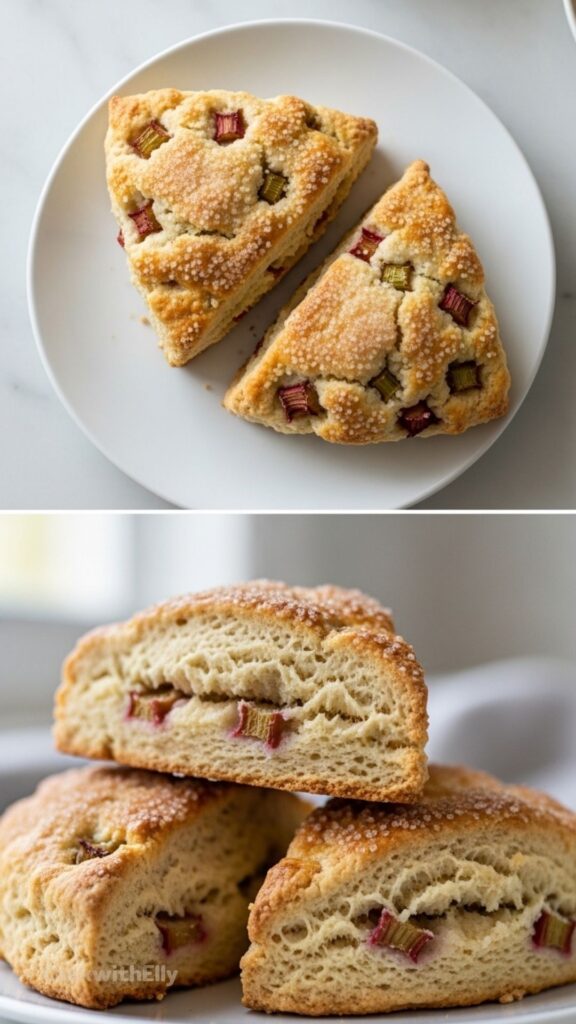
These rhubarb scones came together on a slightly messy counter, with flour on my sleeves and a knife that probably needed sharpening. Still, they turned out exactly how I wanted - tender, lightly sweet, with that little tang in every bite.
I don’t treat scones like delicate bakery items. I treat them like something that should be easy, forgiving, and just a bit rustic. These fit that mood perfectly.
That moment before the dough came together
I had everything measured out, but I still hesitated before mixing. Not because it’s complicated, but because scones always feel like they could go wrong if I overthink them.
The rhubarb sat there, bright and sharp, already sliced thin. I almost added more sugar right then, thinking it might be too tart, but I stopped myself. That contrast is kind of the whole point.
So I just started mixing, telling myself not to fuss too much. It’s better when I don’t.
Ingredients Needed for the Recipe
2 cups all-purpose flour - gives structure and body
1/2 cup sugar - adds sweetness to balance the rhubarb
3 tablespoons brown sugar - brings a slight caramel flavor and softness
1 teaspoon baking powder - helps the scones rise
1/2 teaspoon baking soda - adds extra lift and lightness
1/2 teaspoon salt - balances all the flavors
3/4 teaspoon cinnamon - adds warmth
1/4 teaspoon nutmeg - subtle spice that deepens the flavor
1/2 cup unsalted butter, cold and cubed - creates flaky layers
1 cup thinly sliced fresh rhubarb - the main tart element
1/3 cup milk - brings the dough together
1 egg - adds richness and structure
2 teaspoons vanilla extract - rounds out the flavor
Coarse sugar (optional) - adds crunch on top
How to make Rhubarb Scones?
Step 1 - Mix the dry ingredients
I grab a big bowl and whisk together the flour, sugar, brown sugar, baking powder, baking soda, salt, cinnamon, and nutmeg. I don’t overmix, just enough so everything looks evenly combined.
If I see any clumps of brown sugar, I break them up with my fingers. It’s faster than trying to fix it later.
Step 2 - Cut in the butter
The butter goes in cold, straight from the fridge. I press it into the flour using my fingers until the mixture looks like rough crumbs.
Some pieces stay a little bigger, and I leave them. That’s what gives the scones those flaky pockets.
Step 3 - Add the rhubarb
I toss in the sliced rhubarb and gently mix it through. It looks like a lot at first, but it settles into the dough later.
If the rhubarb is damp, I pat it dry. I’ve skipped that step before, and the dough turned sticky fast.
Step 4 - Mix the wet ingredients
In a smaller bowl, I whisk together the milk, egg, and vanilla. Nothing fancy, just combined.
I pour it into the dry mix and stir until it barely comes together. It always looks too dry at this stage, but that’s normal.
Step 5 - Bring the dough together
I turn the dough onto a floured surface and gently press it together. I knead it maybe five times, no more.
It’s shaggy and uneven, but that’s exactly how I want it. Overworking it makes tough scones, and I’ve learned that the hard way.
Step 6 - Shape and cut
I shape the dough into a rough circle, about 7 to 8 inches wide. It doesn’t need to be perfect.
Then I cut it into 8 wedges. Sometimes they’re uneven, but they bake just fine.
Step 7 - Add topping
I sprinkle coarse sugar over the top. Not too much, just enough to give a little crunch.
This step feels small, but it changes the texture in a good way.
Step 8 - Bake
I bake them at 350°F for about 20 to 25 minutes. I start checking at 20 because ovens don’t always behave.
When the edges turn lightly golden, I pull them out and let them cool on a rack, even though I usually break that rule and grab one early.
When the texture finally feels right
The first bite tells me everything. If it crumbles just a little but still holds together, I know I got it right.
The inside stays soft, with little bursts of tart rhubarb. The outside has that slight crunch from the sugar, which I always appreciate more than I expect to.
Sometimes the bottoms brown a bit more than I planned, but I don’t mind. That slight crisp edge actually works.
Tips
Keep the butter cold - it makes a big difference in texture
Don’t overmix the dough - stop as soon as it comes together
Pat rhubarb dry if it’s wet to avoid sticky dough
Flour your surface well before shaping
Cut the dough cleanly instead of sawing through it
Check early while baking to avoid overbrowning
Let them cool slightly before eating so they set properly
I make these whenever I want something that feels a little special without actually taking much effort. They’re not perfect, and I don’t try to make them that way.
Some batches are softer, some a bit crumblier. Either way, they disappear quickly, usually with crumbs left behind as proof.
And every time I slice that rhubarb again, I get that same sharp smell and think, yeah, this is worth the mess.
Celebrate the arrival of spring with these tender, flaky Rhubarb Scones. Packed with fresh, tart rhubarb and warm hints of cinnamon and nutmeg, these scones feature a caramel-like depth from brown sugar and a delightful crunchy coarse sugar topping. Perfect for breakfast or afternoon tea.
Ingredients
Dry Ingredients
2cups all-purpose flour (240g)
1/2cup granulated sugar (100g)
3tablespoons brown sugar (packed)
1teaspoon baking powder
1/2teaspoon baking soda
1/2teaspoon salt
3/4teaspoon ground cinnamon (can increase to 1 tsp for stronger flavor)
1/4teaspoon ground nutmeg
Wet Ingredients & Add-ins
1/2cup unsalted butter (cold, cut into small pieces)
1cup fresh rhubarb (thinly sliced, patted dry)
1/3cup milk (whole milk preferred for richness)
1large egg
2teaspoons vanilla extract
Coarse sugar (for sprinkling on top, optional)
Instructions
1
Prep & Mix Dry IngredientsPreheat your oven to 350°F (175°C). Line a large baking sheet with parchment paper or a silicone baking mat. In a large bowl, whisk together the flour, granulated sugar, brown sugar, baking powder, baking soda, salt, cinnamon, and nutmeg until well combined.
2
Cut in Butter & Add RhubarbAdd the cold, cubed butter to the dry ingredients. Use a pastry cutter, two forks, or your fingers to work the butter into the flour mixture until it resembles coarse crumbs. Gently stir in the thinly sliced rhubarb, ensuring it is evenly distributed without crushing it.
Ensure rhubarb is dry to prevent sticky dough.
3
Combine Wet IngredientsIn a separate small bowl or measuring cup, whisk together the milk, egg, and vanilla extract until smooth.
4
Form the DoughPour the wet ingredients into the dry ingredients. Stir gently with a spatula or wooden spoon just until the dough begins to come together. It may look slightly shaggy; this is normal. Turn the dough out onto a well-floured surface.
Do not overmix to keep scones tender.
5
Knead & ShapeGently knead the dough 5-6 times just enough to bring it into a cohesive ball. Pat the dough into a circle approximately 7-8 inches in diameter and about 1-inch thick. Use a sharp knife or dough scraper to cut the circle into 8 equal wedges.
Use extra flour on hands if dough is sticky.
6
BakePlace the wedges on the prepared baking sheet, spacing them about 2 inches apart. Sprinkle the tops with coarse sugar if desired. Bake for 20-25 minutes, or until the edges are lightly golden brown and the centers are set.
7
Cool & ServeRemove from the oven and let the scones cool on the baking sheet for 5 minutes, then transfer to a wire rack to cool completely or serve warm. Store leftovers in an airtight container at room temperature for up to 2 days.
Nutrition Facts
Servings 8
Serving Size 1 scone
Amount Per Serving
Calories245kcal
% Daily Value *
Total Fat10g16%
Saturated Fat6g30%
Cholesterol45mg15%
Sodium280mg12%
Potassium120mg4%
Total Carbohydrate36g12%
Dietary Fiber1g4%
Sugars16g
Protein3g6%
* Percent Daily Values are based on a 2,000 calorie diet. Your daily value may be higher or lower depending on your calorie needs.
Note
Tips for Success: 1. Keep Butter Cold: For the flakiest scones, ensure your butter is very cold. You can even freeze it for 10 minutes before cutting it in. 2. Dry Rhubarb: After washing rhubarb, pat it thoroughly dry with paper towels. Excess moisture can make the dough sticky and cause the scones to spread too much. 3. Don't Overwork: Handle the dough as little as possible. Over-kneading develops gluten, resulting in tough scones.