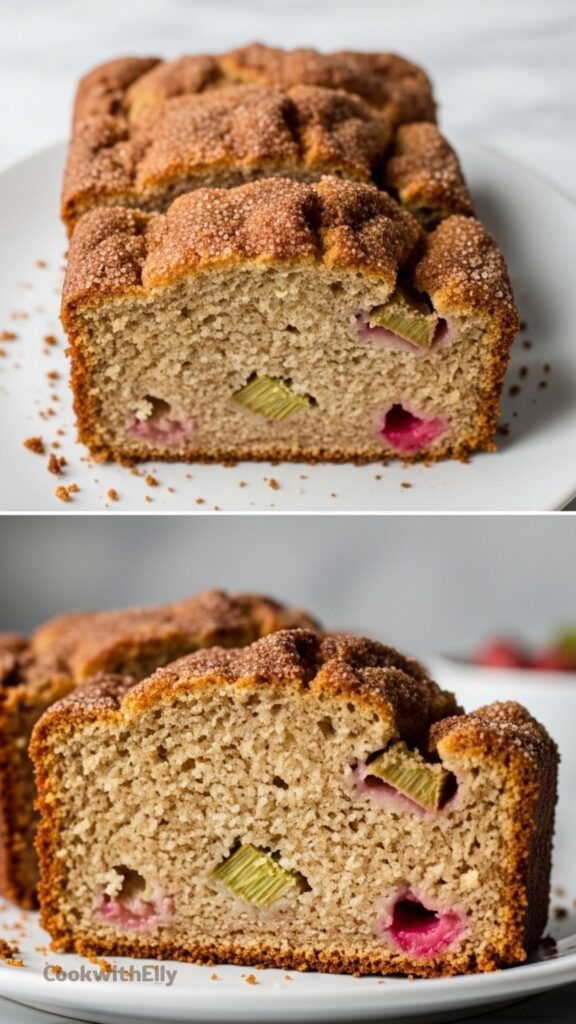
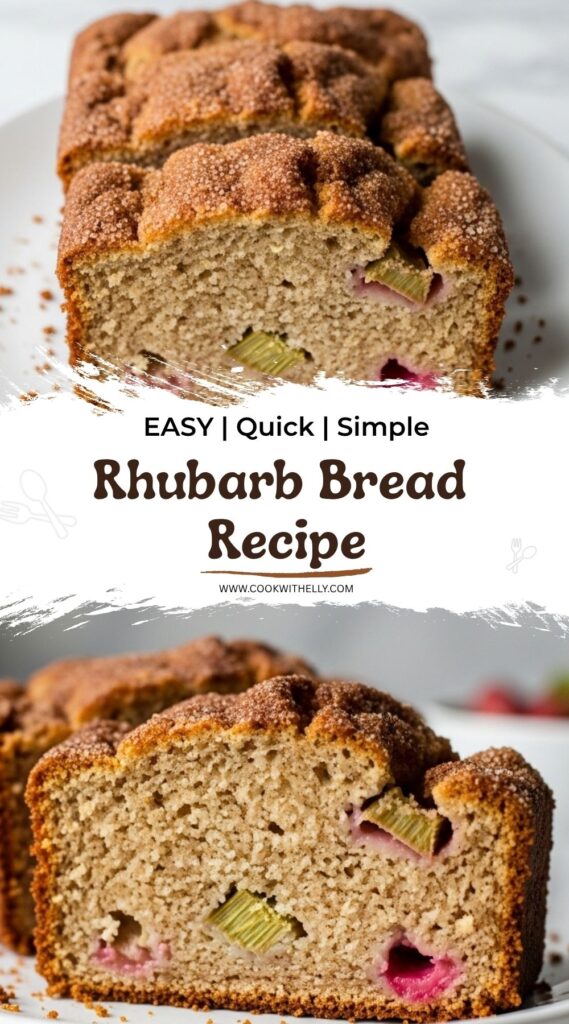
The smell hit me before I even opened the oven door - warm sugar, a little tang, something almost caramel-like settling into the kitchen air. I stood there longer than needed, just letting it build. It felt like something good was already happening.
I’m the kind of cook who leans toward comfort. If a recipe promises soft, sweet, and a little nostalgic, I’m already halfway in. This rhubarb bread does that without trying too hard.
There’s something about rhubarb that pulls me back into slower days. Not perfectly planned ones, just the kind where you bake because you feel like it and not because you need to.
And this one? It comes together fast. Ten minutes of real effort, and then the oven does the rest while everything smells like you knew exactly what you were doing.
A small moment before the mixing started
I had the rhubarb chopped and sitting in a bowl, and for a second I wondered if I’d cut it too thick. Some pieces were chunky, others thin. I almost went back to fix it.
But I didn’t. I left it uneven, and that turned out to be one of the better choices. Some bites end up soft and jammy, others still hold a little bite.
Ingredients Needed for the Recipe
1 1/2 cups brown sugar - adds deep sweetness and balances the tartness
2/3 cup vegetable oil - keeps the bread moist and soft
1 large egg - binds everything together
1 teaspoon vanilla extract - adds warmth and flavor depth
3 cups all purpose flour - gives structure
1 teaspoon baking soda - helps the bread rise
1 teaspoon salt - balances the sweetness
1 cup buttermilk - adds slight tang and helps with texture
2 cups chopped rhubarb - the main flavor, slightly tart and juicy
1/4 cup brown sugar (for topping) - creates a sweet crust
1/2 teaspoon cinnamon - adds warmth to the topping
1 tablespoon melted butter - helps the topping stick and crisp
How to make Rhubarb Bread?
Step 1 - Mix the wet ingredients
I grab a big bowl and start with the brown sugar, oil, egg, and vanilla. It looks grainy at first, but after a bit of mixing, it smooths out.
I don’t rush this part. If the sugar isn’t mostly dissolved, the texture later feels off. A few extra stirs here make a difference.
Step 2 - Combine the dry ingredients
In another bowl, I mix flour, baking soda, and salt. Nothing fancy. Just make sure there are no clumps hiding in the flour.
I’ve skipped mixing properly before and ended up with uneven bites. Not terrible, just not what I wanted.
Step 3 - Bring everything together
I add the dry mix into the wet, a little at a time, alternating with the buttermilk. It thickens quickly, so I go slow.
Sometimes I stop halfway and scrape the bowl because flour likes to hide at the bottom. That one habit saves me every time.
Step 4 - Fold in the rhubarb
The rhubarb goes in last. I fold it gently so it doesn’t break down too much.
The batter looks heavy with fruit, which is exactly what I want. No holding back here.
Step 5 - Prepare the pans and topping
I split the batter between two greased pans. It doesn’t have to be perfect, just roughly even.
Then I mix brown sugar, cinnamon, and melted butter in a small bowl and sprinkle it over the top. I sometimes press it lightly so it sticks better.
Step 6 - Bake
I bake it at 325°F for about an hour. Around the 50-minute mark, I start checking because ovens can be unpredictable.
If the top browns too fast, I loosely cover it. I’ve learned that the hard way once.
Step 7 - Cool and settle
I let the loaves sit in the pans for at least 30 minutes. Taking them out too early makes them fall apart.
Once they’re out, they cool completely on a rack, though I usually sneak a slice while it’s still a little warm.
That one thing that almost went wrong
I almost used regular milk instead of buttermilk. I even had the bottle out before I stopped and thought about it.
Buttermilk changes the texture more than you expect. Without it, the bread feels flatter, less soft. Now I just make a quick version with milk and lemon if I’m out.
Tips
Don’t overmix the batter once the flour goes in - it makes the bread dense
Chop rhubarb into mixed sizes for better texture
Grease the pans well, especially the corners
Check the bread a little early - ovens vary more than you think
Let it cool before slicing or it will crumble
If the top browns too fast, cover it loosely with foil
Add nuts if you want a bit of crunch
Use a toothpick test, but also gently press the top - it should spring back
By the time it’s fully cooled, the smell settles into something softer, less sharp but still sweet. The crumb stays moist for days, which feels like a small win every time I come back for another slice.
I usually end up making this when I have extra rhubarb and no clear plan. It doesn’t demand much, just a bowl, a spoon, and a little attention.
And somehow, it always turns out like something I meant to make all along.
This Rhubarb Bread is the perfect way to use up fresh spring rhubarb! It yields two incredibly moist loaves with a deep caramel flavor from brown sugar, balanced by the tartness of the rhubarb. A simple cinnamon-sugar butter topping adds a delightful crunch and extra warmth. Easy to mix and bake, this quick bread is a nostalgic favorite that brings the comfort of homemade baking to your kitchen.
Ingredients
Bread Batter
1 1/2cups brown sugar (packed)
2/3cup vegetable oil
1large egg
1teaspoon vanilla extract
3cups all-purpose flour
1teaspoon baking soda
1teaspoon salt
1cup buttermilk (see notes for substitute)
2cups fresh rhubarb (chopped into small pieces)
Cinnamon Sugar Topping
1/4cup brown sugar
1/2teaspoon ground cinnamon
1Tablespoon butter (melted)
Instructions
1
Prep and PreheatPreheat your oven to 325°F (165°C). Grease two standard 9x5 inch loaf pans generously with butter or non-stick spray.
2
Mix Wet IngredientsIn a large mixing bowl, combine 1 1/2 cups brown sugar, vegetable oil, egg, and vanilla extract. Whisk vigorously until the mixture is smooth and well combined.
3
Combine Dry IngredientsIn a separate medium bowl, whisk together the all-purpose flour, baking soda, and salt.
4
Combine Wet and DryAdd the dry ingredients to the wet ingredients alternately with the buttermilk. Begin and end with the dry ingredients. Stir gently until just combined; do not overmix.
5
Fold in RhubarbGently fold in the chopped rhubarb until evenly distributed throughout the batter.
6
Prepare ToppingIn a small bowl, mix the 1/4 cup brown sugar, cinnamon, and melted butter until it resembles wet sand.
7
Assemble and BakeDivide the batter evenly between the two prepared loaf pans. Sprinkle the cinnamon-sugar topping evenly over the batter in each pan. Bake for approximately 60 minutes, or until a toothpick inserted into the center comes out clean.
8
Cool and ServeAllow the loaves to cool in the pans for at least 30 minutes. Then, remove from pans and transfer to a wire rack to cool completely before slicing.
Nutrition Facts
Servings 24
Serving Size 1 slice
Amount Per Serving
Calories285kcal
% Daily Value *
Total Fat10g16%
Saturated Fat2g10%
Cholesterol10mg4%
Sodium210mg9%
Potassium180mg6%
Total Carbohydrate46g16%
Dietary Fiber1.5g6%
Sugars26g
Protein3.5g8%
* Percent Daily Values are based on a 2,000 calorie diet. Your daily value may be higher or lower depending on your calorie needs.
Note
Storage: Store cooled bread in an airtight container at room temperature for up to 3 days, or in the refrigerator for up to a week. Freezes well for up to 3 months.
Buttermilk Substitute: If you don't have buttermilk, add 1 tablespoon of lemon juice or white vinegar to 1 cup of regular milk. Let sit for 5-10 minutes before using.
Variations: Add 1/2 cup chopped walnuts or pecans for added crunch. You can also substitute half the rhubarb with strawberries for a classic combination.