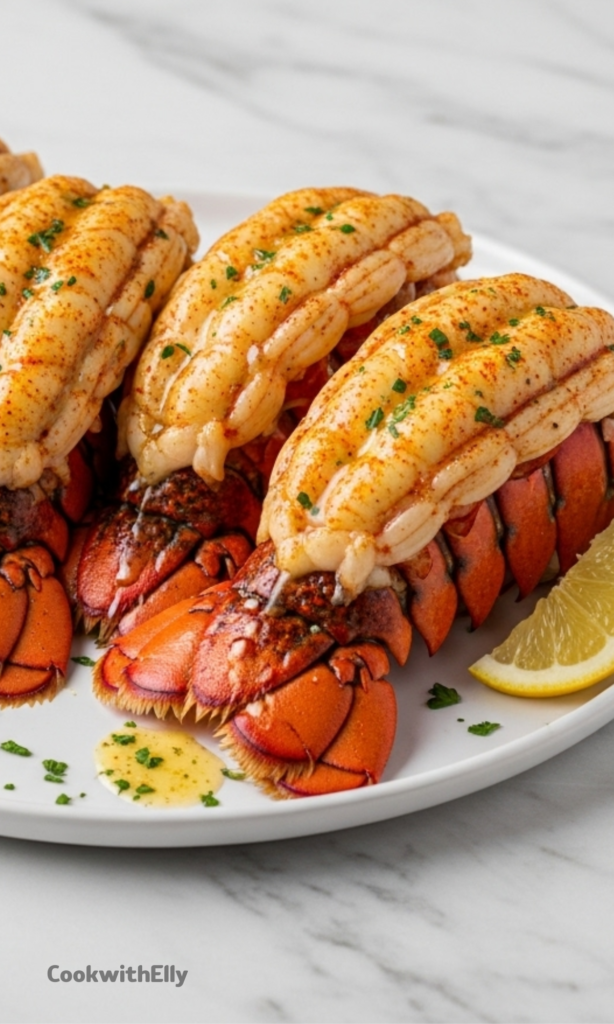
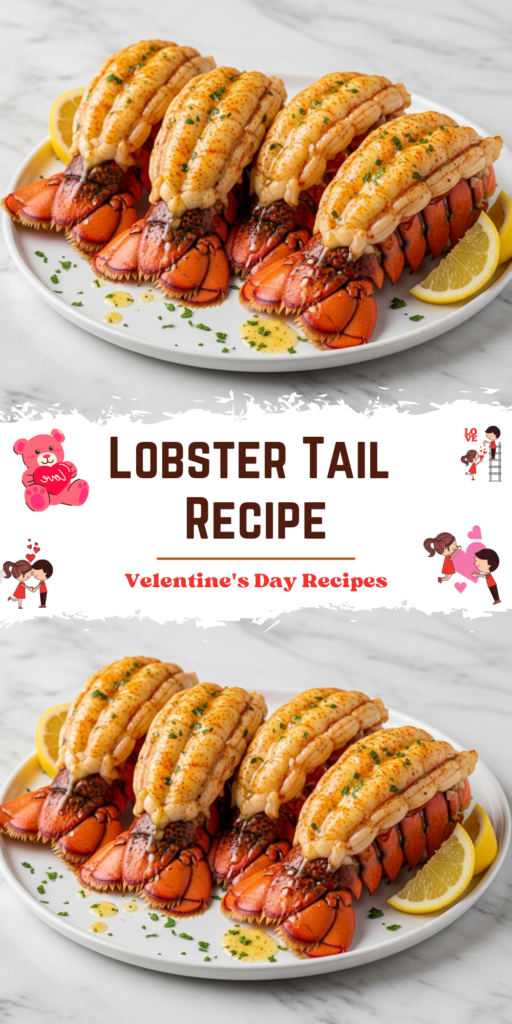
Lobster tail has a reputation. It’s fancy, expensive, and somehow always tied to anniversaries, holidays, or restaurant bills that make you blink twice.
But here’s the truth I learned the first time I cooked it myself: lobster tail is surprisingly simple, and when you do it right, it feels a little magical.
This lobster tail recipe is the one I come back to again and again. It’s fast, buttery, and focused on keeping the meat tender instead of overcomplicating things.
I love this method because it respects the lobster. The flavor stays clean and sweet, with just enough garlic, lemon, and spice to make it feel special.
If you’ve ever worried about overcooking lobster or turning it rubbery, I get it. That fear kept me away for years, until I cracked the timing.
Once you learn how to butterfly the tail and broil it properly, this becomes a low-stress, high-reward recipe you can pull off anytime.
I make this for quiet date nights, last-minute celebrations, and honestly, sometimes just because I want something indulgent without leaving the house.
Let’s walk through it together, step by step, the way I actually do it in my own kitchen.
Ingredients Needed for the Recipe
Lobster tails – The star of the dish, providing sweet, tender meat that cooks quickly under high heat.
Salted butter – Adds richness, keeps the lobster juicy, and helps the surface lightly brown.
Fresh garlic – Infuses the butter with flavor without overpowering the lobster itself.
Lemon juice – Brightens everything and gently tenderizes the meat.
Smoked paprika – Adds warmth and subtle smokiness without masking the seafood.
Cayenne pepper – Just a pinch for balance and a gentle background heat.
The ingredient list is short on purpose. Lobster doesn’t need much help, just thoughtful seasoning and careful timing.
If you’re tempted to add more spices, pause for a second. This recipe works because it lets the lobster stay in the spotlight.
Why This Lobster Tail Recipe Works
I’ve tried boiling, grilling, pan-searing, and even baking lobster tails, but broiling keeps winning me over.
The intense top heat cooks the meat quickly, seals in moisture, and gives you that restaurant-style finish without extra equipment.
The garlic butter sauce does double duty. It flavors the meat and acts as a protective layer so the lobster stays juicy.
Most importantly, the timing is predictable. Once you understand how long each tail needs, the guesswork disappears.
How to make Lobster Tail Recipe?
Make this recipe yours—just save it to your Pinterest board!”
Step 1 – Thaw and Prepare the Lobster
If your lobster tails are frozen, give them time to thaw properly. I usually leave them in the fridge overnight when I plan ahead.
When I forget, I seal them in a bag and submerge them in cold water for about half an hour, checking until flexible.
Starting with fully thawed lobster helps it cook evenly and keeps the texture smooth instead of stringy.
Step 2 – Preheat the Broiler
Set your oven to broil on high and let it fully heat up. This part matters more than it sounds.
You want the oven rack positioned so the lobster sits about four to five inches from the heat source.
That distance gives you strong heat without scorching the butter or drying out the meat.
Step 3 – Butterfly the Lobster Tails
Using sharp kitchen shears, cut straight down the center of the top shell, stopping just before the tail fin.
Gently pull the shell apart and loosen the meat from the sides with your fingers, lifting it up without detaching the tail.
Set the meat on top of the shell, flesh side up. It looks fancy, but it’s actually very forgiving.
Step 4 – Make the Garlic Butter Sauce
Melt the butter and whisk it with crushed garlic, lemon juice, smoked paprika, and a pinch of cayenne.
The mixture should smell rich and fragrant, with the lemon cutting through the butter just enough.
This is where the flavor comes together, so take a second to taste and adjust if needed.
Step 5 – Brush and Broil
Brush the lobster meat generously with the butter sauce, letting it drip into all the curves and crevices.
Slide the baking sheet under the broiler and cook until the meat turns opaque and lightly golden on top.
The general rule I use is about one minute per ounce of each individual tail.
Step 6 – Finish and Serve
Once done, remove the lobster from the oven right away. Overcooking happens fast at this stage.
I like to finish with a little extra melted butter and fresh lemon wedges on the side.
At this point, the lobster should be tender, juicy, and just firm enough to hold together.
Understanding Cook Time Without Stress
Lobster tail cook time depends entirely on size, not quantity. Two small tails cook faster than one large one.
If you’re using a thermometer, aim for about 140°F in the thickest part of the meat.
When I don’t have one handy, I rely on the minute-per-ounce rule and watch for color and texture.
The meat should be opaque, slightly springy, and no longer translucent in the center.
Tips
Use very sharp kitchen shears to avoid cracking the shell unevenly.
It’s okay if the meat gets nicked while cutting; it cooks evenly that way.
Brush all exposed meat with butter to prevent drying.
Avoid brushing the butter too far ahead of time, as the lemon can affect texture.
If the tails curl while cooking, a wooden skewer through the center helps.
Pull the lobster as soon as it’s done; carryover heat can overcook it.
Serving Ideas That Feel Complete
Lobster tail is rich, so I usually pair it with something light and fresh.
Simple vegetables like roasted asparagus or sautéed greens balance the butter without competing for attention.
When I want something heartier, roasted potatoes or a fluffy baked potato feel classic and comforting.
For special occasions, I sometimes add a steak alongside for a surf-and-turf moment that feels celebratory.
Prep Ahead and Leftovers
Lobster is always best fresh, but you can prep a little ahead to make dinner easier.
I often butterfly the tails and mix the butter sauce earlier in the day, keeping them separate in the fridge.
If you end up with leftovers, wrap the tails tightly in foil with a bit of butter and reheat gently.
I avoid freezing cooked lobster, since the texture changes and loses that tender bite.
Variations and Simple Swaps
This lobster tail recipe is flexible if you need it to be. Sweet paprika works when smoked isn’t available.
Garlic powder can stand in for fresh garlic, though the flavor will be slightly softer.
If you enjoy heat, add a bit more cayenne, but I prefer keeping it subtle.
The beauty of this recipe is that small tweaks won’t derail the final result.
Once you’ve made it once or twice, it becomes second nature. And that’s when lobster tail stops feeling intimidating and starts feeling like a treat you can give yourself anytime.
That’s when this lobster tail recipe really earns its place in your kitchen.
With a flavorful butter sauce and ultra quick cooking method, this is my best lobster tail recipe for holidays, celebrations, and date nights at home. It will make you feel like you’re at a fancy restaurant! Ready in just 20 minutes, including time to butterfly them, and doesn’t require any special appliances.
ingredients
410-oz Lobster tails (or see instructions for other sizes)
1/4cup Salted butter (melted; 1/2 stick)
2cloves Garlic (crushed)
2tsp Lemon juice
1/2tsp Smoked paprika
1pinch Cayenne pepper
Instructions
1
If tails are frozen, thaw them overnight in the fridge, or in a bag submerged in cold water on the counter for about 30 minutes.
2
Preheat the oven to Broil (500°F or 260°C). Set the oven rack such that lobster tails placed on a baking sheet would be 4 to 5 inches away from the broiler.
3
Butterfly the lobster tails. Using kitchen shears, cut down the center of the shell lengthwise, starting from the end opposite the tail fins, continuing down until you reach the tail but without cutting the tail. You want to cut through the top of the shell, but don't cut through the bottom shell. Use your thumbs and fingers to spread open the shell on top, then gently pull the lobster meat upward, separating it away from the bottom shell, leaving the end attached to the tail fin intact. Slightly push together the empty shell underneath and place the row of meat on top. Place the butterflied lobster tail onto the baking sheet.
4
In a small bowl, whisk together the melted butter, garlic, lemon juice, smoked paprika, and cayenne. Brush the butter mixture over the lobster meat.
5
Broil the lobster tails until the meat is opaque and lightly browned, about 1 minute per ounce of individual tail. (For example, broil 10-ounce lobster tails for 10 minutes or broil 5-ounce tails for 5 minutes.)
Nutrition Facts
Servings 4
Serving Size 1 lobster tail (10 oz)
Amount Per Serving
Calories285kcal
% Daily Value *
Total Fat20gg31%
Saturated Fat12gg60%
Trans Fat0gg
Cholesterol145mgmg49%
Sodium520mgmg22%
Potassium290mgmg9%
Total Carbohydrate2gg1%
Dietary Fiber0gg0%
Sugars0gg
Protein24gg48%
Calcium 60 mg
Iron 1 mg
* Percent Daily Values are based on a 2,000 calorie diet. Your daily value may be higher or lower depending on your calorie needs.
Note
Serving size: 1 10-ounce lobster tail
Recipe tips: Check out my recipe tips above to help you cut the shells easily, get perfectly juicy results every time, and notes on curling or using frozen tails.
How to butterfly lobster tails: I have a step-by-step visual above to show you how to cut the shells and separate the lobster meat.
Prep ahead: Most seafood is best freshly cooked. Do not brush on the butter mixture on the lobster more than 20 minutes before cooking. The acid in lemon juice will start to “cook” the meat.
Leftovers: Reheat wrapped in foil with butter at 350°F for 5–8 minutes. Use leftovers in lobster bisque or lobster salad.
Freeze: Freeze raw after blanching (1 min boil + ice bath) for up to 12 months. Do not freeze cooked lobster.