I still remember the first time I tasted Irish Brown Bread while traveling with my family. It showed up everywhere we went, quietly sitting beside soups, breakfasts, and tea like it had always belonged there.
At first glance it looked simple, almost too simple. Then I took a bite and realized this bread was hearty, nutty, and comforting in a way that felt both rustic and special.
When we came back home to New England, I missed it more than I expected. That is when I decided I needed to recreate it in my own kitchen, with ingredients I could find and a method that felt just as homey.
This recipe is the result of many mornings of mixing, shaping, and tweaking. Now I can bake a loaf whenever the craving hits, and the smell alone brings back those memories.
A Bread with Humble Roots
Irish Brown Bread is a traditional soda bread, which means there is no yeast involved. Instead, baking soda and buttermilk do all the work, creating a loaf that rises quickly and bakes beautifully.
The flour is what really defines it. A coarse wholemeal wheat flour gives the bread its signature color, texture, and deep nutty flavor that feels far more substantial than everyday wheat bread.
Historically, this was practical food. Families relied on simple ingredients they already had, mixing them together for a nourishing loaf that could be made daily without fuss.
That practicality is still part of its charm. There is no waiting for dough to rise, no complicated shaping, just honest bread that comes together in minutes.
Why I Love Making This Bread at Home
This is the kind of bread that fits into real life. I can decide on a whim to bake it in the morning, and it will be ready before lunch without rearranging my day.
The texture is sturdy yet tender, perfect for spreading with butter or dipping into soup. It feels wholesome without being heavy, which is a balance I always appreciate.
I also love how forgiving it is. Even when the dough looks a little rough or uneven, it bakes into something beautiful and deeply satisfying.
And maybe my favorite part is how it fills the kitchen with a warm, toasty aroma. That smell alone makes the effort worthwhile.
Ingredients Needed for the Recipe
Coarse wholemeal flour - This is the heart of the bread, giving it its rustic texture and nutty flavor.
All-purpose flour - Lightens the loaf so it is not overly dense while still keeping structure.
Granulated sugar - Adds a subtle sweetness that enhances the wheat flavor without making the bread sweet.
Baking powder - Helps with lift and creates a softer crumb.
Baking soda - The main leavening that reacts with buttermilk to make the bread rise.
Salt - Balances all the flavors and keeps the bread from tasting flat.
Buttermilk - Provides moisture, tang, and the acidity needed to activate the leaveners.
Before You Start Mixing
This is not a bread that likes to be fussed over. The less you handle the dough, the better the final texture will be.
I like to set everything out before I begin so the process stays quick and relaxed. Once the buttermilk is added, things move fast.
A Dutch oven gives the loaf a lovely shape, but a simple baking sheet works just as well. This bread is about practicality, not perfection.
How to make Irish Brown Bread?
Step 1 - Preheat the Oven
Start by heating your oven to 400 degrees F. Line a baking sheet or prepare a Dutch oven with parchment so nothing sticks.
This bread depends on a good initial burst of heat to rise properly. Having the oven fully preheated makes a noticeable difference.
Step 2 - Mix the Dry Ingredients
In a large bowl, stir together the wholemeal flour, all-purpose flour, sugar, baking powder, baking soda, and salt. Make sure everything is evenly distributed.
I like to use a whisk or my fingers to break up any clumps. It only takes a minute, but it ensures a consistent texture.
Step 3 - Add the Buttermilk
Pour in most of the buttermilk and begin stirring gently. The mixture will look shaggy and a little uneven at first, and that is exactly right.
Add the remaining buttermilk only if needed. The dough should be soft but not sticky or wet.
Step 4 - Bring the Dough Together
Turn the mixture onto a lightly floured surface. Give it just a few quick squeezes to form a rough ball.
This is not kneading in the traditional sense. Overworking the dough will make the bread tough, so stop as soon as it holds together.
Step 5 - Shape the Loaf
Form the dough into a round and place it onto your prepared pan or into the pot. It should look rustic and slightly uneven.
Use a sharp knife to cut a deep cross across the top. Tradition says this lets the fairies out, but it also helps the bread bake evenly.
Step 6 - Bake with a Temperature Change
Bake the bread for 10 minutes at 400 degrees F. Then reduce the heat to 375 degrees F and continue baking for another 40 to 45 minutes.
The loaf is ready when it is browned and sounds hollow when tapped on the bottom. That hollow sound is the best indicator.
Step 7 - Let It Cool
Transfer the bread to a rack and let it cool for at least 30 minutes before slicing. I know it is tempting, but cutting too soon can ruin the texture.
As it cools, the crumb finishes setting and becomes easier to slice cleanly.
How I Like to Serve It
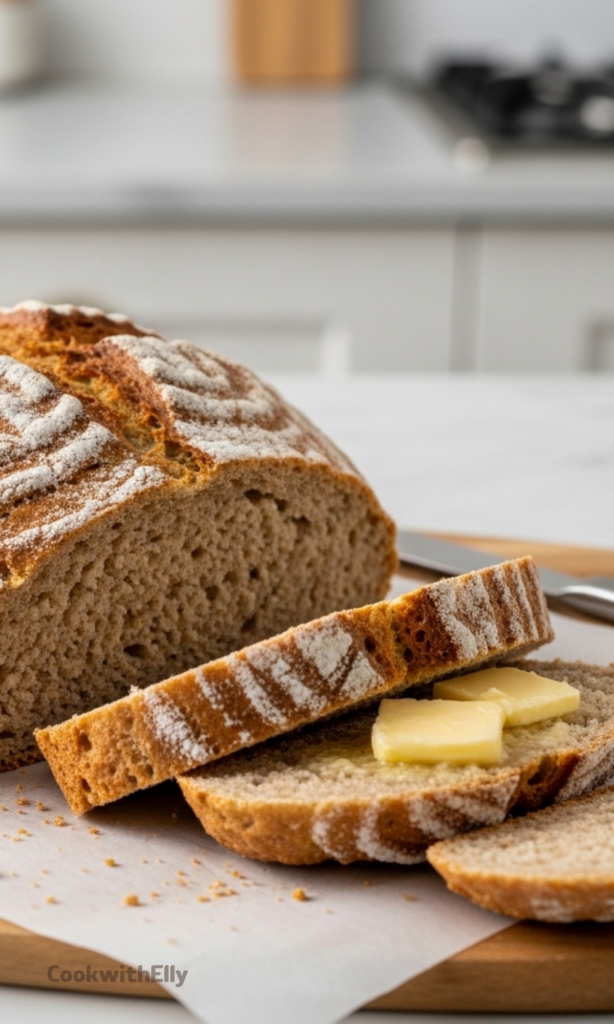
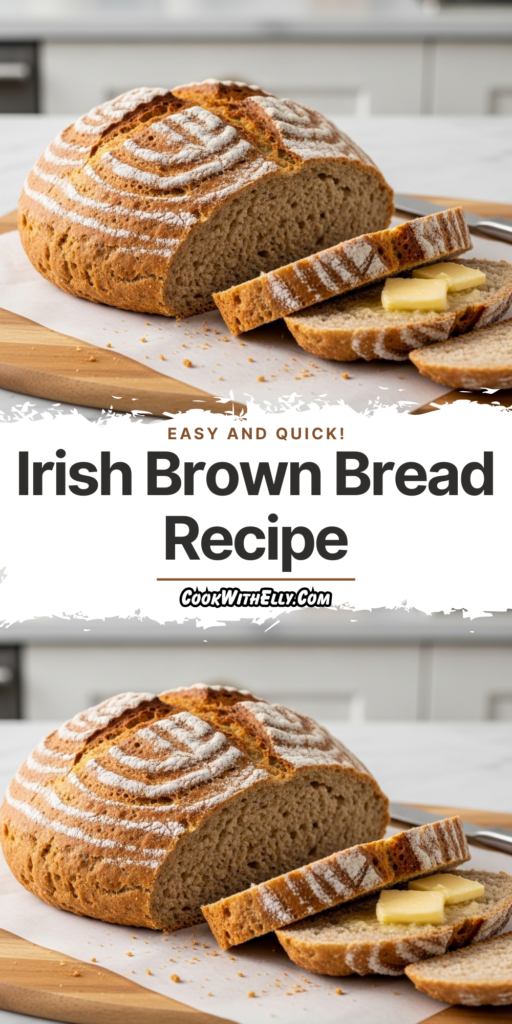
The simplest way is still my favorite. A warm slice with good butter melting into it is hard to beat.
This bread is also wonderful with soup or stew because it holds up well when dipped. It absorbs flavor without falling apart.
In the afternoon, I often toast a slice and add a little jam. It turns into the perfect companion to coffee or tea.
Storing the Bread
Irish Brown Bread is best enjoyed within a few days of baking. I keep it wrapped at room temperature in a bread bag or cloth.
Because it has no preservatives, it will naturally dry out faster than commercial bread. That is part of its charm.
If it does get a little firm, toasting brings it right back to life.
Common Mistakes to Avoid
The biggest mistake is overmixing the dough. Treat it gently and resist the urge to knead like you would yeast bread.
Another issue can be using old baking soda or baking powder. Fresh leaveners are essential for a good rise.
Also be careful not to add too much liquid. A slightly shaggy dough bakes better than a wet one.
Why This Bread Became a Staple in My Kitchen
I love recipes that feel connected to place and tradition, yet still fit into modern life. This bread does exactly that.
It reminds me that good food does not need to be complicated. A few solid ingredients and a simple method can create something deeply comforting.
Now I bake it year round, not just when I am feeling nostalgic. It has become part of our everyday routine.
Tips
Use coarse wholemeal flour if you can find it - the texture makes a big difference.
Handle the dough as little as possible to keep the crumb tender.
Slash the top deeply so the loaf expands evenly while baking.
Bake in a Dutch oven for a taller loaf, or on a sheet for a more rustic shape.
Let the bread cool before slicing so it sets properly.
Enjoy it fresh, but toast leftovers to bring back its warmth and texture.
This Irish Brown Bread recipe brings the hearty, rustic charm of Ireland to your kitchen. Made with coarse wholemeal flour and buttermilk, this easy soda bread requires no yeast or rising time. Perfect for breakfast, afternoon tea, or alongside soups and stews, each slice is nutty, tender, and best enjoyed slathered with Irish butter.
ingredients
2cups Irish coarse wholemeal flour (such as Odlum's or King Arthur Irish Style Flour)
2cups all-purpose flour (unbleached preferred)
4½tablespoons granulated sugar (can reduce or omit for less sweetness)
2teaspoons baking powder (check expiration date for freshness)
1½teaspoons baking soda (essential leavener for soda bread)
½teaspoon salt (fine sea salt or kosher)
1½cups buttermilk (room temperature, plus more as needed)
Instructions
1
Preheat and PreparePreheat oven to 400°F (200°C). Line a round enameled Dutch oven or baking sheet with parchment paper. Have a floured surface ready for kneading.
A Dutch oven helps create a taller, rounder loaf, but a baking sheet works well too.
2
Mix Dry IngredientsIn a large bowl, stir together the wholemeal flour, all-purpose flour, sugar, baking powder, baking soda, and salt until well combined.
Whisking ensures even distribution of leaveners for consistent rise.
3
Add ButtermilkPour in most of the buttermilk and stir into the dry ingredients. If the mixture seems very dry, add the remaining buttermilk until a shaggy dough forms.
The dough should be moist but not sticky; avoid overmixing.
4
Quick KneadTurn the dough onto a floured surface and give it just a few quick squeezes to pull it together. Do not over-knead, as this will make the bread tough.
Handle gently—soda bread dough should come together in under 30 seconds.
5
Shape and SlashShape the dough into a round ball and place it in the prepared pot or on the baking sheet. Use a sharp knife to slash a deep cross on top, and poke a small hole in each corner of the dough.
Traditionally, this 'lets the fairies out' and helps the bread bake evenly.
6
BakeBake at 400°F (200°C) for 10 minutes, then reduce heat to 375°F (190°C) and continue baking for 40–45 minutes, until the loaf is risen, deeply browned, and sounds hollow when tapped on the bottom.
Internal temperature should reach 190°F (88°C) if using a thermometer.
7
Cool and ServeTransfer the bread to a cooling rack and let cool for at least 30 minutes before slicing. Serve warm with Irish butter, blackberry jam, or alongside soup.
Cooling allows the crumb to set for cleaner slices.
Nutrition Facts
Servings 12
Serving Size 1 slice (1/12 of loaf)
Amount Per Serving
Calories165kcal
% Daily Value *
Total Fat1.5gg3%
Saturated Fat0.4gg2%
Trans Fat0gg
Cholesterol2mgmg1%
Sodium220mgmg10%
Potassium145mgmg5%
Total Carbohydrate32gg11%
Dietary Fiber3.5gg15%
Sugars4.5gg
Protein5.2gg11%
Calcium 85mg mg
Iron 1.8mg mg
* Percent Daily Values are based on a 2,000 calorie diet. Your daily value may be higher or lower depending on your calorie needs.
Note
Flour tip: Authentic Irish coarse wholemeal flour (like Odlum's) gives the traditional texture. If unavailable, King Arthur's Irish Style Flour is an excellent substitute.
Don't overwork the dough: Handle gently and briefly—over-kneading creates a tough, dense loaf.
Baking vessel: A Dutch oven creates a taller, rounder loaf with a crisp crust, but a parchment-lined baking sheet works perfectly too.
Storage: Wrap cooled bread tightly in beeswax wrap or a plastic bag. Best enjoyed within 2–3 days at room temperature.
Freezing: Slice and freeze individual portions for up to 1 month. Thaw at room temperature or toast directly from frozen.
Keywords:
irish brown bread, soda bread, wholemeal bread, irish recipe, buttermilk bread, easy bread recipe