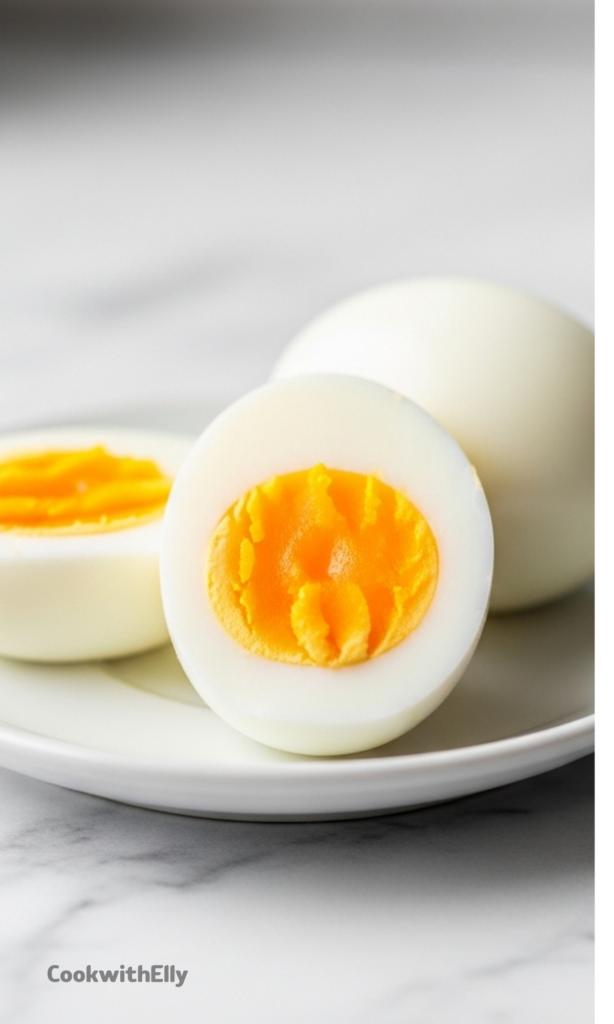
Hard boiled eggs sound basic, and yet they’re one of those things people quietly struggle with for years. I know I did. Too chalky, too jammy when I didn’t want it, shells clinging for dear life.
This method finally stuck because it’s calm and predictable. No tricks, no gadgets, just timing, temperature, and a little patience. Once you nail it, you’ll wonder why it ever felt complicated.
These eggs work for everything. Breakfast plates, quick dinners, lunchboxes, salads, deviled eggs, and those moments when you just need protein fast and don’t want to think.
Ingredients Needed for the Recipe
Eggs – the main event, large eggs cook most evenly and are easiest to time
Cold water – helps the eggs heat gradually and cook more gently
That’s it. No salt, no vinegar, no baking soda. This is about control, not additives, and once you trust the process, you won’t miss the extras.
If you’re cooking more eggs, just scale up the water and pan size. The eggs should always sit in a single layer so they cook at the same pace.
How to know if an egg is cooked or raw
This comes up more often than you’d think, especially when eggs get mixed together in the fridge. There’s a quick, oddly satisfying way to tell without cracking anything open.
Give the egg a spin on a flat surface. A cooked egg spins smoothly and confidently, while a raw one wobbles and loses momentum fast.
How to make ?
Make this recipe yours—just save it to your Pinterest board!”
Step 1 – Set up the eggs
Place the cold eggs in a saucepan in a single layer. Pour in enough cold water to cover them by at least one inch.
Starting with cold water allows the eggs to heat evenly. It reduces sudden temperature shocks that can cause cracking and uneven cooking.
Step 2 – Bring to a boil
Cover the saucepan and place it over high heat. Bring the water to a full boil as quickly as possible.
Once the water reaches a rolling boil, immediately remove the pan from the heat. This stops aggressive bubbling that can overcook the eggs.
Step 3 – Let the eggs rest
Keep the pan covered and let the eggs sit in the hot water for 12 minutes if using large eggs.
This resting time finishes the cooking gently. The whites firm up fully, and the yolks set without turning dry or crumbly.
Step 4 – Cool them down fast
Drain the hot water right away and run cold water over the eggs until they’re completely cool.
Rapid cooling stops the cooking process and helps prevent that greenish ring that sometimes forms around the yolk.
Two ways to peel hard boiled eggs
Peeling is where most frustration lives, so it’s worth slowing down here. The goal is clean, smooth eggs without gouges or lost chunks.
Both methods work well, and which one you prefer often depends on habit more than results.
Crack and roll method
Tap the egg gently on a hard surface until the shell is cracked all over. Roll it between your hands to loosen the shell.
Start peeling from the wide end where the air pocket sits. The shell usually releases more easily from that spot.
Water-assisted method
Crack the egg and peel it under running cold water or in a bowl of water.
The water slips under the shell and lifts it away from the egg white, which is especially helpful with stubborn shells.
Why this method works so consistently
This approach relies on steady heat and residual cooking rather than constant boiling. That small shift makes a big difference.
The eggs cook through without being bullied by aggressive bubbles. The texture stays tender instead of rubbery.
It’s also forgiving. Slight differences in egg size or stove strength won’t ruin the batch, which is what makes it reliable.
Tips
Use eggs that have been in the refrigerator a bit longer for easier peeling
Keep eggs in a single layer so they cook evenly
Add a few extra minutes if using extra large eggs
Cool eggs immediately to stop overcooking
Store peeled or unpeeled eggs in the fridge and use within one week
Storage and make-ahead ideas
Hard boiled eggs are quiet meal-prep heroes. Cook a batch once, and you’ve got options for days.
Store unpeeled eggs in a sealed container in the refrigerator. They stay fresher longer with the shell intact.
If you peel them ahead of time, keep them in a container with a damp paper towel. This prevents drying and keeps the texture pleasant.
Ways to serve hard boiled eggs
Sometimes I eat one plain with a pinch of salt, standing at the counter. Other times, they’re part of something bigger.
Slice them over salads, mash them into egg salad, or halve them for deviled eggs. They also slide easily into grain bowls and wraps.
They’re especially helpful on busy mornings or evenings when cooking feels like too much. Quiet, dependable food has its place.
Once you trust this method, hard boiled eggs stop being a gamble. They become something you can count on, every single time.
This foolproof method for hard boiling eggs delivers tender, perfectly cooked eggs every time—ideal for snacks, salads, or a protein-packed start to your day. Cooking times may vary slightly based on egg size and stove type, so feel free to fine-tune to your preference.
ingredients
2 large eggs (preferably not ultra-fresh for easier peeling)
enough to cover eggs by 1 inch cold water
Instructions
1
Place cold eggs in a single layer in a saucepan. Cover with at least 1 inch (2.5 cm) of cold water.
2
Cover the saucepan and bring quickly to a boil over high heat. As soon as it reaches a boil, immediately remove from heat.
3
Let the eggs stand, covered, in the hot water for 12 minutes (for large eggs). Adjust time if using extra-large or jumbo eggs.
4
Drain the hot water and immediately run cold water over the eggs or submerge them in an ice bath until completely cooled (about 5 minutes).
5
To peel, gently tap the egg on a hard surface to crack the shell all over, then roll between your hands to loosen. Start peeling from the larger end, preferably under cool running water.
Nutrition Facts
Servings 1
Serving Size 2 eggs
Amount Per Serving
Calories148kcal
% Daily Value *
Total Fat11g17%
Saturated Fat3g15%
Cholesterol372mg124%
Sodium123mg6%
Potassium126mg4%
Total Carbohydrate2g1%
Protein12g24%
Calcium 56 mg
Iron 1.2 mg
* Percent Daily Values are based on a 2,000 calorie diet. Your daily value may be higher or lower depending on your calorie needs.
Note
Peeling tip: Older eggs peel more easily than very fresh ones.
Avoid green yolks: Rapid cooling prevents the gray-green ring around the yolk caused by overcooking.
Storage: Keep unpeeled hard boiled eggs in the fridge for up to 7 days.
Test for doneness: Spin the egg—if it spins smoothly, it’s cooked; if it wobbles, it’s raw.
Keywords:
hard boiled eggs, easy egg recipe, healthy breakfast, protein snack, meal prep eggs