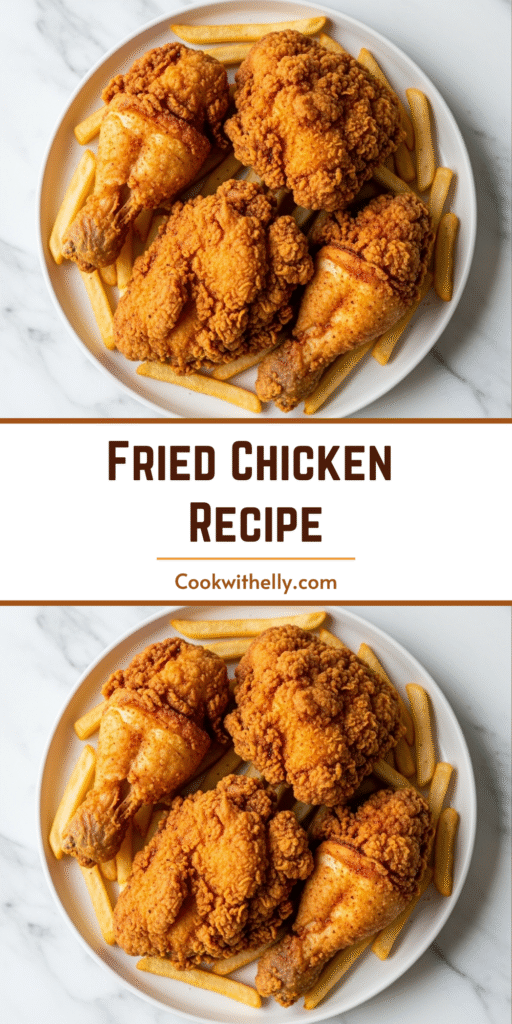
There’s fried chicken, and then there’s the kind that stops a conversation. This is the latter. We’re talking about a recipe passed down through generations, one that trades hours of brining for a brilliantly simple, yet wildly effective, technique.
The goal? A crust so audibly crunchy it could win awards, hugging chicken that’s juicy and seasoned right down to the bone.
This isn’t just dinner; it’s an experience, a little piece of Southern heritage that’s surprisingly straightforward to bring to your own table.
The magic, you’ll find, is in the details—a trusted combination of ingredients and a couple of old-school tricks that guarantee success every single time.
Why This Recipe Stands Apart
Many classic recipes rely on a long buttermilk soak, which is fantastic but requires planning.
The marinade is built right into the breading process, using eggs and potent seasonings. The real structural genius, though, comes from a duo in the dry mix: all-purpose flour and cornstarch.
The flour provides the foundation, while the cornstarch is the secret weapon for that ultra-crisp, almost shatteringly delicate crust. It’s a hundred-year-old legacy, streamlined for modern life, and it absolutely delivers.
Ingredients Needed for the Recipe
Gathering everything before you start is the first step to confident frying. Each component here has a specific job, from building flavor to creating that iconic crunch.
Chicken (8 pieces): A mix of thighs, drumsticks, and breasts ensures something for everyone. Dark meat stays incredibly juicy, while white meat offers that classic appeal.
Large Eggs (3): Beaten eggs are the glue. They bind the seasoned flour to the chicken, creating a solid base for the crust to form.
Hot Sauce (1 tsp): Just a teaspoon adds a subtle, backnote warmth that perks up the flavor without overwhelming spice.
Worcestershire Sauce (1 tsp): This is a flavor powerhouse. It brings a savory, umami-rich depth to the egg wash, seasoning the chicken from the very first layer.
All-Purpose Flour (2 ½ cups): The main body of your coating. It crisps up beautifully and holds all the wonderful spices.
Cornstarch (3 tbsp): The crispness champion. This light powder fries up lighter and crispier than flour alone, giving that professional-quality crunch.
Seasoned Salt (3 tbsp): This is your primary seasoning agent. It’s a balanced blend of salt, herbs, and spices that distributes flavor evenly throughout the crust.
Paprika (2 tsp): Provides a sweet, earthy pepper flavor and contributes to that beautiful, deep golden-red color.
Cayenne Pepper (½ tsp): Offers a gentle, building heat. You can adjust this to your liking, but it’s key for authentic character.
Black Pepper (2 tsp): Freshly ground is ideal for its bright, pungent kick that complements the other spices.
Garlic Powder & Onion Powder (½ tsp & 1 tbsp): These pantry staples deliver the essential savory, aromatic notes that make fried chicken so irresistibly good.
Neutral Oil for Frying: Use a high-smoke-point oil like vegetable, peanut, or canola. You’ll need enough to come about 1 ½ inches up the side of your skillet.
Essential Equipment for Success
Having the right tools makes the process smooth and safe. A heavy pot is non-negotiable for maintaining steady heat.
A large, heavy cast-iron skillet or Dutch oven is perfect. Its weight distributes heat evenly, preventing hot spots that burn the coating.
Metal tongs or a spider strainer for safely lowering and retrieving the chicken from the hot oil.
A reliable instant-read thermometer to check your oil temperature and the chicken’s doneness. No guessing allowed.
Two baking sheets—one for letting the breaded chicken rest, and one (lined with parchment) for keeping finished pieces warm in the oven.
A wire cooling rack set over paper towels. This is the best way to drain fried food, as it keeps the crust crisp on all sides.
How to make Fried Chicken Recipe?
Make this recipe yours—just save it to your Pinterest board!”
Step 1: Prepare Your Coating Stations
In a medium bowl, whisk the three beaten eggs, hot sauce, and Worcestershire sauce until fully combined. This is your egg wash, your flavor-infused adhesive.
In a large paper bag (a bowl works too), combine the flour, cornstarch, seasoned salt, paprika, cayenne, black pepper, garlic powder, and onion powder.
Seal the bag and give it a vigorous shake. You want every single grain of flour to be friends with the spices.
Step 2: Bread the Chicken Methodically
Working with one piece at a time, dip the chicken completely into the egg wash. Let any excess drip back into the bowl for a moment. Then, drop the wet chicken into the paper bag of flour.
Hold the top closed and shake it gently but thoroughly until the piece is utterly coated in the seasoned flour. Place the breaded piece on a clean baking sheet. Repeat until every piece is coated.
Step 3: The Critical Resting Period
This is the step you don’t skip. Let the breaded chicken sit on that baking sheet for 10 to 15 minutes. You’ll see the coating change from powdery white to a more settled, paste-like appearance.
This rest allows the egg wash to fully hydrate the flour, creating a seal that prevents the crust from sliding off and helps it fry up extra crisp.
Step 4: Heat the Oil and Test It
While the chicken rests, pour your oil into the heavy skillet. You want it about 1 ½ inches deep. Heat it over medium-high heat until it reaches 350°F on your thermometer. No thermometer?
Use Big Mama’s test: flick a tiny pinch of the seasoned flour into the oil. If it immediately sizzles and dances, the oil is ready. Also, preheat your oven to 275°F to keep the first batch warm.
Step 5: Fry in Batches with Strategy
Carefully add four pieces of chicken to the hot oil, starting with dark meat pieces like thighs and drumsticks first, as they take slightly longer to cook. Do not crowd the pan; the chicken needs space for the oil to circulate.
Fry for about 5-6 minutes per side, until you achieve a light golden color. Then, cover the skillet with a lid for 2-3 minutes. This gentle steam ensures the chicken cooks through without over-browning the crust.
Step 6: Crisp to Golden Perfection
After steaming, remove the lid. The crust may look a bit soft, but don’t worry. Continue frying, turning occasionally, for another 3-5 minutes. This final fry re-crisps the coating into that deep, glorious, golden brown we’re after.
The chicken is done when an instant-read thermometer inserted into the thickest part (away from bone) reads 165°F.
Step 7: Drain and Keep Warm
Using your tongs or spider, transfer the finished chicken to the wire rack set over paper towels. Let the excess oil drip for just a minute. Then, place them on a parchment-lined baking sheet and into the warm oven.
This keeps them perfectly hot and crisp while you fry the remaining batch. Repeat the frying process with the rest of the chicken.
Tips
These aren’t just suggestions; they’re the collected wisdom that bridges the gap between good and legendary. Pay attention to them.
Dry your chicken pieces thoroughly with paper towels before you start breading. Any surface moisture will create steam and make the coating gummy.
Maintain your oil temperature. After adding chicken, the temp will drop. Adjust your burner to keep it as close to 350°F as possible for even cooking and browning.
Let the fried chicken rest for 5-10 minutes after it comes out of the oven before serving. This allows the frantic, hot juices inside to relax and redistribute, so they don’t all end up on your plate.
Serving & Presentation Ideas
This chicken deserves a plate that matches its grandeur. Think of classic, comforting pairings that balance its rich, crispy nature.
For a true Southern spread, serve with collard greens simmered with a smoked turkey wing, a scoop of ultra-creamy mac and cheese, and a fluffy buttermilk biscuit.
Keep it simple and utterly satisfying with just a drizzle of hot honey and a side of cool, creamy coleslaw for that perfect sweet, spicy, and crunchy contrast.
Turn it into a celebratory sandwich. Place a piece on a soft brioche bun with pickles, a swipe of mayo, and a dash of hot sauce for pure bliss.
Storing and Reheating for Later
Leftover fried chicken is a treasure, but only if reheated correctly. The goal is to revive the crunch, not create chewiness.
Store cooled leftovers in an airtight container in the fridge for 3-4 days. For longer storage, freeze on a baking sheet then transfer to a freezer bag for up to 3 months. To reheat, skip the microwave.
Instead, place the chicken on a wire rack set over a baking sheet. Bake in a 400°F oven for 15-20 minutes, or until hot and crisp throughout. This method uses circulating hot air to refresh the crust beautifully.
Common Questions Answered
A few final pieces of advice to ensure your confidence is as solid as your crust.
If your crust falls off, the oil was likely not hot enough, or the chicken didn’t get its initial resting period. A proper seal is crucial. Yes, you can reuse the oil. Let it cool completely, then strain it through a fine-mesh sieve or cheesecloth into a jar.
Store it in a cool, dark place and use it for one more frying session. And while a deep fryer works, a heavy pot on the stove gives you more control and often results in a better, more textured crust. Enjoy the process, and get ready for some seriously good eating.
This Southern fried chicken recipe is extra, EXTRA crispy and finger-lickin’ good—passed down through generations with over 100 years of soulful flavor. Instead of buttermilk, it uses a tangy egg wash with hot sauce and Worcestershire, then a seasoned flour and cornstarch crust that fries up golden and crunchy in a cast iron skillet. Quick, bold, and perfect for Sunday suppers or weeknight cravings!
Prepare Egg WashIn a medium bowl, whisk together the eggs, hot sauce, and Worcestershire sauce. Set aside.
2
Mix Dry CoatingIn a large paper bag, combine flour, cornstarch, seasoned salt, paprika, cayenne pepper, black pepper, garlic powder, and onion powder. Shake well to mix thoroughly.
3
Bread the ChickenDip each chicken piece into the egg wash, coating both sides. Then place it into the seasoned flour bag, seal, and shake to coat completely. Transfer to a baking sheet.
4
Rest the CoatingLet the breaded chicken sit for 10–15 minutes so the coating adheres properly.
5
Preheat Oil and OvenAdd 1½ inches of oil to a cast iron skillet and heat over medium-high until it reaches 350°F. Meanwhile, preheat oven to 275°F.
6
Fry in BatchesFry 4 pieces at a time, starting with dark meat. Cook until both sides are golden brown. Cover with a lid for 3–4 minutes to steam the inside, then uncover and continue frying until deeply golden and crispy (internal temp 165°F).
7
Drain and Keep WarmTransfer fried chicken to a wire rack or paper towels to drain. Place on a parchment-lined baking sheet and keep warm in the preheated oven while frying remaining pieces.
8
ServeLet fried chicken rest 5 minutes before serving for maximum juiciness and crisp.
Nutrition Facts
Servings 4
Serving Size 1 piece
Amount Per Serving
Calories580kcal
% Daily Value *
Total Fat34gg53%
Saturated Fat9gg45%
Trans Fat0gg
Cholesterol210mgmg70%
Sodium1180mgmg50%
Potassium540mgmg16%
Total Carbohydrate28gg10%
Dietary Fiber1gg4%
Sugars1gg
Protein42gg84%
Calcium 40 mg
Iron 3 mg
* Percent Daily Values are based on a 2,000 calorie diet. Your daily value may be higher or lower depending on your calorie needs.
Note
Resting the coating is key! It helps the crust adhere and stay crispy during frying.
Oil temp matters: Keep it steady at 350°F. Too cool = soggy. Too hot = burnt outside, raw inside.
Use a meat thermometer: Chicken is done at 165°F internally—even if it looks golden.
Reheat like a pro: Place on a foil-lined baking sheet, cover loosely, and bake at 400°F for 20 minutes.
Keywords:
Southern fried chicken, crispy fried chicken, cast iron fried chicken, Big Mama's fried chicken, easy fried chicken recipe