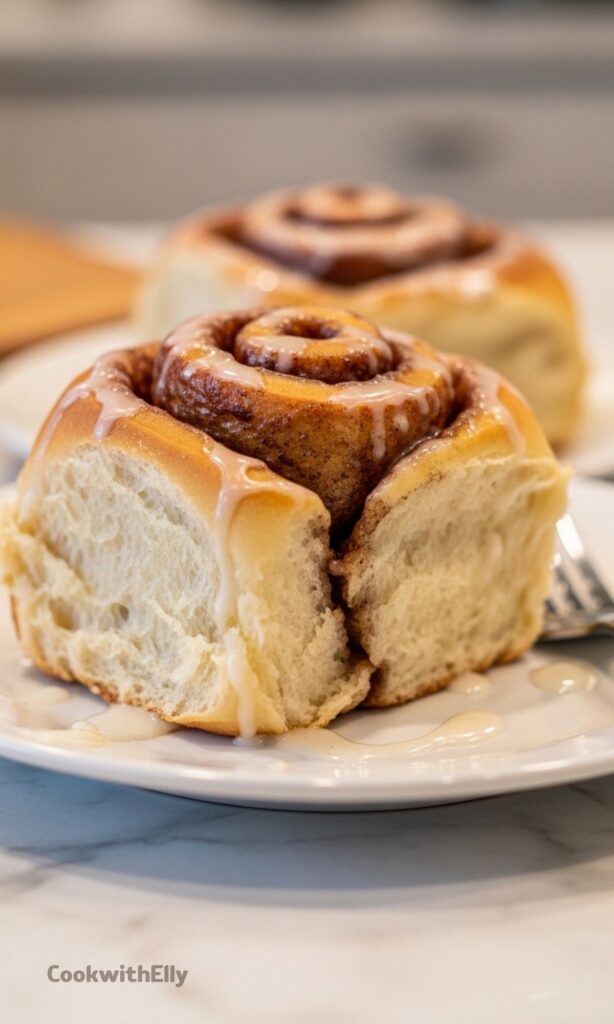
There’s something quietly magical about pulling a tray of warm cinnamon rolls out of the oven. The smell alone fills the kitchen with a kind of comfort that feels familiar, even if it’s your first time baking them. I’ve made these countless mornings, especially around the holidays, and they never lose their charm.
These cinnamon rolls are soft, pillowy, and filled with a rich swirl of brown sugar and cinnamon. What I love most is how simple they actually are. No complicated techniques, no fancy equipment - just a few steps and a little patience.
I still remember the first time I made them from scratch. I expected it to be tricky, but it wasn’t. In fact, it felt surprisingly relaxed, like the dough just needed a bit of attention and time to do its thing.
And that glaze at the end? It ties everything together. Sweet, slightly gooey, and just enough to melt into every swirl. You can swap it for cream cheese frosting if you want something richer, but honestly, both are hard to resist.
Ingredients Needed for the Recipe
Active dry yeast or instant yeast - Helps the dough rise and become soft and airy.
Warm water - Activates the yeast and gets everything started.
Granulated sugar - Adds sweetness and feeds the yeast.
Melted butter - Brings richness and a tender texture to the dough.
Milk - Adds moisture and softness.
Sea salt - Balances the sweetness and enhances flavor.
All-purpose flour - Forms the structure of the rolls.
Dark brown sugar - Creates that deep, caramel-like filling.
Cinnamon - The heart of the flavor, warm and aromatic.
Powdered sugar - Used to make the smooth glaze.
Vanilla extract - Adds a soft, sweet aroma to the glaze.
Extra milk for glaze - Helps achieve the right consistency.
Make-Ahead and Storage Options
If mornings feel rushed, this recipe can easily work around your schedule. I often prepare the rolls the night before, especially when I know I want something special without waking up too early.
Once the rolls are shaped and placed in the baking dish, cover them and refrigerate overnight. The next morning, let them sit out for about an hour before baking. That small pause makes a big difference.
For leftovers, I usually keep them in an airtight container at room temperature. They stay soft for a couple of days, though honestly, they rarely last that long in my kitchen.
If you want to freeze them, let them cool completely first. Wrap them well and store for up to three months. Reheat gently and add fresh glaze before serving - it brings them right back to life.
How to make Cinnamon Rolls?
Step 1 - Proof the Yeast
Start by mixing warm water, sugar, and yeast in a small bowl. Let it sit for about five minutes until it becomes foamy. This step is small, but it tells you everything is working as it should.
If nothing happens, don’t push forward. It’s better to restart here than end up with dense rolls later.
Step 2 - Make the Dough
In another bowl, combine melted butter, milk, sugar, and salt. Add in the yeast mixture and stir gently. Then bring in the flour and mix until everything comes together.
The dough will feel slightly sticky at first, and that’s okay. It softens as you knead it.
Step 3 - Knead the Dough
Transfer the dough onto a lightly floured surface. Knead it for a few minutes until it becomes smooth and elastic. You’ll feel the texture change under your hands.
This part is oddly calming. Just a steady rhythm, nothing rushed.
Step 4 - First Rise
Place the dough in a greased bowl and cover it. Let it rest in a warm spot until it doubles in size, usually about an hour.
I like to keep it near a window or inside the oven with just the light on. It creates a gentle warmth that helps the dough rise beautifully.
Step 5 - Prepare the Filling
Mix together the brown sugar and cinnamon in a small bowl. It’s simple, but this mixture is where all that cozy flavor comes from.
Sometimes I sneak a tiny taste at this stage. It already smells incredible.
Step 6 - Roll and Fill the Dough
Roll the dough into a large rectangle on a floured surface. Brush it with melted butter, then sprinkle the cinnamon sugar evenly across.
Try to spread it all the way to the edges, but leave a small border so it doesn’t spill out.
Step 7 - Shape the Rolls
Roll the dough tightly into a log, starting from the shorter side. Slice it into even pieces using a sharp knife.
Place the rolls in a greased baking dish, cut side up. They’ll look neat, but they’ll expand soon.
Step 8 - Second Rise
Cover the rolls and let them rise again for about an hour. This second rise gives them that fluffy, airy texture.
It’s tempting to rush this step, but giving it time really pays off.
Step 9 - Bake the Rolls
Bake in a preheated oven at 350°F for 25 to 30 minutes. The tops should turn lightly golden.
Keep an eye on them near the end. You want them baked through but still soft inside.
Step 10 - Glaze and Serve
Mix powdered sugar, milk, and vanilla to make the glaze. Once the rolls cool slightly, pour it over while they’re still warm.
The glaze melts just enough to seep into every swirl. That first bite is always worth the wait.
Tips
Always proof your yeast before starting to avoid dense rolls.
Use warm, not hot water - too much heat can kill the yeast.
Let the dough rise in a warm, draft-free spot for best results.
Don’t over-flour the dough while kneading, keep it soft.
Slice the rolls gently to maintain their shape.
Allow rolls to cool slightly before adding glaze so it doesn’t melt away.
Use room temperature milk to help the dough rise properly.
Variations You Can Try
Once you’ve made these a couple of times, it’s hard not to start experimenting. Sometimes I swap the glaze for a cream cheese frosting when I want something richer and slightly tangy.
You can also add chopped nuts or raisins to the filling. It changes the texture a bit and adds small surprises in each bite.
For a lighter twist, using almond milk and coconut oil works beautifully. The rolls stay soft and still taste indulgent, just with a slightly different flavor.
There are days when I add a pinch of cardamom along with cinnamon. It gives a subtle warmth that feels a little unexpected, in a good way.
These easy homemade cinnamon rolls are soft, gooey, and delicious! They're my family's favorite holiday breakfast. Made with a tender yeast dough, rich brown sugar-cinnamon filling, and a quick vanilla glaze (or cream cheese frosting!), they're perfect for Christmas morning, Easter brunch, or any special weekend treat. Make-ahead and freezing instructions included!
ingredients
For the Yeast
1/2cup warm water (110°F)
1package active dry yeast or instant yeast (¼-ounce)
1teaspoon granulated sugar
For the Dough
1/3cup melted butter (plus more for brushing)
1/2cup milk (at room temperature)
1/3cup granulated sugar
1teaspoon sea salt
2 3/4cups all-purpose flour (plus more for kneading)
For the Filling
1/2cup dark brown sugar (packed)
1 1/2tablespoons ground cinnamon
For the Glaze
1 1/2cups powdered sugar (sifted)
3-4tablespoons milk
1/2teaspoon vanilla extract
Instructions
Prepare the Yeast & Dough
1
Grease an 8x11 or 9x13-inch baking dish with butter or non-stick spray.
2
In a small bowl, stir together warm water (110°F), yeast, and 1 teaspoon granulated sugar. Set aside for 5 minutes, or until the yeast is foamy.
If yeast doesn't foam, discard and start with fresh yeast.
3
In a medium bowl, combine melted butter, milk, ⅓ cup granulated sugar, and salt. Stir in the foamy yeast mixture.
Ensure milk is at room temperature to avoid killing yeast.
4
Place flour in a large bowl, add wet ingredients, and stir until combined. The mixture will be sticky.
5
Turn dough onto a floured surface and knead for 3-4 minutes until smooth, adding flour as needed. Form into a ball.
No stand mixer required—hand kneading works perfectly!
6
Brush a large bowl with butter, place dough inside, cover with plastic wrap or a kitchen towel, and let rise in a warm place for about 1 hour, or until doubled in size.
Tip: Place in oven with light on (oven off) for ideal rising warmth.
Fill & Shape the Rolls
7
In a small bowl, mix brown sugar and cinnamon for the filling.
8
Punch down risen dough and roll out on a floured surface into a 20x14-inch rectangle.
Dust surface and rolling pin to prevent sticking.
9
Brush dough with 2 tablespoons melted butter, then sprinkle cinnamon-sugar filling evenly, leaving a ½-inch border at the edges.
10
Starting at a short 14-inch end, tightly roll dough into a log. Use a sharp knife to slice into 12 even rolls.
For clean cuts, use unflavored dental floss or a serrated knife.
11
Place rolls cut-side up in prepared baking dish. Cover and let rise for 1 hour at room temperature.
For overnight rolls: refrigerate after this step, then let stand 1 hour at room temp before baking next morning.
Bake & Glaze
12
Preheat oven to 350°F (175°C).
13
While rolls rise, make the glaze: whisk together powdered sugar, 3 tablespoons milk, and vanilla until smooth. Add more milk if too thick.
For cream cheese frosting option, use 1 recipe of your favorite cream cheese frosting instead.
14
Uncover risen rolls and bake for 25-30 minutes, or until lightly golden on top.
Internal temperature should reach 190°F for doneness.
15
Remove from oven and let cool for 10 minutes.
This ensures glaze sets perfectly without melting completely.
16
Drizzle glaze or spread frosting over warm rolls. Serve immediately and enjoy!
Nutrition Facts
Servings 12
Serving Size 1 roll
Amount Per Serving
Calories295kcal
% Daily Value *
Total Fat10gg16%
Saturated Fat6gg30%
Trans Fat0gg
Cholesterol27mgmg9%
Sodium220mgmg10%
Potassium75mgmg3%
Total Carbohydrate49gg17%
Dietary Fiber1gg4%
Sugars30gg
Protein4gg8%
Calcium 4% mg
Iron 8% mg
* Percent Daily Values are based on a 2,000 calorie diet. Your daily value may be higher or lower depending on your calorie needs.
Note
Make ahead: Assemble rolls the night before, refrigerate overnight, then let rise 1 hour at room temp before baking.
Vegan option: Use almond milk instead of dairy milk and melted coconut oil instead of butter.
Glaze timing: Add glaze when rolls are warm (not hot) for perfect consistency—cool 10 minutes after baking.
Freezing: Cool baked rolls completely, wrap individually, and freeze up to 3 months. Reheat at 350°F wrapped in foil; add glaze after reheating.
Yeast tip: Always proof yeast even if using instant—water should be 105-115°F to activate without killing it.