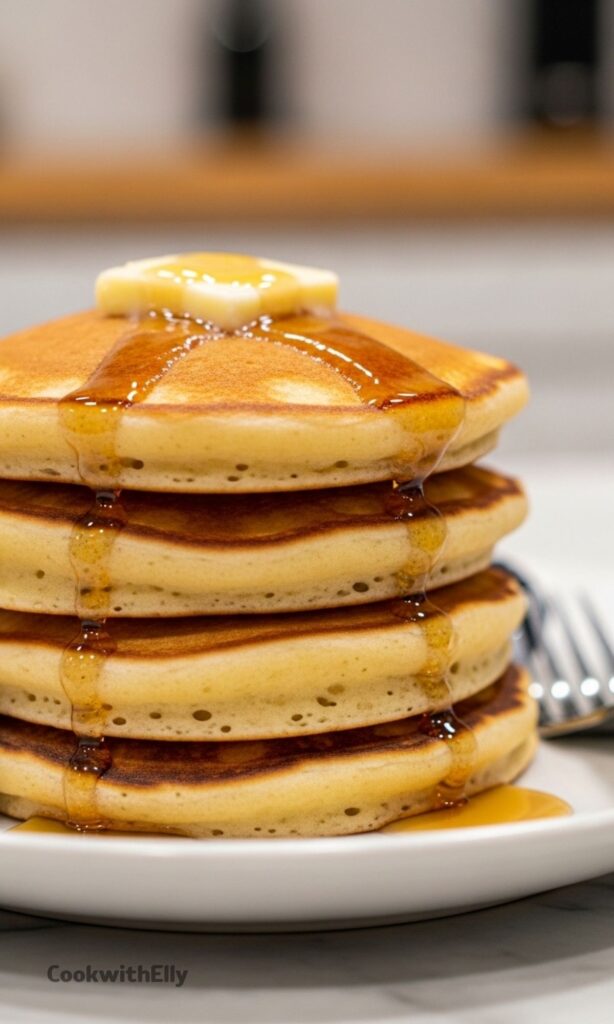
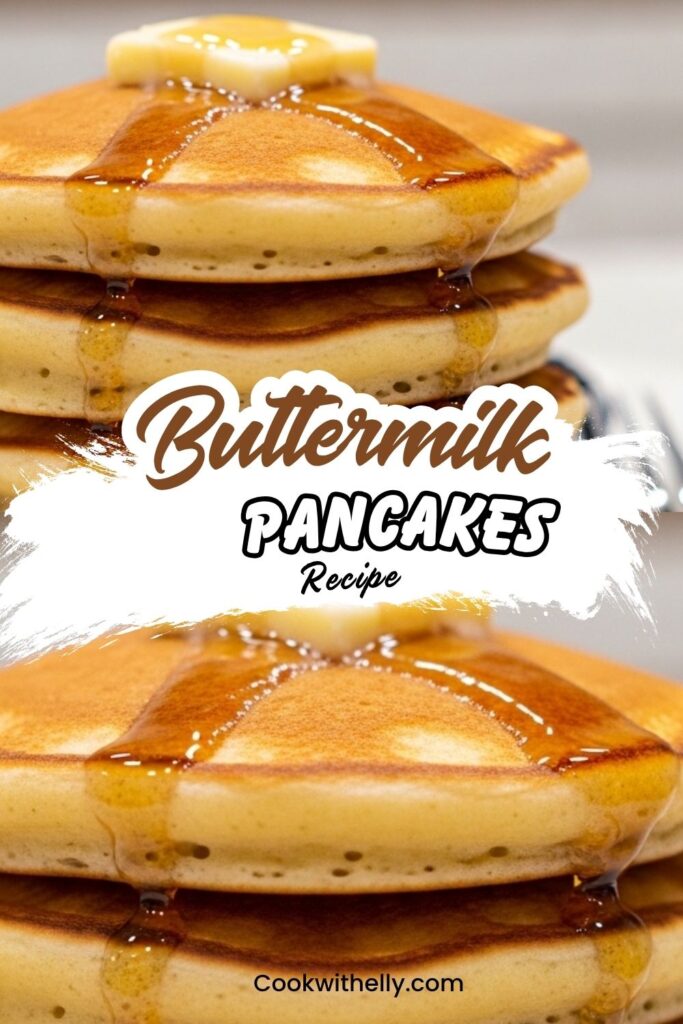
There’s something quietly comforting about making pancakes from scratch. I’ve done it on rushed mornings and slow Sundays, and somehow, it always feels right. These buttermilk pancakes are the kind I come back to again and again, no matter how many new recipes I try.
They turn out soft, fluffy, and just rich enough without feeling heavy. The kind that soak up syrup like they were made for it. And honestly, once you make them this way, those boxed mixes don’t even cross your mind anymore.
I’ve tweaked this recipe over time, mostly learning by doing. A slightly warmer pan here, a gentler mix there. It’s simple food, but it rewards small attention in the nicest way.
If you’re someone who enjoys cooking with a bit of intuition, you’ll like this one. It’s forgiving, flexible, and still gives you that perfect stack every time.
Ingredients Needed for the Recipe
All-purpose flour – gives the pancakes structure and that soft, slightly chewy bite.
White sugar – adds a light sweetness without overpowering the flavor.
Baking powder – helps the pancakes rise and stay airy.
Baking soda – reacts with buttermilk to boost fluffiness.
Salt – balances everything and keeps the flavor from falling flat.
Buttermilk – brings that gentle tang and makes the texture tender.
Milk – smooths out the batter and adjusts thickness.
Eggs – add richness and hold everything together.
Melted butter – gives flavor and keeps the pancakes soft and moist.
Little Things That Make a Big Difference
I didn’t realize this at first, but pancakes are more about how you mix than what you mix. The batter doesn’t need to be perfect. In fact, slightly lumpy batter is exactly what you want.
Also, your pan matters more than you think. Too hot, and they brown too fast. Too low, and they dry out before they cook through. Finding that middle ground makes all the difference.
And flipping, well, that’s a small moment but an important one. You wait, watch the bubbles, and then go for it. It’s oddly satisfying every single time.
How to make Buttermilk Pancakes?
Step 1 - Prepare the Dry Ingredients
In a large bowl, mix together the flour, sugar, baking powder, baking soda, and salt. I usually give it a quick whisk just to make sure everything is evenly combined.
This step sets the base, so even mixing here helps later. Nothing fancy, just make sure there are no clumps hiding in the flour.
Step 2 - Mix the Wet Ingredients
In another bowl, whisk together the buttermilk, milk, eggs, and melted butter. The butter should be warm, not hot, so it blends smoothly without cooking the eggs.
You’ll notice the mixture looks slightly creamy. That’s exactly what you want before combining it with the dry ingredients.
Step 3 - Combine Wet and Dry
Pour the wet mixture into the dry ingredients. Using a spoon or fork, gently mix until everything just comes together.
The batter will look a bit lumpy, and that’s perfect. Overmixing here is the quickest way to lose that fluffy texture.
Step 4 - Heat the Pan
Place a lightly oiled pan or griddle over medium-high heat. I like to test it by flicking a few drops of water on the surface. If they sizzle and dance, it’s ready.
This small check saves you from undercooked centers or overly dark pancakes. It’s worth the few extra seconds.
Step 5 - Cook the Pancakes
Pour about half a cup of batter onto the pan for each pancake. Let them cook undisturbed for a minute or two.
Once bubbles form across the surface and the edges look set, flip them gently. Cook the other side until golden brown.
Step 6 - Serve Warm
Transfer the pancakes to a plate and serve them while they’re still warm. That’s when they taste their best, soft and slightly steamy.
You can stack them high or keep them simple, either way they disappear quickly.
Serving Ideas That Never Get Old
Classic maple syrup is always a safe choice, and honestly, it’s hard to beat. The way it seeps into the pancakes just works.
Sometimes I switch things up with a spoonful of jam or a drizzle of honey. It adds a different kind of sweetness, a bit lighter.
Fresh fruits like berries or sliced bananas bring a nice balance. And if I’m feeling a little indulgent, a few chocolate chips do the trick.
Maple syrup with a small pat of butter
Fresh berries with a light drizzle of honey
Chocolate chips melted slightly into the pancakes
Jam spread gently over a warm stack
Chopped nuts for a bit of crunch
Tips
Don’t overmix the batter – a few lumps keep the pancakes soft.
Wait for bubbles before flipping – it’s the easiest way to get it right.
Keep the heat medium-high, not too low or too hot.
Add mix-ins like berries right before flipping, not earlier.
Use a measuring cup for even-sized pancakes.
Lightly grease the pan between batches if needed.
Serve immediately for the best texture and flavor.
Storing and Reheating
If you somehow end up with leftovers, they store surprisingly well. I usually let them cool completely before packing them away.
You can keep them in the fridge for a couple of days, or freeze them for longer storage. Just place them in a single layer first so they don’t stick together.
Reheating is simple. A toaster works great for a slightly crisp edge, while the microwave keeps them soft. Both options do the job depending on your mood.
I tend to make a slightly bigger batch on purpose sometimes. It makes the next morning a lot easier, and still just as satisfying.
These light and fluffy buttermilk pancakes are the ultimate breakfast treat! Made with fresh buttermilk, they deliver a tender crumb, rich flavor, and that perfect golden-brown exterior. Whether you're feeding a crowd or enjoying a lazy weekend morning, this classic recipe is easy to master and always delivers restaurant-quality results at home.
ingredients
3cups all-purpose flour
3tablespoons white sugar
3teaspoons baking powder
1 ½teaspoons baking soda
¾teaspoon salt
3cups buttermilk (fresh, well-shaken)
½cup whole milk
3large eggs (room temperature)
⅓cup butter (melted and slightly cooled)
Instructions
1
In a large bowl, whisk together flour, sugar, baking powder, baking soda, and salt until well combined.
Sifting the dry ingredients helps ensure a lump-free batter.
2
In a separate bowl, beat together buttermilk, milk, eggs, and melted butter until smooth.
Let wet ingredients come to room temperature for best results.
3
Pour the wet mixture into the dry ingredients and gently fold with a wooden spoon or fork until just combined. Do not overmix; batter should remain slightly lumpy.
Overmixing develops gluten and leads to tough pancakes.
4
Heat a lightly oiled griddle or nonstick skillet over medium-high heat. Test by flicking a few drops of water on the surface—if they sizzle and bead, it's ready.
Lightly grease between batches as needed.
5
Pour approximately ½ cup of batter per pancake onto the griddle. Cook until bubbles form across the surface and edges look set, about 1–2 minutes.
Adjust heat if pancakes brown too quickly.
6
Flip carefully with a spatula and cook the other side until golden brown, about 1–2 minutes more.
Press gently to check doneness; centers should spring back.
7
Transfer cooked pancakes to a warm plate or low oven (200°F/95°C) while finishing remaining batter.
Stack with parchment paper between layers to prevent sticking.
8
Serve immediately with your favorite toppings: maple syrup, fresh berries, whipped butter, or honey.
Nutrition Facts
Servings 12
Serving Size 1 pancake (5-inch)
Amount Per Serving
Calories219kcal
% Daily Value *
Total Fat7gg11%
Saturated Fat4gg20%
Trans Fat0gg
Cholesterol63mgmg21%
Sodium516mgmg22%
Potassium145mgmg5%
Total Carbohydrate31gg11%
Dietary Fiber1gg4%
Sugars6gg
Protein8gg16%
Calcium 185mg mg
Iron 2mg mg
* Percent Daily Values are based on a 2,000 calorie diet. Your daily value may be higher or lower depending on your calorie needs.
Note
For extra fluffiness: Let the batter rest 5–10 minutes before cooking to allow the leaveners to activate.
No buttermilk? Make a substitute: add 1 tablespoon lemon juice or white vinegar to 1 cup milk, let sit 5 minutes before using [[8]].
Add-ins: Fold in fresh blueberries, chocolate chips, or chopped nuts right after pouring batter onto the griddle for customized pancakes.
Keep pancakes warm: Place cooked pancakes on a baking sheet in a 200°F (95°C) oven while finishing the batch.
Freezer-friendly: Cool completely, flash-freeze on a baking sheet, then store in freezer bags for up to 2 months. Reheat in toaster or microwave.